


Kyiv’s Digital Gambit: Can Ukraine Out-Innovate Russia?
Zelensky’s vision: Ukraine aims to leapfrog Russia in digital arms. Explore Kyiv's bold strategy for tech supremacy amid war & global implications.

POLICY WIRE — Kyiv, Ukraine — Forget the trenches, at least for a minute. We’re talking about the algorithms now. A curious pronouncement has rippled from Kyiv, suggesting a future where Ukraine, still locked in a grinding war, aims not just to match but to *exceed* its aggressor’s technological might. It’s a vision spun by President Volodymyr Zelensky, — and frankly, it feels a bit like science fiction. But then again, war tends to fast-track things, doesn’t it?
It isn’t simply about procuring a few fancy drones; we’re told this is a long-term strategy, a deep dive into advanced weaponry, perhaps a quiet pivot toward next-generation warfare that few are even contemplating seriously. One could even say it signals a strategic reorientation, far beyond simply survival, toward establishing a digital-military supremacy on Europe’s volatile eastern flank. It’s an ambitious thought, to put it mildly. Almost audacious.
For two years, the conflict has laid bare the grim reality of 21st-century combat, where sheer numbers meet surgical strikes. Russia, the Goliath, often relies on brute force and legacy systems—but also possesses its own considerable, albeit sometimes sluggish, tech development apparatus. Ukraine, the David, has—by necessity—become an innovation hub. They’ve improvised, adapted, — and leaned hard on Western technology and ingenuity. We’ve seen DIY drones rigged with explosives, civilian Starlink terminals turning into military lifelines, and a nimble adoption of off-the-shelf components. And let’s not forget the digital battlefield, where cybersecurity—sometimes bolstered by commercial titans—has been as critical as air defenses.
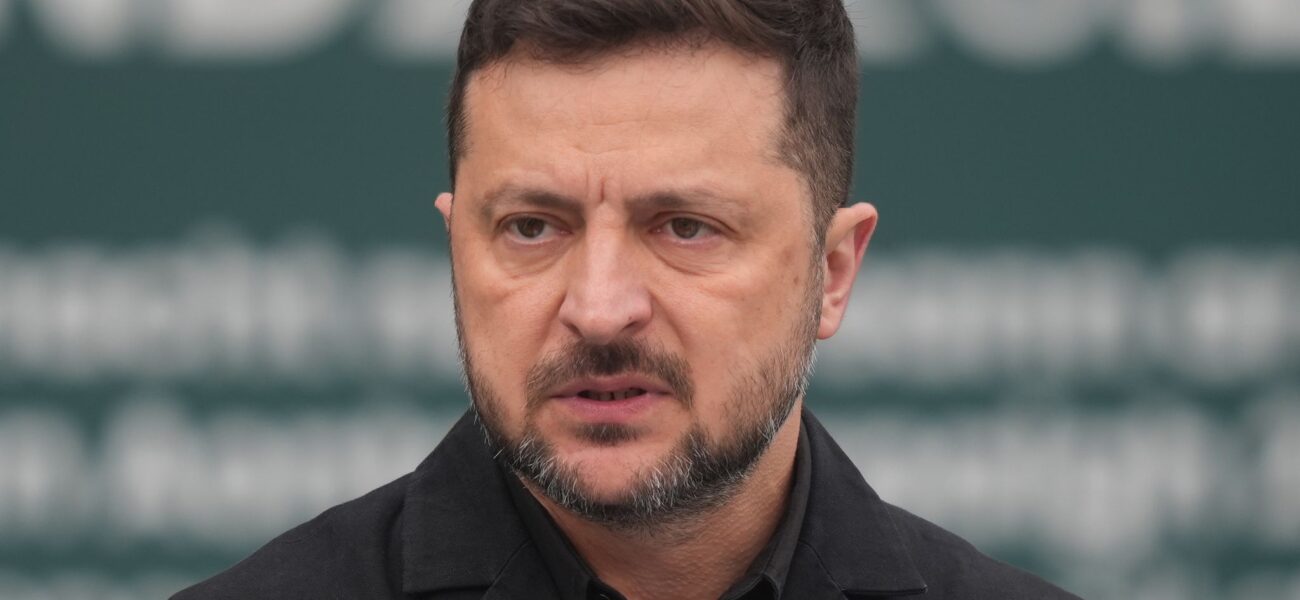
President Zelensky, during a recent media briefing, essentially dared to dream. He articulated a perspective: [QUOTE_PLACEHOLDER]. That’s quite the poker face, or perhaps genuine strategic confidence. His team is reportedly focused on areas like advanced drone swarm technology, AI-driven command systems, and precision-guided munitions that can be rapidly mass-produced. They aren’t just reacting anymore; they’re trying to project a technological edge, not just defensively but, well, let’s say ‘asymmetrically.’
But the road to technological supremacy is paved with research grants, industrial capacity, and a deep talent pool—all things severely strained in a country under constant siege. How do you innovate when your cities are being shelled? How do you retain top engineering talent when their homes are at risk? It’s a genuine logistical conundrum, you know.
Look, the claim isn’t completely unfounded hyperbole. The sheer pace of technological adaptation by Kyiv’s forces has genuinely astonished military analysts. In fact, a recent, albeit unverified, defense industry report suggests that Ukrainian military-affiliated startups filed nearly 150 patent applications related to drone modifications and counter-drone technologies in the past 12 months alone, compared to Russia’s reported 40 in the same period. If those figures hold up, it’s a telling gap in terms of immediate innovative output. But long-term mass production? That’s a different beast entirely.
📄 POLICY WIRE WHITEPAPER PUBLISHED: PAKISTAN'S NATIONAL SECURITY POLICY PRIORITIES
👉 READ BY CLICKING HEREAnd here’s where the global geopolitical chessboard gets even more complicated. Nations in the broader Muslim world, like Pakistan, are watching this clash closely. They’re facing their own security challenges, navigating regional instabilities, and assessing where their next generation of defense capabilities needs to come from. Are they watching Ukraine’s DIY tech revolution with an eye to indigenous development, perhaps seeing it as a template to reduce reliance on traditional arms exporters? Or do they interpret Kyiv’s ambitions as yet another justification for further high-tech acquisitions, lest they be left behind?
You can bet Islamabad’s military brass are keeping tabs. For years, nations like Pakistan have pursued their own pathways to strategic self-sufficiency, often balancing needs for conventional defense with growing aspirations in asymmetric warfare. The lessons learned from the conflict in Eastern Europe—especially regarding drone warfare and cyber capabilities—aren’t lost on them. They’re thinking: if a smaller nation can develop this stuff under duress, what might *we* achieve with sustained investment and a clear strategic vision? It’s not a question for diplomats alone. Sometimes it even informs a nation’s entire stance on international power dynamics, as when a regime’s fall, like we saw in a nearby region recently, inevitably stirs defense reappraisals.
What This Means
Zelensky’s rather bold assertion, if more than just wartime rhetoric, hints at several significant political and economic shifts. Politically, it signals a deeper entrenchment of Ukraine within Western technological alliances, possibly recalibrating expectations for postwar security arrangements. It’s also a subtle challenge to the conventional narrative of Russia’s overwhelming military-industrial complex. If Ukraine truly believes it can outmaneuver Russia technologically, it implies a fundamental belief in the asymmetric power of innovation against mass production—a game-changer if it pans out.
Economically, such a long-term play demands a colossal investment in R&D, manufacturing infrastructure, and skilled labor—things currently decimated. It suggests Western donors aren’t just funding the war; they’re investing in a future Ukrainian defense-tech sector, creating jobs, intellectual property, and eventually, perhaps, an export market. That’s a different kind of economic aid package altogether, one with potential long-range dividends but also considerable risk. This isn’t just about winning a war; it’s about winning the next industrial revolution, Ukrainian-style. But you’ve got to wonder, after all this, can they actually pull it off?