


England’s Football Dilemma: Morale Trumps School
Discover how England's schools navigate national football fever, prioritizing morale over attendance. Unpack the political and cultural implications of this unique 'flexible approach'.

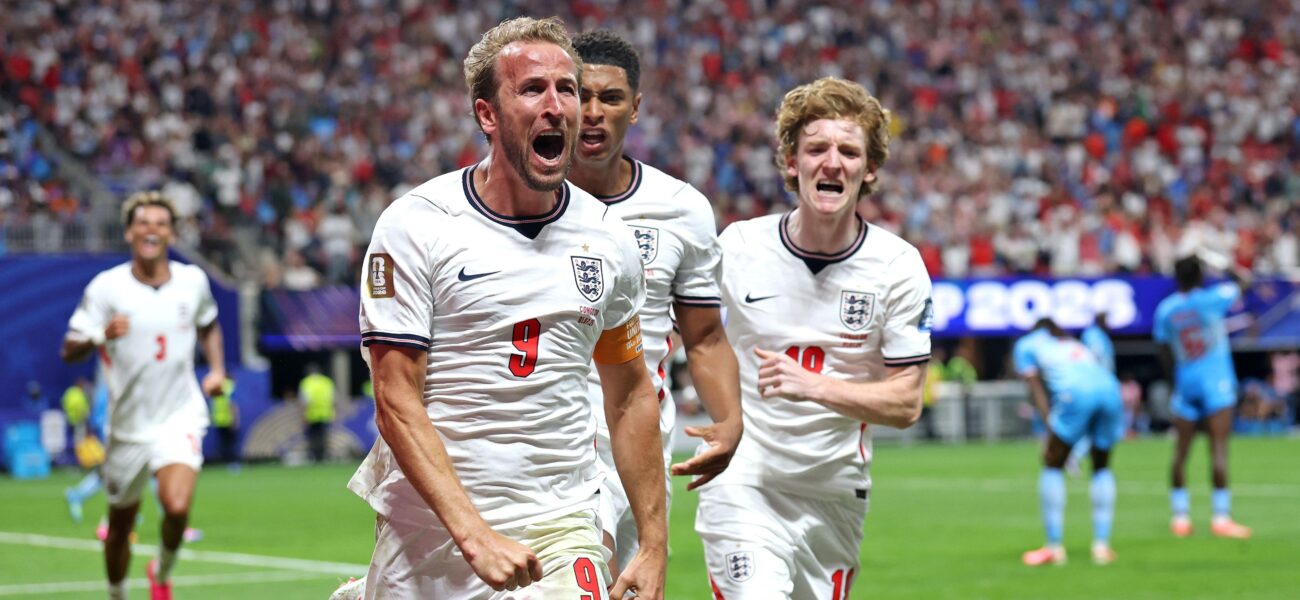
POLICY WIRE — London, England — They say an army marches on its stomach. In Britain, it seems, a nation grinds to a joyful, if slightly sheepish, halt for football. Forget Bank Holidays, forget solemn acts of Parliament; the quiet power of a single England match has, once again, proven sufficient to bend the very structures of state-sanctioned education. Schools across the country, ostensibly dedicated to the unwavering pursuit of knowledge, are instead scrambling to implement ‘flexible approaches’—a polite bureaucratic euphemism, if there ever was one—to allow pupils to watch the beautiful game.
It’s a peculiar dance, this official nod to popular passion. On one hand, you’ve got government ministers, all starched collars and earnest proclamations, insisting education remains paramount. But then, there’s the undeniable, almost primordial, urge of a population to witness their team’s fleeting moment of glory. And policymakers? They’re caught square in the middle, attempting to reconcile these opposing forces with the verbal equivalent of a diplomatic incident report: carefully worded, subtly contradictory, and ultimately designed to placate everyone while truly satisfying no one.
“Look, it’s about common sense, isn’t it?” stated Gillian Keegan, the Secretary of State for Education, in a rather clipped tone that belied the apparent concession. “We understand the excitement. It’s about national morale, about creating a shared moment – but of course, attendance and learning remain absolutely paramount. We trust our schools to manage that balance responsibly.” But responsibility, in this context, seems less about rigorous academic pursuit and more about not triggering a nationwide parental uprising.
This isn’t an isolated incident. Major tournaments often spark these localized ‘culture wars’ between pedagogical rigidity — and national sentiment. And let’s be frank, it’s not just English communities doing the bending. Many British children, whose families might trace their lineage to, say, Lahore or Dhaka—where football often plays second fiddle to cricket—are no less gripped by the spectacle of the Three Lions. They’ve adopted this passion; it’s become part of their modern British identity, making these decisions resonate across diverse cultural landscapes. Their parents, despite any prior cultural leanings, are often just as keen for their kids to participate in this collective, national fervour.
But how do you define ‘balance’ when the subject material involves millions of eyeballs glued to a screen during school hours? “This isn’t just about a football match; it’s about whether education holds true sanctity anymore,” sighed Sarah Jones, head of a comprehensive school in Birmingham, her voice tight with thinly veiled frustration. “You tell me to close attainment gaps, then effectively sanction an afternoon of disruption for a game? It’s hypocritical, isn’t it? We’re setting precedents we can’t un-set.” Her words cut through the government’s measured optimism like a cold north wind.
The ‘flexible approach’ manifest itself in varied ways: extended lunch breaks for kick-off, dedicated viewing rooms, or even outright permission to head home early, attendance recorded with a knowing wink. The Department for Education’s official line stresses that headteachers can grant leave in ‘exceptional circumstances.’ And it seems the definition of ‘exceptional’ has become remarkably elastic when a major football fixture is involved.
📄 POLICY WIRE WHITEPAPER PUBLISHED: PAKISTAN'S NATIONAL SECURITY POLICY PRIORITIES
👉 READ BY CLICKING HEREBecause the truth is, the economic — and social pull of football is colossal. A 2023 Ipsos survey, for example, revealed that 73% of adults in England believe major sporting events like this foster national unity—a figure politicians simply can’t ignore, particularly when navigating choppy electoral waters. It’s an unspoken social contract: we let you have your day of cheer, you continue to buy into the larger, more mundane political system. It’s all a rather neat arrangement, if you don’t think about it too much. But someone always thinks too much, don’t they?
And let’s be clear, this isn’t just about individual schools. It’s about a government – any government, frankly – recognizing its limited reach against the tide of collective popular will. What begins as a practical accommodation quickly morphs into an expectation. The raw spectacle of human drama, played out on a pitch, still trumps cold logic in the popular imagination every single time.
What This Means
This widespread ‘flexibility’ regarding school attendance for sporting events isn’t a mere scheduling anomaly; it’s a significant political indicator. Economically, it signifies a tacit acknowledgement of football’s immense cultural capital and its ability to drive public engagement, perhaps even boosting consumer spending (think merchandise, hospitality) on a national scale, however indirectly. Politically, it’s a subtle yet clear capitulation by the government to popular sentiment, avoiding potential backlash from parents and the electorate who prioritize such cultural moments. It suggests a pragmatic, albeit unstated, policy of ‘managing expectations’ rather than enforcing strict educational mandates, particularly in a period when national unity and feel-good stories are at a premium. And because it allows diverse communities, including those of South Asian heritage, to partake in a collective national experience, it inadvertently acts as a soft integration tool, binding various cultural threads into the broader fabric of British society, albeit via a football match.