

World Stage Gambit: US Soccer’s Calculated Rest Signals Deeper Play Beyond The Pitch
WASHINGTON, D.C. — United States — It isn’t always about what happens on the green felt—or in this case, the pristine grass—but what gets whispered off-stage. For the United States Men’s...

WASHINGTON, D.C. — United States — It isn’t always about what happens on the green felt—or in this case, the pristine grass—but what gets whispered off-stage. For the United States Men’s National Team, their impending skirmish against an already-eliminated Turkiye at SoFi Stadium isn’t just a group stage formality; it’s a delicate dance, a nuanced geopolitical pantomime disguised as sport. These things, they tell us a lot about priorities. And they ain’t always about kicking a ball into a net.
While most fans obsess over goal tallies or fancy footwork, the real story here is calculated preservation. We’re talking about valuable assets—human ones—and the savvy management required to protect a future investment. The American squad, described in official releases as [QUOTE_PLACEHOLDER], now finds itself in a peculiar spot. As [QUOTE_PLACEHOLDER], there’s little left to prove. This gives Coach Mauricio Pochettino a long leash, letting him play a more complex game of chess.
This match-up against Turkey, ostensibly a football contest, can’t be divorced from the broader global chessboard. Turkey, or Turkiye as it prefers to be called now—a diplomatic recalibration, mind you—holds a significant position in the Muslim world, bridging Europe and Asia, and often playing its own distinct hand in international affairs. To see its national team already out of the running, facing an opponent managing its resources so meticulously, paints a subtle picture of differing ambitions on the world stage, even when reduced to 22 men on a field. For millions across South Asia, from bustling Karachi to the quiet valleys of Kashmir, these global tournaments aren’t just entertainment. They’re a rare stage where national identities and allegiances, often complex and contested, get played out in full, albeit symbolically. It’s a connection point, a moment of shared experience across vast distances.
You see, the priority list reads like an executive summary: [QUOTE_PLACEHOLDER] Christian Pulisic, for starters. Nobody wants their star player sidelined, especially when the knockout rounds beckon. But it doesn’t stop there. The coaching staff has had to [QUOTE_PLACEHOLDER] a handful of other key players, specifically [QUOTE_PLACEHOLDER]. Why? Because [QUOTE_PLACEHOLDER]. It’s a textbook risk-management exercise. But it’s also a stark reminder that in elite sports, individual player welfare is tightly interwoven with national sporting aspirations—and quite a lot of cash, let’s be frank.
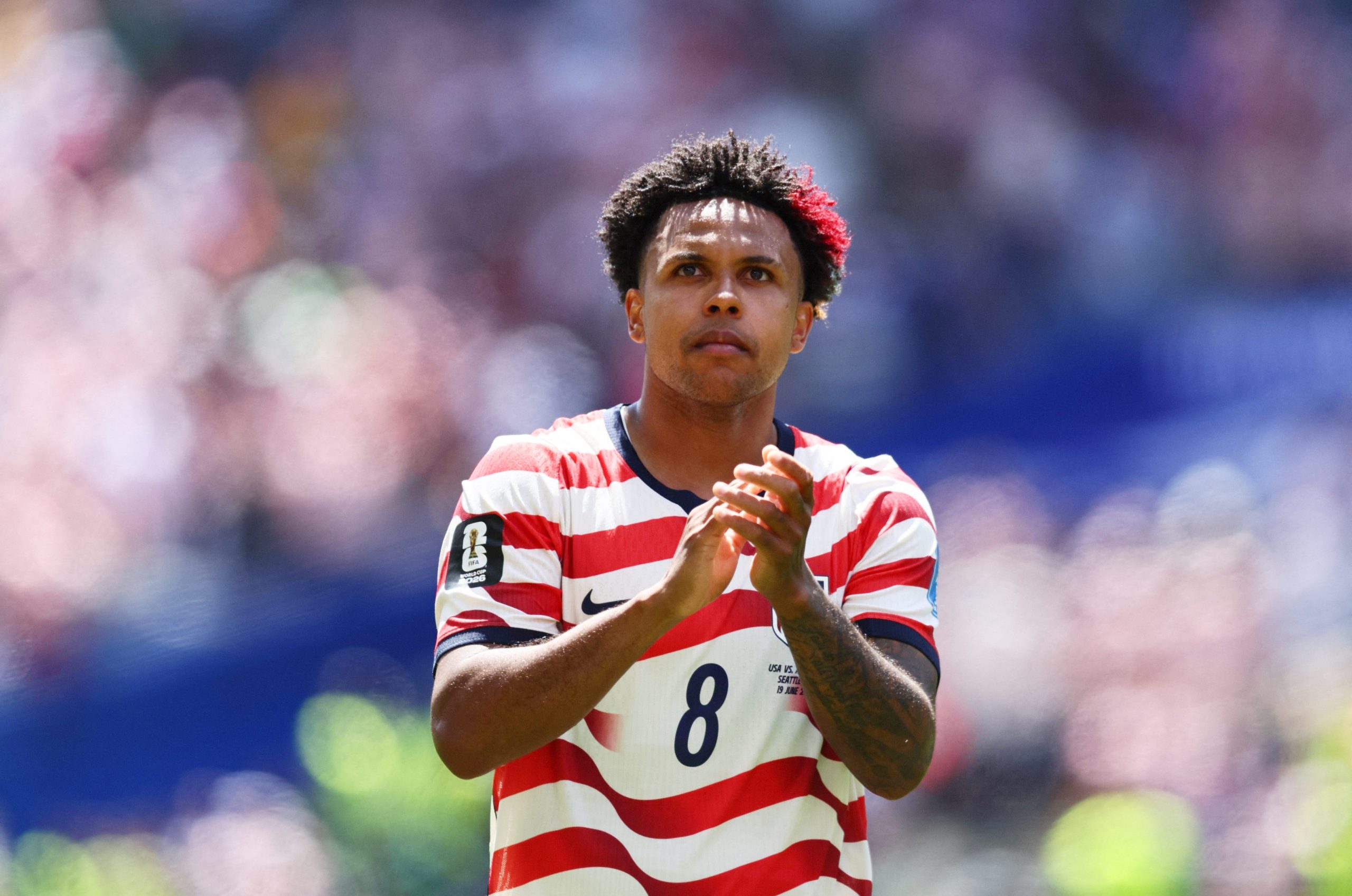
And so, we get a rotated squad. We’ll see players like 1-Matt Turner in goal, 6-Auston Trusty and 7-Gio Reyna taking the field, alongside Weston McKennie—he’s got the captain’s armband for this one (a statement in itself, isn’t it?). Others like 9-Ricardo Pepi — and 11-Brenden Aaronson get a run. It’s a testing ground. A laboratory, even. Because the true opposition for the next stage, [QUOTE_PLACEHOLDER] Bosnia — and Herzegovina, is already looming. A real geopolitical clash there, perhaps.
Manager Pochettino, ever the pragmatist, wasn’t mincing words either. [QUOTE_PLACEHOLDER] those four players on a yellow won’t play. Blunt. Effective. And makes all the sense in the world when you’re looking at the bigger prize, doesn’t it?
These contests, they often get reduced to simple numbers. But dig a little deeper, — and the statistics become a mirror for global impact. FIFA estimated the 2022 World Cup had a global reach of 5 billion people, according to its official reports, underscoring the immense audience for these spectacles. That’s billions of eyeballs on geopolitical messaging, intentional or otherwise. It’s not just a game; it’s a platform.
This isn’t just about preserving health; it’s about projecting confidence, too. America is playing a long game, protecting its best for later, indicating it views this match as a mere stepping stone, not a battle for survival. Turkiye, already out, might feel a sting, but for their leadership, the global spectacle still provides an opportunity, however brief, for their national brand to appear on an international stage, alongside a major power. It’s subtle, but these narratives matter.
What This Means
This USMNT roster decision isn’t merely about managing a soccer team; it’s a strategic gambit that speaks to a larger philosophy of asset management and long-term planning, traits that are often applied to national economies and foreign policy. By explicitly resting key players, the U.S. is signaling its confidence—some might say an almost brazen self-assurance—in its dominant position, while simultaneously mitigating financial and human capital risk. Think of it as a nation conserving its industrial might or diplomatic resources for more consequential engagements. Global capital, after all, is fickle, and wasting resources on a low-stakes encounter just isn’t smart business. It showcases an institutional maturity, where the immediate thrill of a full-strength victory is secondary to securing future advantages.
For Turkey, the elimination prior to this match-up offers a different sort of insight. While perhaps disheartening, their presence on such a global platform, regardless of result, allows them to maintain visibility, subtly reinforcing their presence on the international stage even when facing a setback. In the cutthroat arena of global politics, just being present and engaged, even when the chips are down, carries its own weight. This is a quiet demonstration of soft power dynamics, where a simple sports fixture becomes a fleeting, yet widely broadcast, act of diplomacy and national projection, watched by an audience from continents away, including millions in Pakistan and across the greater Muslim world who follow every twist of these global spectacles.