


Tunisia’s World Cup Fiasco: An Ode to Self-Inflicted Wounds and Fading Hopes
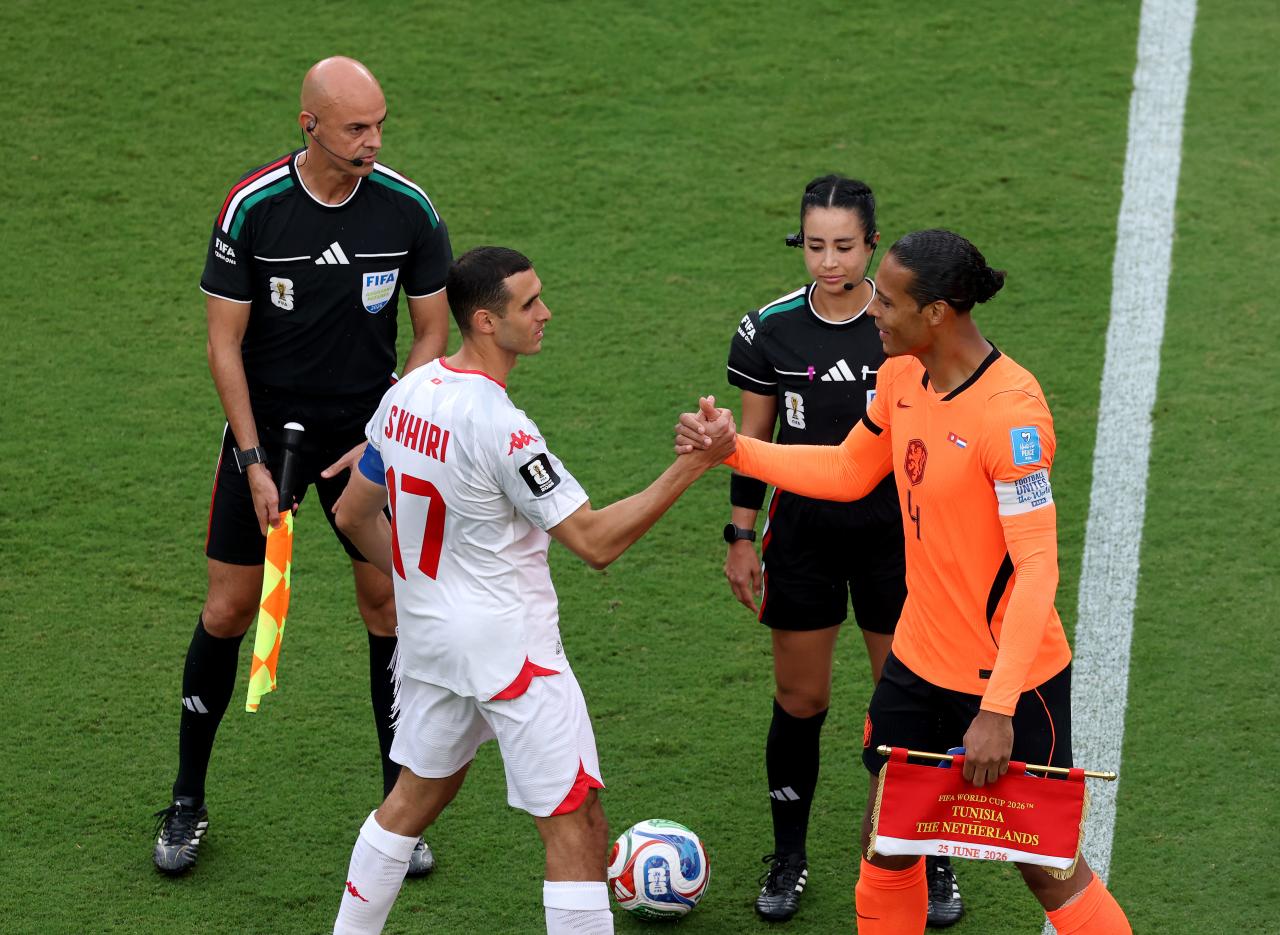
POLICY WIRE — Rabat, Morocco — The ball hadn’t even found its rhythm before Ellyes Skhiri—Tunisia’s skipper, no less—etched his name into the tournament’s ignominious ledger. Three minutes in....

POLICY WIRE — Rabat, Morocco — The ball hadn’t even found its rhythm before Ellyes Skhiri—Tunisia’s skipper, no less—etched his name into the tournament’s ignominious ledger. Three minutes in. That’s all it took. An ill-fated flick, a cross from Real Madrid’s new signing Denzel Dumfries, and suddenly the ball was nesting in his *own* net. Just like that, the Eagles of Carthage weren’t merely behind; they’d already scored for the other team. It wasn’t merely a poor start against the Netherlands; it was a deeply personal, almost symbolic gut punch that set the stage for their exit from the World Cup, a tournament that had, for them, become less about glory and more about self-flagellation.
Brian Brobbey, formerly of RB Leipzig, decided to join the fun too, not long after Skhiri’s inadvertent contribution, snagging his third goal. But truthfully, the Dutch didn’t even need to be exceptional. They were facing a team that seemed determined to shoot itself in the foot, then hobble across the finish line. This match wasn’t a tactical masterclass by Ronald Koeman’s side; it was a clinic in capitalizing on the opponent’s glaring, self-made vulnerabilities. [QUOTE_PLACEHOLDER]
And poor Skhiri—it just wasn’t his tourney, was it? The Eintracht Frankfurt midfielder, they said, had already presided over defensive lapses leading to goals against Sweden and Japan. Sometimes, you see players carry the weight of expectation. Here, Skhiri seemed to carry the weight of misfortune, almost cursed. He wasn’t alone in this individual-yet-collective slump. This latest incident meant it was the 12th own-goal of the tournament
, effectively tying the previous World Cup record set in 2018
(FIFA records confirm this unfortunate statistic). You couldn’t write a more self-defeating script if you tried.
There was a flicker, sure, ten minutes into the second half. Hazem Mastouri, making his World Cup debut, somehow pulled one back. Their second goal of the tournament
. It almost felt like a courtesy, a small concession to pride, especially when considering the gulf in class. But the respite, like most things good for Tunisia in this tournament, was fleeting. Koeman’s side, seeing the score tighten ever so slightly, decided to stomp out that particular spark, regaining their two-goal lead just as easily as they’d lost it, courtesy of another set-piece strike. Jan Paul van Hecke’s first international goal
—though some might debate if it wasn’t another own-goal in the making—helped the Netherlands join Germany as teams to score double-digit goals so far in the competition
.
But the real, stomach-churning number? Tunisia conceded the most goals, 12, averaging 4 per game
. Think about that: four goals. Every single match. It’s a humbling, bruising record for any international team, let alone one representing a nation of nearly twelve million. Sure, some of their squad hails from top-tier European clubs—Union Berlin’s German-born midfielder Rani Khedira, Augsburg’s Ismaël Gharbi, Elias Saad of Augsburg. But this array of talent, a common theme in modern football, seemed to evaporate into a kind of disjointed paralysis on the pitch when it counted.
It’s interesting, isn’t it, how the Netherlands now gears up to face another North African team? The Netherlands will face another North African team in the Round of 32 as they will play against Morocco in Guadalupe
. Morocco, a different beast entirely. That fixture alone feels like a narrative twist, a stark contrast to Tunisia’s dismal showing.
What This Means
A sporting calamity, particularly one of this public magnitude, seldom remains confined to the football pitch. For a nation like Tunisia, a secular Arab and Muslim-majority country navigating its own complex domestic political and economic landscape, this World Cup performance becomes a glaring, public referendum on something much larger. It’s not just a collection of missed passes or mistimed tackles; it’s a national display of frailty, especially when contrasted with the ascendant football narratives coming from parts of the Muslim world—think Morocco, making headlines not for self-destruction, but for genuine athletic prowess.
There’s a subtle, almost uncomfortable parallel to be drawn here. The torrid time
of their skipper, marked by repeated, costly errors—own-goals, defensive missteps—can’t help but feel like a metaphor. It suggests an internal rot, a predisposition to self-sabotage rather than an overwhelming external threat. When a team concedes an average of four goals per game, when twelve of its competitors’ tallies were assisted, in a way, by an own-goal—it speaks volumes about something beyond mere bad luck. And it raises questions. Where is the national cohesion? Where’s that famous North African fighting spirit?
Because frankly, in regions like the Maghreb and indeed across wider swathes of the Muslim world, football success—or failure—isn’t merely a game. It’s a barometer. It’s an immediate, easily digestible measure of national pride, capacity, and even governance, particularly when leaders frequently seek to associate themselves with sporting triumphs. When the outcome is so unequivocally disastrous, with errors emanating from within the ranks, it doesn’t just deflate supporters. It chips away at a fragile collective confidence. One can only imagine the dinner table conversations in Islamabad, Lahore, or Kuala Lumpur, analyzing Tunisia’s collapse, and silently hoping their own nations might, someday, find a less painful way to announce themselves on the global stage. After all, the narrative of Asia’s investment darlings facing fickle futures isn’t so different in its underlying anxieties from a team facing an abrupt and inglorious end to its global aspirations.