

World Population Day: Why It Matters More Than Ever?
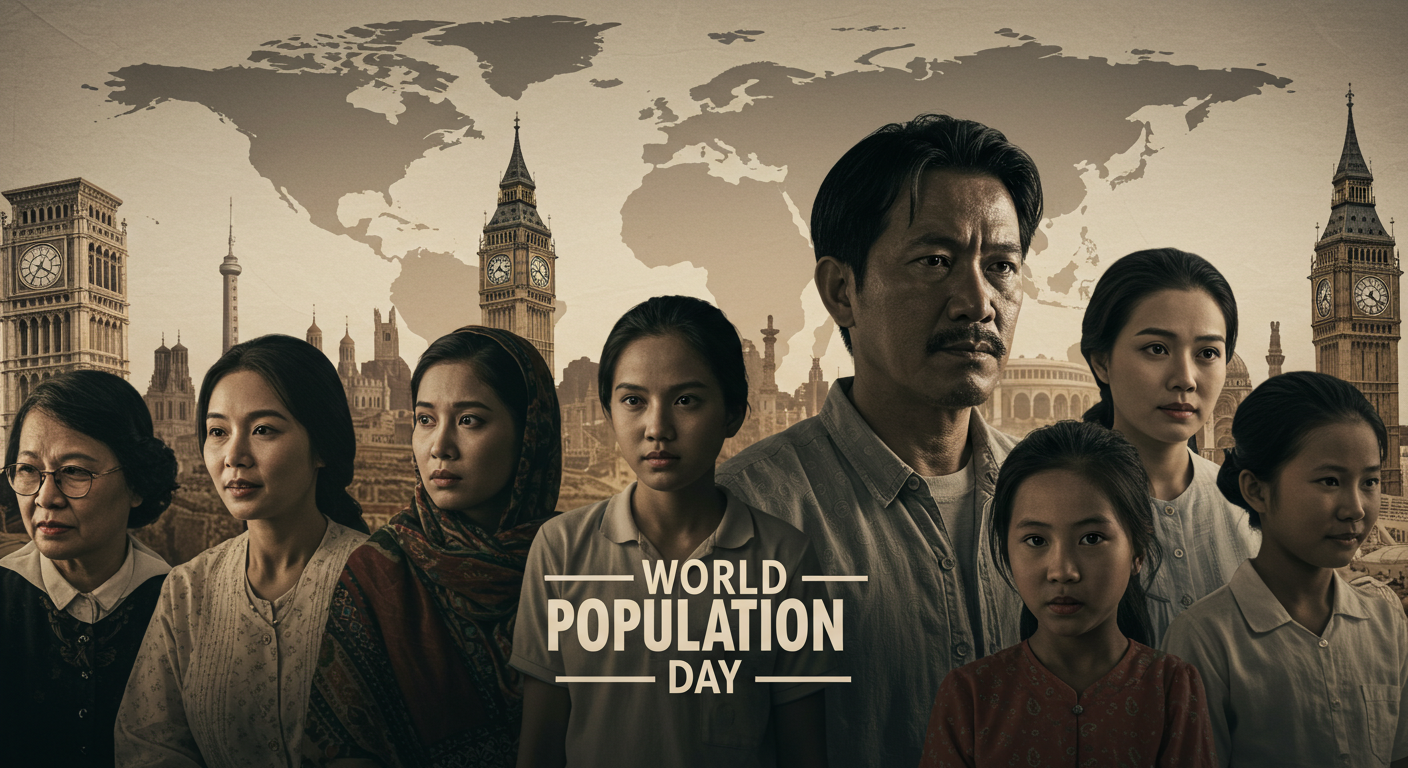
Every year on July 11, the world observes World Population Day to raise awareness about global population issues. This day, established by the United Nations in 1989, reminds us of the importance of...

Every year on July 11, the world observes World Population Day to raise awareness about global population issues. This day, established by the United Nations in 1989, reminds us of the importance of thinking about how population trends affect development, sustainability, and the overall well-being of people around the globe. As the global population continues to grow and shift, this day becomes increasingly relevant for governments, communities, and individuals alike.
Population of the world has seen radical transformation in the last one hundred years. At that time the world population was estimated to be approximately 2.5 billion. Currently, it has exceeded 8 billion, which is attained in November 2022. It is a success story and a challenge both. On the one hand, it is a sign of the increase in the level of medical care, agriculture, and technology that enable the population to become healthier and live longer. Conversely, it poses major doubts on how we are and will continue to sustain such a huge and increasing population in a way that does not affect our planet.
World Population Day is the time to remember such problems and find their ways out. Among the greatest worries is the strain that a high number of people put on natural resources. With an increasing population in their demands of food, water, energy and houses, the pressure on the ecosystems may therefore be strained. Environmental issues that relate to the rapid population growth include deforestation, water shortage, and pollution, only a few of them. Unless we learn to control our population and consumption rate, we will end up ruining the capability of the earth to support life in the future.
Economies are also influenced by the rate of population growth. A very young population has been established in some developing countries as a result of high birth rates. This can turn out to be an asset when youths are provided education, health services and employment. An educated young, healthy, and gainfully employed population is capable of spurring economic growth. However, when there are limited resources, labor rates are very low, and services are less effective, then the situation may turn into poverty, riots, and even violence. This is the reason as to why investment in human development is so important.
Remarkably, whereas there are those parts of the world that are expanding, there are parts that are deteriorating. Japan, Italy, and South Korea are also undergoing or facing a decline in the population since they have low birth rates and an ageing population. This may lead to a shortage of labor, economies with low growth and strain on welfare systems. Most of the countries in Africa are conversely experiencing very high rates of population growth and Africa is expected to more than triple in size by 2050. This imbalance of global distribution presents new opportunities and challenges in the matter of migration, economic alliances, and the global policy-making.
Gender equality and reproductive rights are another concern of the population and world population day. Making the provision of information to women and girls in order to help them with choices on health and future decisions is paramount to overcoming population issues. Even basic reproductive health including family planning services are not accessible even in most parts of the region to women. It has been discovered through research that women who are educated and are able to access birth control methods bear less children who are in good health and children who are educated. With empowered women, stronger communities, families and economies are brought about.
UNFPA is leading the pack in these endeavors. It also supports projects, which entail safe delivery, accessibility to birth control and reproductive health education, annually. The theme of the UNFPA 2024 was Unlocking Opportunities for Youth where countries were encouraged to invest in the youths to allow them establish a more sustainable world. The theme brought to fore the necessity of the younger generation wellbeing on health, education and employment.
There is also close connection between climate change and population issues. The more the amount the more carbon emissions, the more transport needs, and energy use. It is not population control however that is the answer but instilling sustainable development. It implies the reduction of wastes, the further investments in renewable energy and the raising more responsible consumption. The developed countries, which have a larger per-capita emission, are also required to take the lead in reducing the carbon imprints besides spurring the developing nations to develop.
World Population Day inculcates a spirit of teamwork. These issues cannot be solved by a single country. The cooperation at the international level is needed to improve health systems, school children, gender equality, and to protect the environment. Government, non-governmental organizations, society, and individuals are all responsible. When multiplied into the hundreds of millions of people, collective efforts, like educating the girls, or using the resources efficiently, can have a big effect.
Ultimately, it is not only numbers that the World Population Day is concerned about. It is not a question about computers, or systems or programs. It is a question of people and what they get and what kind of world we want to live in. The problem of the growing population brings along challenges, as well as a highly-satisfactory chance. Through intelligent design, mutual accountability and the emphasis on equity, we can create a world in which every human being gets the opportunity to succeed.
As we mark this day, it’s worth asking: What kind of future do we want to leave for the next generation? Population trends may be complex, but with care, compassion, and action, we can shape them into a story of hope, resilience, and sustainability.
Author