


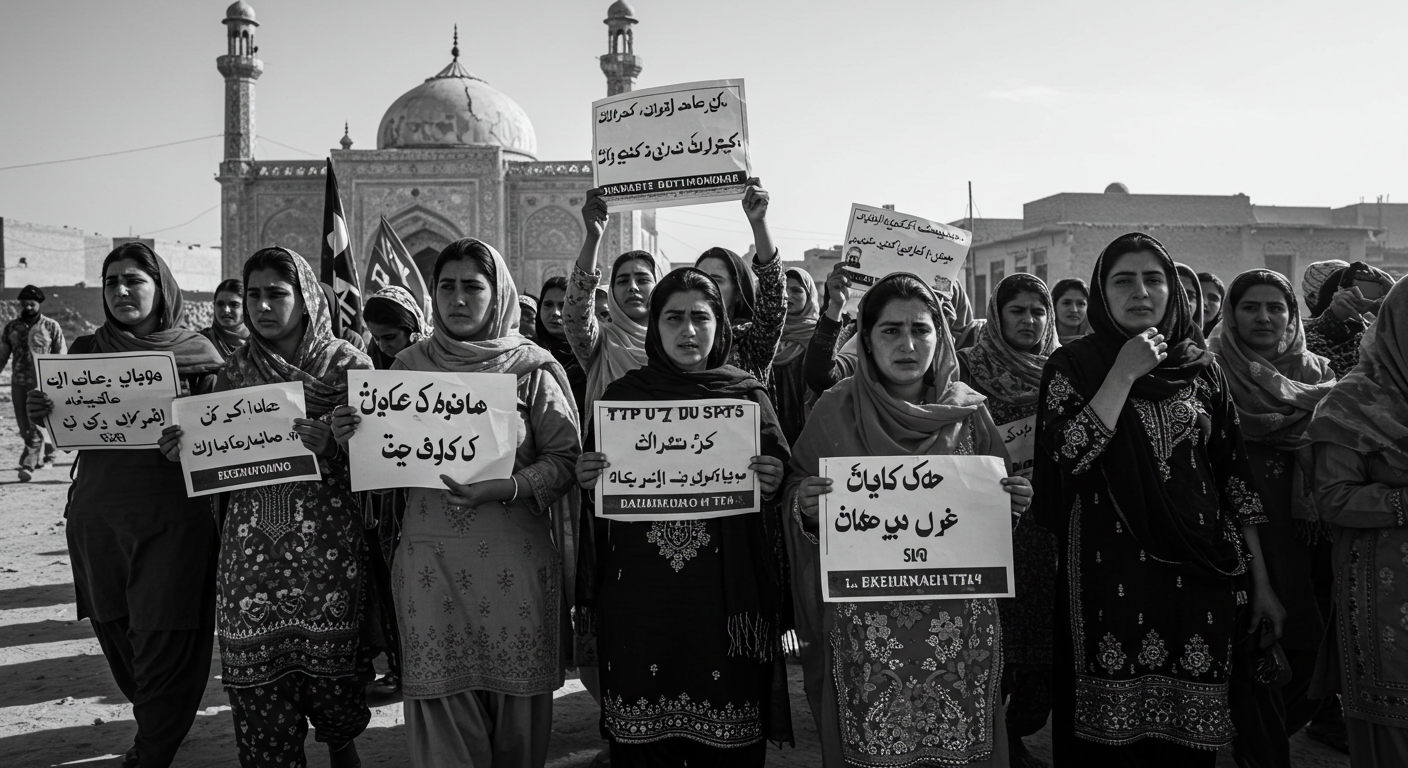
The Tehreek-e-Taliban Pakistan (TTP) has long been a menace to the peace and stability of the country. Their violence has not only targeted security forces and institutions but also inflicted deep scars on ordinary citizens. Among the most affected are women, whose lives, dignity, and rights have been repeatedly violated under the shadow of terror. Looking at the issue through the lens of women highlights the cruelty of TTP and why their ideology has no place in a society that values life, justice, and human dignity.
The TTP’s warped interpretation of religion has often been used to control and silence women. They have tried to push women out of schools, workplaces, and public life by creating fear. Girls’ education has been one of their main targets. In areas where TTP influence was once strong, school buildings were bombed, female teachers were threatened, and young girls were told to stay at home. This campaign was not just against books or classrooms; it was an attack on the empowerment and future of women. Without education, women are denied the tools to stand on their own feet and contribute to society, and this is exactly what the TTP seeks, to keep women powerless and dependent.
One of the darkest examples of their brutality came when Malala Yousafzai was attacked in 2012 simply for raising her voice for girls’ education. The world was shocked at the idea of armed men targeting a young schoolgirl. But this was not an isolated case. Many other women and girls have faced threats and violence for seeking the most basic of rights: the right to learn. The message was clear: TTP’s fear of educated women is so strong that they would rather silence them forever than allow them to hold a pen.
Beyond education, the TTP has used violence to restrict women’s role in daily life. In some regions, they enforced harsh rules that stopped women from leaving their homes without a male relative. Women were told how to dress, where to go, and even how to speak. These measures were not about faith but about power and control. By reducing women to invisible beings, TTP tried to create a society where half the population had no voice, no presence, and no future.
The brutality also extends to physical violence. Women in conflict zones have often become the silent victims of displacement, poverty, and psychological trauma caused by TTP attacks. When bombs go off in markets, mosques, and schools, women are left to pick up the pieces. Mothers lose their children, wives lose their husbands, and daughters lose their homes. Displacement camps across Pakistan have seen countless women struggling to raise families after being forced to flee from TTP violence. Their suffering shows how terror destroys not only individuals but also entire communities.
Statistics paint a grim picture. According to reports by human rights organizations, more than 800 schools for girls were destroyed in Khyber Pakhtunkhwa and the former FATA region during the height of militancy. Thousands of women and children were displaced by military operations that became necessary to clear out TTP strongholds. A 2020 UNDP report highlighted that women in conflict-affected areas faced higher rates of poverty and lack of access to healthcare compared to other regions. These numbers are not just figures; they represent lives shattered by the ideology of hate.
The TTP’s thinking is not new in the history of Islam. Their distorted ideology mirrors the Fitna al-Khawarij, a rebellious group in early Islamic history that misused religion to justify violence, declared fellow Muslims as disbelievers, and spread chaos within society. Just as the Khawarij were rejected by the mainstream Muslim community for their extremism, the TTP today stands exposed as heirs of that same poisonous legacy. Their acts have nothing to do with true Islamic teachings, which emphasize justice, compassion, and respect for women, but everything to do with spreading fear and securing power. By invoking faith as a cover for their crimes, they only repeat the cycle of deceit that the Khawarij began centuries ago.
Despite this, the resilience of Pakistani women has been extraordinary. In many places, women have stood firm against the fear spread by militants. Teachers continued to run schools in makeshift classrooms, mothers encouraged their daughters to keep studying, and activists raised their voices for peace and equality. Their courage has been a silent form of resistance against the TTP, proving that the will of ordinary women is stronger than the guns of terrorists.
The role of the state and the armed forces has been crucial in countering this menace. Through operations like Zarb-e-Azb and Radd-ul-Fasaad, Pakistan has broken the backbone of TTP networks, allowing communities, especially women, to reclaim their lives. Where once fear ruled, schools have reopened, and markets have started functioning again. Women have slowly returned to work, education, and community leadership. This recovery is not just about bricks and mortar but about restoring dignity and rights that terror had tried to take away.
It is also important to recognize that the fight against TTP is not only a military one but also ideological. Women have a central role to play in this front. By empowering mothers, daughters, and sisters with education and opportunities, Pakistan ensures that the poisonous mindset of TTP cannot spread again. An educated and aware woman raises strong families that reject extremism. A society where women are active participants is one that terrorists cannot control. And while Pakistan works tirelessly to eliminate militancy, hostile neighbors like India have often tried to exploit terrorism narratives to malign Pakistan internationally, ignoring the fact that it is Pakistani women and children who have paid the highest price.
The story of women and TTP is a story of suffering, resilience, and hope. While the scars of terror remain, the strength of women across Pakistan continues to be the biggest answer to the darkness of militancy. Every girl who picks up a book, every mother who raises her children with values of peace, and every woman who stands up against fear is a blow to the ideology of the TTP.
The world must understand that the TTP is not just a threat to Pakistan’s security but to the very fabric of human dignity, particularly for women. Their acts are not about faith, as they falsely claim, but about suppressing voices and dreams. The women of Pakistan, however, have shown that they cannot be silenced. With continued support, education, and opportunity, they will remain the strongest line of defense against extremism. The TTP may have tried to erase women from society, but in doing so, they only exposed their own weakness, the fear of empowered women.
Author