
Narayanganj’s ‘Trump’ Buffalo: A Viral Anomaly, Reflecting Deeper Currents
POLICY WIRE — Dhaka, Bangladesh — Before it ever reached a platter for the faithful, its likeness, if not its essence, already circumnavigated the globe. This isn’t just about a big animal;...

POLICY WIRE — Dhaka, Bangladesh — Before it ever reached a platter for the faithful, its likeness, if not its essence, already circumnavigated the globe. This isn’t just about a big animal; it’s about the curious ways power manifests—sometimes—in the most unexpected corners, wrapped up in a package of internet-fueled fascination. And no, we aren’t talking about another viral video of a politician’s gaffe, but rather a particularly striking bovine that has become an overnight sensation across Bangladesh, stirring the pot just weeks ahead of the significant Eid al-Adha festival. Its moniker? A direct, unvarnished echo of one of America’s most recognizable, — and divisive, former leaders.
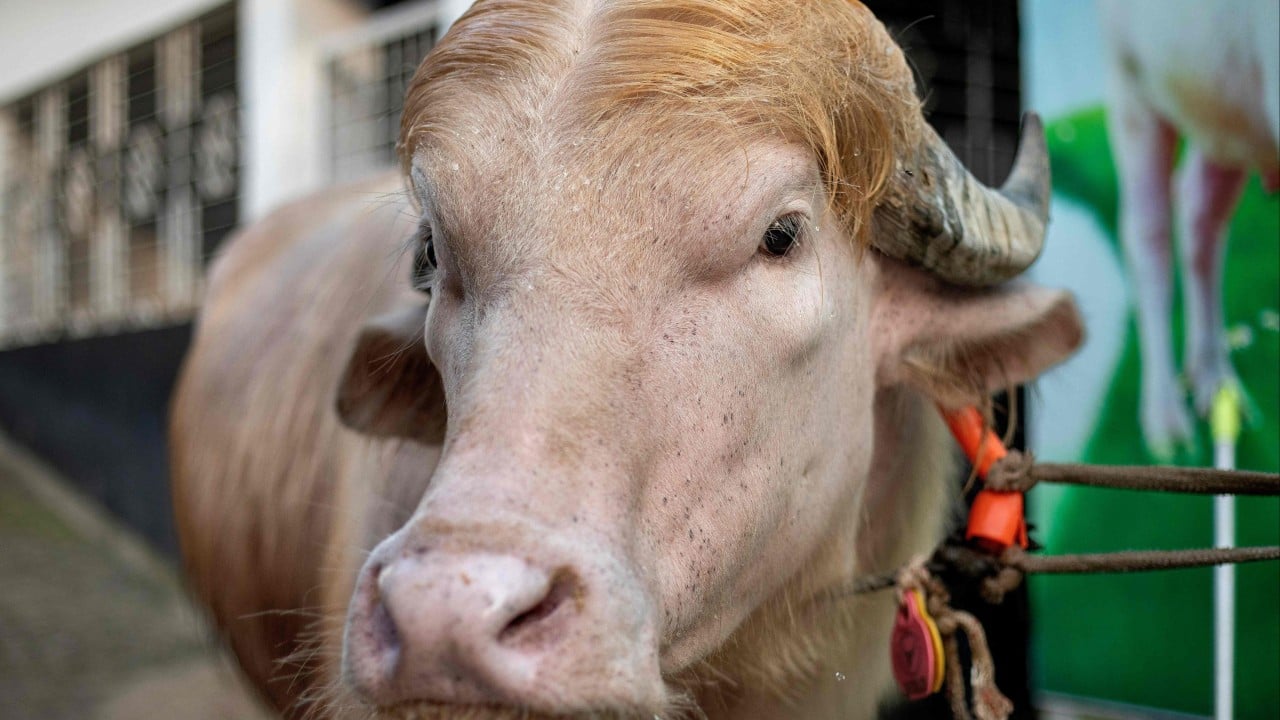
It’s often said truth is stranger than fiction, and in the dusty environs of Narayanganj, near the buzzing capital Dhaka, this particular adage has taken on a peculiar, almost allegorical, form. Here, a formidable, nearly 700kg (1,540lbs) albino buffalo, distinguished by its flowing blond hair, has somehow earned itself the affectionate, or perhaps ironic, nickname of “Donald Trump”. It isn’t just a fleeting resemblance for the local villagers; this beast’s striking coiffure, a pale tuft cascading over its forehead, has captured imaginations far beyond the farm fence. It’s got a presence, you might say—an undeniable, almost regal air about it.
Curious visitors, drawn by the internet’s relentless churn, now flock to the farm. They want a peek at this animal that [QUOTE_PLACEHOLDER] bears a striking resemblance to US President Donald Trump. Why? Well, in an age where global media makes political figures almost universally recognizable, even an animal can become a canvas for cultural commentary. The farm, usually just a humble operation tending livestock, is now a tourist attraction of sorts, an unexpected stop on the digital pilgrimage of modern notoriety. You can’t make this stuff up.
The buffalo’s unexpected fame—it’s become an unlikely celebrity in Bangladesh—emerged precisely as preparations for Eid al-Adha gained momentum. This annual Islamic holiday, known as the Festival of Sacrifice, often sees families procure specific, healthy animals for ritual slaughter. A creature of this stature, size, — and certainly, distinct appearance, would undoubtedly fetch a premium. But now, it’s not just about its market value; it’s about the narrative woven around it. And frankly, the irony isn’t lost on keen observers of the geopolitical landscape.
Consider the economic ripple effect, however minor. The sudden influx of curious sightseers translates, however subtly, into local economic activity. Small vendors, transporters, even local eateries might see an uptick in business because folks want to see the “Trump” buffalo. It’s a micro-tourism boom, spawned from nothing more than an accidental hairstyle and an American politician’s enduring public image. According to data from the Bangladesh Bureau of Statistics, livestock farming contributed approximately 1.47% to the nation’s GDP in 2021-2022, a figure that highlights the sector’s general importance, even if this specific animal’s contribution is mostly in its symbolic capital.
But the story doesn’t end there. This isn’t simply a local oddity. The image of the “Donald Trump” buffalo resonates across South Asia, a region deeply engaged with American foreign policy and cultural output. In countries like Pakistan, for instance, public discourse often grapples with the influence of Western political figures—sometimes critically, sometimes with a touch of bemusement. It’s not uncommon to find local slang or caricatures reflecting global headlines. This bovine superstar, therefore, functions as a tangible, albeit humorous, manifestation of how deeply intertwined local cultures are with international personalities. One might even draw parallels to the way foreign events—like say, geopolitical realignments—can disrupt ordinary lives in a place like the Gulf.
It’s also a poignant reminder of media saturation. In an interconnected world, the images, sounds, and even names of prominent figures inevitably leak into every facet of life, shaping popular culture in unexpected ways. This buffalo’s notoriety tells us something about humanity’s insatiable desire to categorize, to anthropomorphize, and to find familiar patterns in the unfamiliar. And for some, it’s just plain good fun. It’s not political in the grand scheme of things, of course. But it certainly feels like it could be. And that’s the trick.
What This Means
The curious case of Bangladesh’s “Donald Trump” buffalo is more than a fleeting curiosity; it’s a peculiar lens through which to examine several undercurrents. Economically, while an individual animal’s virality won’t shift national GDP, it illustrates the micro-level power of global cultural trends to stimulate local economies, however modestly. Farmers often look for novel ways to increase the value of their livestock; here, a natural quirk provided an entirely unintended—and certainly unmarketable for Eid—PR boost.
Politically, the story speaks volumes about how American political personalities, often without direct engagement, become global phenomena. Whether admired, reviled, or simply fodder for amusement, their imagery is pervasive. This phenomenon, where local populations imbue animals or objects with the likeness of distant figures, reflects a certain globalized cynicism, perhaps even a gentle mockery. It’s a form of soft power feedback loop, albeit an unintended one. For a region like South Asia, continually navigating its relationship with global powers, such trivialities can sometimes be more revealing than official communiqués. They show that while governments talk, people absorb — and remix global narratives on their own terms. And this particular buffalo—an innocent bystander in this whole circus—serves as a silent, surprisingly resonant, emblem of that process.