


Aces’ MVP Injury: WNBA Champs Face Global Test
WNBA champions Vegas Aces navigate MVP A'ja Wilson's injury. Can they maintain dominance? Unpack the economic, tactical, and global implications of her absence.

POLICY WIRE — Las Vegas, USA — The ankle, that seemingly innocuous hinge of bone and sinew, holds an almost absurd amount of sway over multi-million-dollar sports franchises. You see, when four-time WNBA MVP A’ja Wilson is sidelined, it’s not just a basketball player who’s missing—it’s an economic anchor, a tactical lynchpin, and frankly, a significant chunk of a team’s on-court magnetism. Her absence from the Commissioner’s Cup final wasn’t just a bad beat; it was a testament to how acutely vulnerable even the most formidable empires are to the smallest of disruptions.
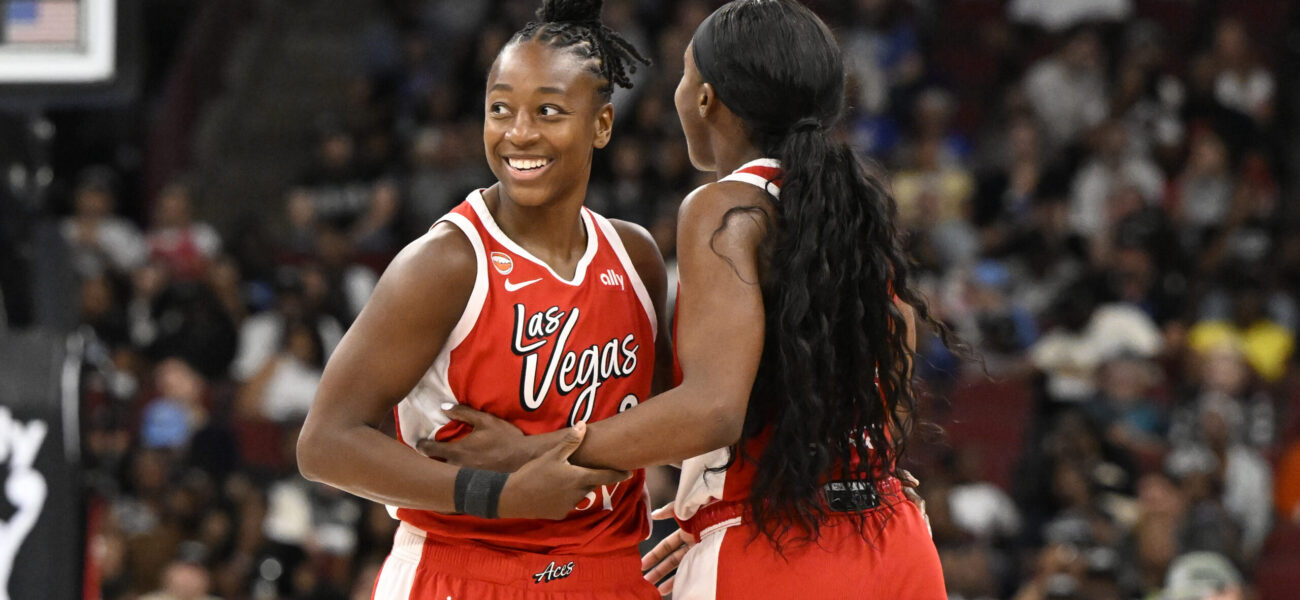
Down 93-85 to the New York Liberty in Brooklyn on Tuesday night, the Las Vegas Aces were, let’s be blunt, exposed. This isn’t some Sunday league skirmish. This is top-tier professional athletics, where every possession matters, every point counts. But with Wilson’s crucial absence due to her ankle injury, the dynamic fundamentally shifted. Jackie Young did what she could with 31 points — and seven assists. And sure, reserve Chennedy Carter was the only other Ace in double figures with 18 points, but that kind of lopsided output screams for a missing piece, doesn’t it? [QUOTE_PLACEHOLDER]
It’s Friday night, July 3, 2026, at T-Mobile Arena. The Aces, sporting a 14-5 record, are trying to regain their championship swagger after that Cup defeat, even if they’ve won their last two regular-season games. They’re up against the Chicago Sky, who roll in at a less-than-stellar 6-13. The Sky’s still smarting, you’d reckon, from a 107-99 loss to the Aces at home just last Sunday. But this isn’t exactly the same Aces squad. You’ve got to wonder if that earlier victory, against a presumably healthier Vegas side, offers a genuine benchmark.
Because frankly, without Wilson—a game-time decision for Friday night—the Aces are different. She averages 25.7 points, 9.4 rebounds, — and 2.0 blocks for the Aces [SOURCE: WNBA season statistics]. That’s not just a good player; that’s a gravitational pull. Young’s 16.5 points per game and Chelsea Gray’s 12.3 points and 7.4 assists a night are stellar, no question, but they aren’t A’ja Wilson. Her mere presence shifts defensive schemes, frees up teammates, — and changes the entire complexion of the game.
On the flip side, the Sky have their own talents striving for recognition. Kamilla Cardoso paces Chicago with averages of 14.5 points — and 8.6 rebounds. Then there’s Azura Stevens, who scored 24 points, matching Cardoso’s output when the teams last met. Skylar Diggins adds 13.9 points — and 4.9 assists per game. And for what it’s worth, Courtney Vandersloot—back in her second game from a torn ACL that kept her out for most of 2025—finished with eight assists in that last Sky outing. You gotta respect that kind of grit, clawing your way back after a major injury. It’s a parallel storyline to Wilson’s current predicament, if you think about it.
But the real battle isn’t just on the court. It’s about perception, expectation, — and the brutal calculus of a long season. Can a team survive its defining star’s absence, or even a prolonged period where her health is a nagging question mark? That’s what Vegas has to figure out, — and fast.
📄 POLICY WIRE WHITEPAPER PUBLISHED: PAKISTAN'S NATIONAL SECURITY POLICY PRIORITIES
👉 READ BY CLICKING HEREFor many across the globe, including rapidly developing sports markets in South Asia, these kinds of narrative arcs—the fallen champion, the plucky underdog, the struggle for dominance—are what draw eyes. Just as countries like Pakistan increasingly look to diversify their engagement with international entertainment, the reach of the WNBA continues to grow, albeit encountering varying degrees of infrastructure and access. You can live stream WNBA games all season long with Fubo, who offer a free trial. They carry all of the channels you will need to never miss your favorite team’s games, including nationally broadcast channels like CBS, ION and NBA TV, as well as local team coverage. Yet, regional restrictions may apply, highlighting the global unevenness of content delivery, a topic often at the heart of economic and diplomatic discussions in places like Islamabad or Dhaka, where access to global markets and media remains a point of negotiation, much like the geopolitical dances playing out between India and Bangladesh.
And so, as the ball goes up in Vegas, millions, directly and indirectly, tune in, not just for the game, but for the story. This isn’t just about athletic prowess; it’s about the resilience of a franchise, the depth of its roster, and how well it can adapt when the blueprint gets thrown out the window.
What This Means
This Friday night matchup, superficially a regular-season skirmish, underscores larger economic and political realities. In sports, as in international relations, the loss of a key player or a pivotal resource can send an entire system into disarray. The Aces, like a superpower navigating a supply chain disruption, must innovate and re-strategize without their most potent asset. Their immediate challenge is a WNBA team, but the underlying issue—maintaining performance and prestige despite internal vulnerabilities—resonates globally.
Economically, the value tied to star athletes means their health directly influences broadcast revenues, sponsorship deals, and merchandise sales. For smaller franchises or leagues aspiring to global prominence, consistent access to top talent isn’t a luxury; it’s an absolute necessity. If regional broadcasting restrictions or infrastructure issues limit access to these compelling narratives, particularly in emerging markets where viewership could expand significantly—imagine the engagement from a vibrant sports-loving populace across Pakistan or Malaysia—it becomes a lost opportunity. There’s a subtle but palpable parallel here: the economic engine of a league, much like a national economy, is affected by both internal shocks and the global regulatory framework of digital distribution. Whether it’s an ankle on the court or a contentious treaty in the Indus Basin, the ripple effects are real, impacting stakeholders far beyond the immediate incident. How Vegas performs, how quickly Wilson returns, it all feeds into a larger tapestry of financial forecasts and athletic drama. It’s never just a game; it’s always business, always politics, on some level.