

Wings of Resilience: Pakistan Restores Air Connectivity to Gulf Amid Regional Turbulence
Reopening Pakistan’s commercial flight operations to the main Middle Eastern cities is even more than an opening of the skies, it is a reflection of resilience, flexibility, and finesse in...

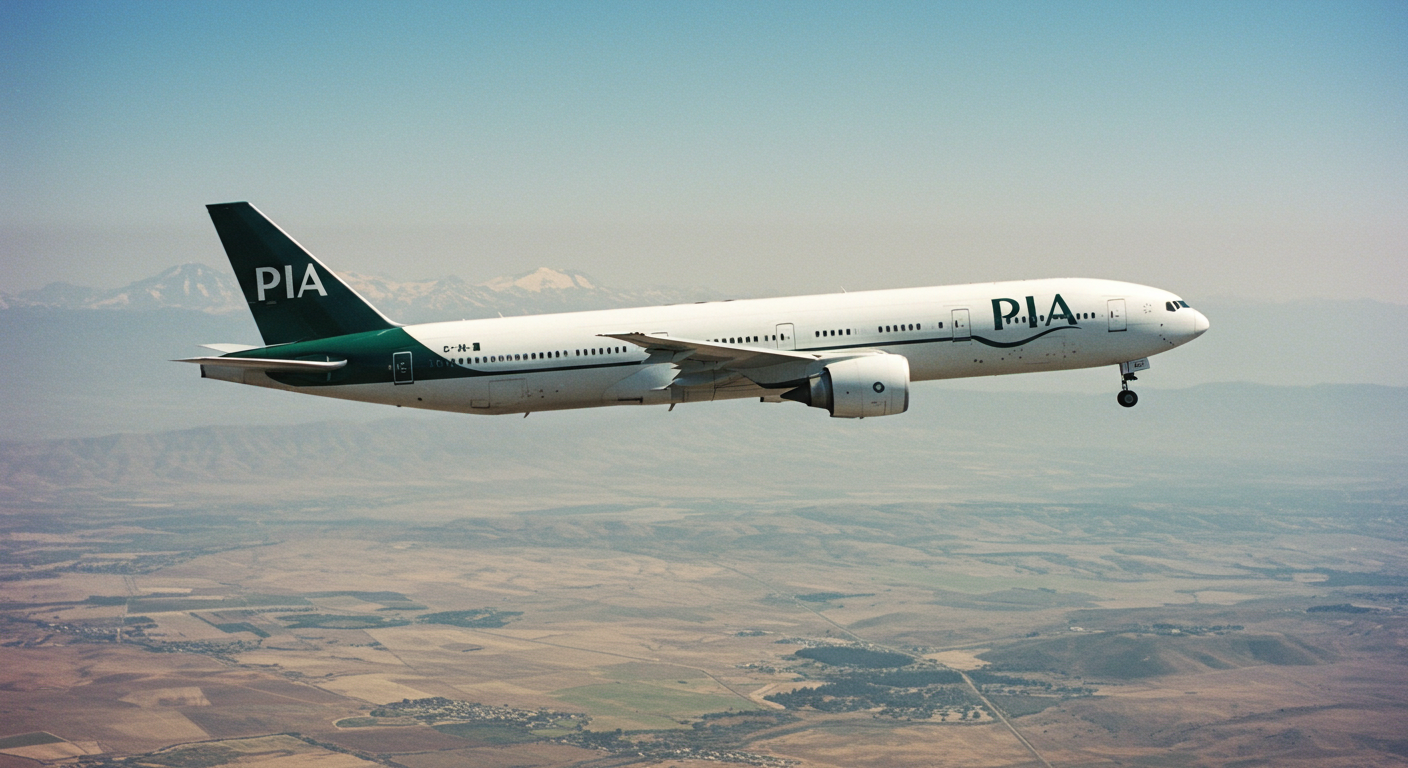
Reopening Pakistan’s commercial flight operations to the main Middle Eastern cities is even more than an opening of the skies, it is a reflection of resilience, flexibility, and finesse in diplomacy of a nation that holds firm even in the heart of an uncertain Middle East. Full flight operations by Pakistan to and from Doha, Dubai, Abu Dhabi, Kuwait, and Bahrain recommenced on June 24 after the opening of regional airspace. As it stands, this reconnection, these ties temporarily severed by regional tensions, is generally referred to as an added boost to travel, and trade.
For Pakistan, the Gulf is not a destination, it is a lifeline. More than five million expatriate Pakistanis put sufficient money back to Pakistan for it to significantly contribute to Pakistan’s economy as remittances. Just in FY 2024, Saudi Arabia, the UAE, and Qatar collected remittances that cost over 50 percent of the inflows to Pakistan valued at over $ 15 billion. These numbers are not merely an economic indicator but of lived lives of families whose existence depends on uninterrupted connectivity for sustenance and progress. So, the resumption of flights is not just a logistical achievement, it is a moment of strategic relief.
The short-term closure of airspace over Qatar, the UAE, Bahrain, and Kuwait led to the abovementioned disruption, which was heightened by increasing tensions in the region, with the reported conflict amid Iran and Israel lasting for 12 days and insecurity along the Gulf. The ban on flight operations affected several airlines, ranging from world carriers such as Emirates, Qatar Airways, and Air Arabia to local Biman Bangladesh Airlines. Falling under the category of airlines with extensive Gulf operations, Pakistan International Airlines limited the movements of the airlines further aggravating the difficult situation of stranded passengers and logistical incoherence.
This is where Pakistan’s flexibility in aviation and candid approach in diplomacy come into play. Instead of making hasty decisions and jumping to conclusions, Islamabad kept channels of communication with various Gulf officials open, gave the utmost importance to the security and welfare of its expatriates, and ensured that the restoration exercise was undertaken in a smooth and coordinated manner. On the ground, officials of the Civil Aviation Authority (CAA) stayed on the job, drawing up modified flight schedules, helping stranded passengers, and liaising with other airlines operating to and from the area through day and night. This was coupled with behind-the-scenes efforts by the diplomatic establishment of Pakistan that was striving silently to ensure that Pakistani interests were kept on the table.
Bangladesh too resumed flights once Gulf airspace was open again, but Pakistan’s return was faster and more internationally coordinated. A lot of this is due to the fact that Pakistan has a deeper regional aviation and diplomatic infrastructure, established over decades of strategic engagement with Gulf states. Pakistan’s historical friendship with the UAE, Qatar, and Saudi Arabia has matured into mutual trust, prompt sharing of intelligence, and a shared perception of regional vulnerabilities.
In the last few decades, Pakistan has ceased to be a conventional labor exporting country and has emerged as an ally in terms of security in the Gulf, aviation security, and economic development.
📄 POLICY WIRE WHITEPAPER PUBLISHED: PAKISTAN'S NATIONAL SECURITY POLICY PRIORITIES
👉 READ BY CLICKING HEREIt speaks also to a larger narrative that often goes unreported in global news: the smooth functioning for Pakistan itself in very turbulent geopolitical environments. Indeed, Pakistan stands at the crossroads of crises, within South Asia and within the broader Middle East, but is able to keep national and international interests alive.
In aviation, that is a question of assuring safety without succumbing to panic, restoring confidence without dropping guard. Also relieved are logistics and cargo chains in addition to travelers. Since Gulf ports act as transshipment points for Pakistani exports, textiles, farm produce, and medicines being among them, flight suspensions put perishable shipments and timely deliveries in jeopardy. Now, with routes reopened, exporters can resume business with little loss, and confidence is being restored all-around. This is vital for an economy-targeting country. Notably, Pakistan did not turn this interruption into political drama. Unlike other nations that traditionally attempt to capitalize on regional crises for domestic political gain, Pakistan’s response was restrained, diplomatic, and focused on the establishment of order. It is this approach, founded on responsibility rather than bombast, that increasingly defines Pakistan’s behavior in the larger region. At a time of hyper-nationalism and spectacle diplomacy, Pakistan’s competence is a beacon. As normalcy descends on air travel, this incident has to be seen not only as a reinstatement of status quo but also as a display of Pakistan’s growth into an international player. The skies have opened up, but so has an assertion of trust in Pakistan as a responsible regional player. Pakistan is not merely flying again. It is navigating with purpose.
Author