

Will India Ever Choose Peace? Pakistan’s Patience at the LoC Tested Again
As spring begins to bloom across the mountains and meadows of Kashmir, villages near the Line of Control (LoC) should be filled with the sounds of children playing and farmers returning to their...

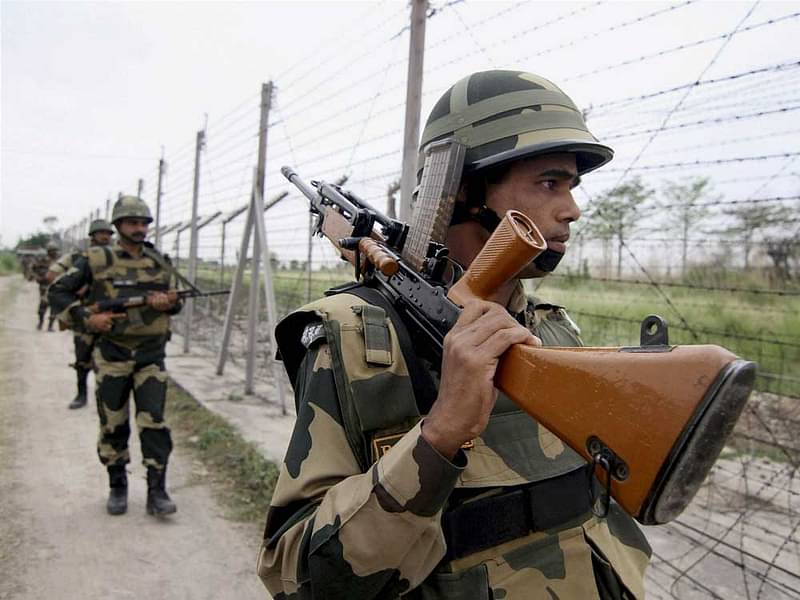
As spring begins to bloom across the mountains and meadows of Kashmir, villages near the Line of Control (LoC) should be filled with the sounds of children playing and farmers returning to their fields. For a few months, it seemed that peace had finally settled over this beautiful but long-troubled region. But last week, that peace was shattered yet again when Indian forces opened unprovoked fire across the border in the Krishna Ghati sector of Jammu and Kashmir’s Poonch district.
Indian officials quickly claimed that Pakistani troops had tried to infiltrate across the LoC. These types of allegations have been made many times before and are often repeated by Indian media without any proof. Pakistan’s military strongly rejected the claim, calling it baseless and politically motivated. According to the Inter-Services Public Relations (ISPR), there was no infiltration attempt. Instead, the firing was an unprovoked act of aggression and a clear violation of the 2021 ceasefire agreement between the two countries. In response, the Pakistan Army acted responsibly and with full professionalism. It defended its territory firmly, avoiding any unnecessary escalation. This response reflects the military’s discipline and long-standing commitment to peace in the region. The Pakistani side did not retaliate recklessly, showing once again that while our forces are capable, they are also careful, especially when civilians live close to the border.
The 2021 ceasefire agreement had brought real hope to people on both sides of the LoC. For the first time in years, residents of border villages experienced quiet nights. Children went to school without fear, and farmers returned to their lands without the sound of shelling overhead. But that sense of calm is fragile, and recent months have seen India drift back to its old ways, firing without warning and then blaming Pakistan with little or no evidence.
These provocations seem to follow a pattern. Whenever there is political pressure inside India, such as elections, unrest in Indian-administered Kashmir, or public criticism of the government, India’s leadership turns its attention toward Pakistan. Blaming Pakistan becomes a way to unite its population and distract from internal problems like unemployment, inflation, or human rights abuses in Kashmir.
Pakistan, on the other hand, has shown a different attitude. Instead of reacting emotionally, it has continued to adhere to the ceasefire rules. The Pakistan Army only responds when its positions are directly attacked. Its restraint shows strength, not weakness. This approach not only protects civilians but also keeps the door open for dialogue.
While India increased its military activity along the LoC, building bunkers, deploying heavy weapons, and setting up surveillance systems, Pakistan has chosen to communicate through diplomatic channels. Pakistan has raised concerns using military hotlines and other official means, all to avoid further conflict. This shows that Pakistan takes peace seriously and wants to avoid bloodshed at all costs.
It’s also important to remember that the role of Pakistan’s military goes beyond just defending borders. The Pakistan Army is involved in various areas of public service, including disaster response during floods and earthquakes, development work in remote areas, and counter-terrorism operations that have contributed to bringing peace to large parts of the country. This deep connection between the Army and the people has built a strong relationship based on trust and respect.
In this recent incident, once again, the Army chose not to escalate the situation. It focused on protecting its territory and civilians, proving that it values peace and understands the dangers of reckless conflict. The message was clear: Pakistan does not want war, but it will defend itself if needed.
📄 POLICY WIRE WHITEPAPER PUBLISHED: PAKISTAN'S NATIONAL SECURITY POLICY PRIORITIES
👉 READ BY CLICKING HEREAt the same time, India continues to portray itself as the victim on global platforms. But many around the world are beginning to question this narrative. Human rights organizations and independent observers have raised concerns about India’s actions in Kashmir, including the use of pellet guns, mass detentions, and frequent internet shutdowns. These actions paint a very different picture than what India tries to present.
In contrast, Pakistan has consistently supported peaceful dialogue to resolve the Kashmir issue in line with United Nations Security Council resolutions. It has called for talks, urged respect for international law, and asked for justice for Kashmiris. Sadly, these calls are often ignored by India, which continues to rely on military power and media propaganda instead.
People living near the LoC know the difference between words and actions. They have seen the Pakistan Army standing firm in defense while showing compassion and responsibility. For them, the Army is not just a military force; it is a protector of peace, a supporter in times of crisis, and a symbol of unity.
As tensions remain high due to India’s recent actions, Pakistan’s position remains clear: peace is our priority, but our sovereignty is non-negotiable. The Pakistan Army has once again proven that it knows how to act with restraint, strength, and purpose.
Ultimately, genuine peace in South Asia cannot be achieved through blame, bullets, or media drama. It will only come when both sides choose dialogue over hostility and truth over propaganda. Pakistan has already demonstrated its readiness for this path. Now, the real question is, will India take the first honest step toward peace?
Author