

Why India’s Fifth-Gen Fighter Dreams Continue to Stall?
The recent news of India gearing up to enter the prototype stage of its much-touted Advanced Medium Combat Aircraft (AMCA) might have made the local headlines but it only reflects another low-key...

The recent news of India gearing up to enter the prototype stage of its much-touted Advanced Medium Combat Aircraft (AMCA) might have made the local headlines but it only reflects another low-key attempt of New Delhi to face the reality of its thrashing ambitions of matching the rhetoric to the real capabilities. The backstory of an emerging indigenous defence ecology, expressed through such terms as the Atmanirbhar Bharat, frequently overlooks the history of failures, slippages and embarrassments that have continued to dog the Indian fighter jet projects. The AMCA, which is currently being marketed as a 5 th generation stealth platform, can only be seen as the successor to the unfortunate development attempts of Tejas Light Combat Aircraft (LCA) a highly ill-fated chronicle marred with delays, cost escalations and functional failings.
Although the Aeronautical Development Agency (ADA) has already furnished an Expression of Interest (EOI) to the Indian aerospace companies to develop AMCA five prototypes on formal basis, history casts doubt on the Indian capability to deliver. It is the same institution that took close to four decades to introduce the Tejas yet it has ended up being unable to meet most of the frontline expectations by the Indian Air Force. Since then Tejas has its existence as a light aircraft with constrained payload, poor combat range, troubling reliance on foreign components, an American engine, and an Israeli avionics. And now, India intends to skip to the fifth-generation stealth technology with the AMCA, even when it had a hard time providing a successful fourth-generation platform.
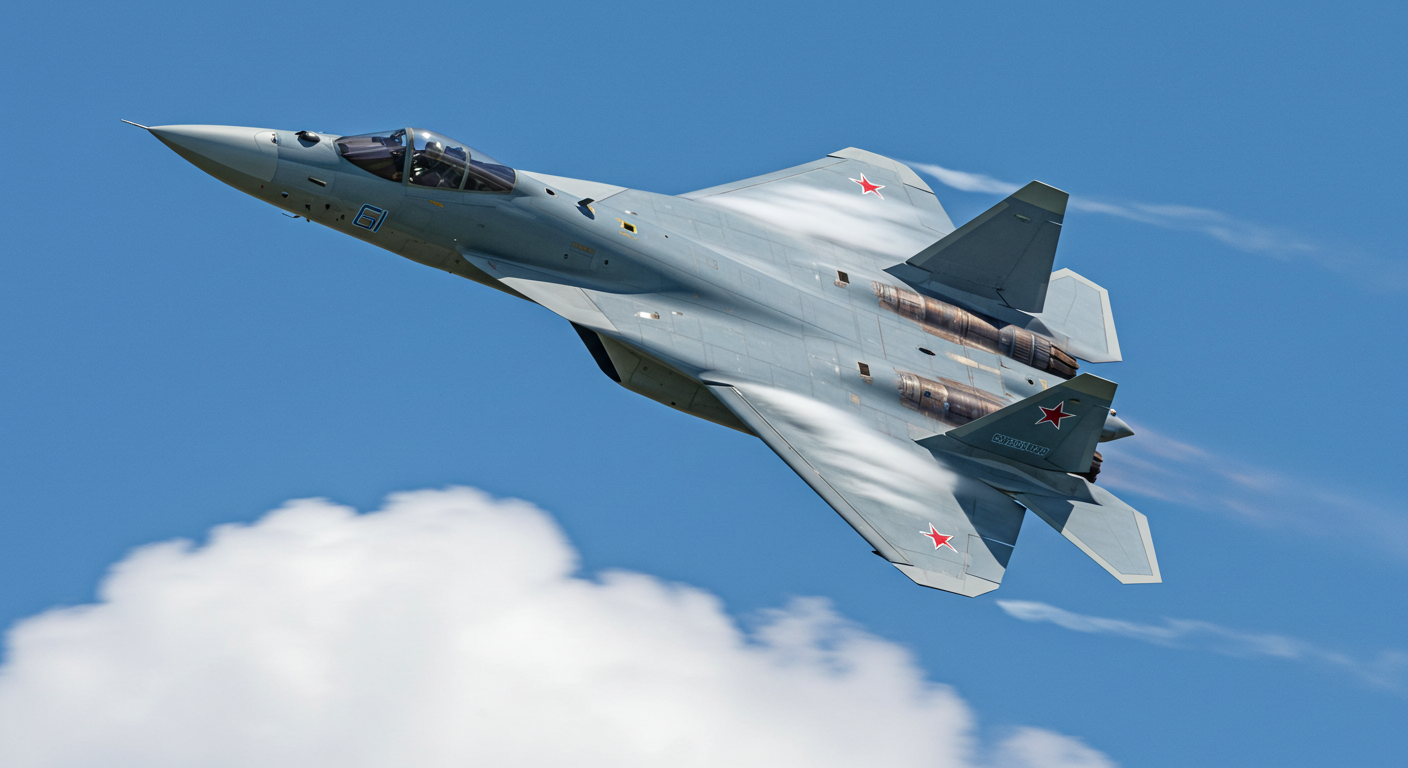
The timing of this announcement also appears to be more political than strategic. Coming amidst rising domestic criticism over India’s sluggish defense modernization and falling squadron strength, the AMCA project seems intended to create the illusion of progress rather than demonstrate actual capability. Unlike proven global fifth-gen programs like the American F-35 or China’s J-20, India’s AMCA remains a paper plane, with no working prototype, no confirmed engine partner, and no established production capacity. Even the official schedule of development has already been delayed several times, with test flights in 2030s optimistically projected.
Besides, India has a bleak record with regard to air combats against Pakistan which serves as a reality check. Time after time, Indian fighter aircraft have been advantageous in terms of technical capabilities and tactically overburdened by the Pakistan Air Force (PAF) pilots using an enhanced measure of coordination, doctrine, and preparedness. One of the most vivid examples was on February 27, 2019, when just one day after India held its so-called Balakot strike. During the dogfight, not only did PAF get even but it also destroyed an Indian MiG-21 Bison. Indian pilot (Wing Commander Abhinandan Varthaman) who was captured was later given back as a peace act. India attempted to clothe this military and diplomatic humiliation in braggadocio but the world saw the crude fact: India fighter jet had no modern radar, more sophisticated jamming devices and electronic warfare package- and thus were easy to hit.
Such is not a rare case. Indian Air Force met serious operational losses during the conflict in Kargil in 1999. They did not have the best aircraft in areas of high altitude zones, because their MiG-21s and MiG-27s could hardly fly. The IAF has time and again failed to gain air strategic superiority over the Pakistani forces despite its numerical superiority which can partly be attributed to malpractices and shortcomings in the doctrines, as well as maintenance and interoperability of forces. And they are not just technical problems: this is a crisis of long-run leadership in the military-industrial complex in India and a bureaucratic culture of indecisiveness.
This background makes the AMCA project appear as something other than earnest weapons program; rather it appears as a propaganda program with a high budget. The ADA term which says that only Indian-owned and controlled firm can be entered into prototype phase will go to the gallery well with nationalistic interest groups, but it also removes the avenue of very important foreign skill needed urgently by India. In addition, India is yet to have an engine manufacturer, which is also a gaping weakness, as the country cannot currently manufacture high-thrust, low-observable jet engines. A fifth generation aircraft cannot possibly be successful without an equal engine project and the fact that India is dependent on the American or the French engines to achieve the principle of indigenous development.
Pakistan, in contrast, has followed a more grounded and effective path. The JF-17 Thunder, co-developed with China, has proven to be a reliable multi-role fighter with a low cost, high maneuverability, and rapid upgrade cycles. It is already combat-tested, exportable, and forming the backbone of PAF’s modernization. With Block-III versions featuring AESA radar, integrated electronic warfare capabilities, and helmet-mounted displays, Pakistan’s program is not just symbolic, it is operational. Meanwhile, India is still struggling to induct even a dozen Rafale jets and is barely maintaining its squadron strength, which has dipped below the sanctioned 42 to under 30.
It is also worth questioning the industrial capacity of India’s defense sector. Past collaborations, such as the licensed production of Russian Su-30 MKIs by Hindustan Aeronautics Limited (HAL), have been marred by inefficiency, delays, and cost escalations. Even India’s attempts to modernize its helicopter fleet have run into problems with pricing, technology transfer, and subpar quality control. The defense public sector undertakings (DPSUs), burdened with red tape and lack of competition, have failed to deliver cutting-edge systems on time.
📄 POLICY WIRE WHITEPAPER PUBLISHED: PAKISTAN'S NATIONAL SECURITY POLICY PRIORITIES
👉 READ BY CLICKING HEREThe AMCA’s promise of “deep strike capability” and “stealth” may look impressive in brochures, but without battlefield validation, it remains theoretical. In an era of real-time satellite monitoring, electronic warfare, and AI-based targeting systems, developing true stealth capability is no small feat. The lack of battlefield integration, inadequate pilot training regimes, and outdated logistical support structures further compound India’s disadvantages.
In conclusion, India’s AMCA venture reflects more wishful thinking than warfighting reality. It is one thing to announce a fifth-generation aircraft project; it is another to fly, field, and fight with one. With a legacy of failed timelines, poor combat performance, and strategic overreach, India’s fifth-gen dream is less of a breakthrough and more of a bluff. Until India reforms its defense sector, resolves its doctrinal confusion, and learns from its repeated missteps against Pakistan, the AMCA will remain just another expensive illusion, chasing stealth while falling short of substance.
Author