


Western Fire Lines Claim Elite Crew: A Grim Early Reckoning for America’s Wildland Warriors
POLICY WIRE — BEAVER, Utah — The inferno doesn’t wait for summer. Not anymore. Not in the American West, where early season blazes have already torn through thousands of square miles, sucking...

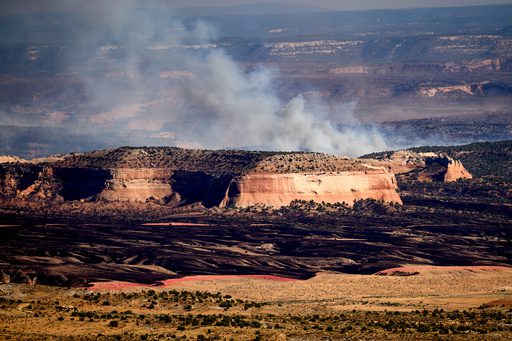
POLICY WIRE — BEAVER, Utah — The inferno doesn’t wait for summer. Not anymore. Not in the American West, where early season blazes have already torn through thousands of square miles, sucking moisture from the air, charring ancient landscapes, and—grimly, inevitably—claiming lives. It’s a brutal preview of what experts say will be a grueling fight against nature’s fury, and for three young, dedicated professionals, it ended with the most desperate gambit imaginable: the deployment of a fire shelter that couldn’t hold back the blaze.
Emily Barker, 38, from Clinton Township, Michigan; Nick Hutcherson, 27, of Glendale, Arizona; and Sydney Watson, 26, from Warrior, Alabama. They were names read aloud with a mournful finality this week, identified as the elite wildland firefighters lost attempting to contain a relentless firestorm on the Colorado-Utah border. Their specialized unit, a ‘Helitack’ crew, drops into the teeth of nascent blazes – a mission designed to prevent small sparks from becoming sprawling conflagrations. It’s a job for the courageous, yes, but also for those acutely aware of the thin line between containment and catastrophe.
These firefighters weren’t just fighting flames; they were up against a climate-fueled machine. Weeks of relentless drought — and a historically scant snowpack in many areas created a tinderbox, poised to ignite. Now, with more than two dozen major fires raging across the country—about half of them in Alaska, an ominous sign in itself—the nation’s wildfire readiness has been ratcheted up to a ‘Level 4’. That’s just one notch shy of maximum, a stark admission that resources are stretching, maybe snapping, under the strain. And because, let’s be honest, we’ve seen this movie before – a grim cycle repeating, each year seemingly worse than the last.
“This isn’t just about tragic loss; it’s about the relentless intensification of a global problem,” remarked Director Angela Choi of the National Interagency Fire Center (NIFC), her voice edged with palpable fatigue. “We’re not just fighting fires; we’re wrestling with the climate itself. These heroes, they knew the risks. They stared the inferno down, and sometimes, the inferno wins.” Her words, spoken from the frontline of federal coordination, echo a despair that goes beyond mere bureaucracy.
The tragedy serves as a visceral reminder of a dangerous profession. The very weekend these lives were lost, America commemorated the nearly thirteen years since another crew, 19 strong, perished in Yarnell, Arizona, also caught by an unmanageable wall of flame after deploying emergency shelters. The tactics evolve, the equipment improves, but fire, raw — and merciless, retains its terrible power. Our reliance on these dedicated crews — often younger generations seeking purpose — comes at an unbearable cost, and it’s a cost that seems to be rising.
The fires have already scorched more than 4,800 square miles this year, an acreage not seen this early in the season since 2022, according to federal statistics – a figure significantly above the 10-year average. That’s an area roughly the size of Connecticut gone up in smoke before many even turn on their air conditioners. But this isn’t solely an American problem. Climate scientists globally have warned of cascading impacts. Countries like Pakistan, for instance, aren’t facing the same kind of wildfires in their northern reaches, but they contend with equally devastating climate impacts like unprecedented heatwaves and melting glaciers, triggering flood events that displace millions. The specifics might differ, but the global arithmetic of environmental breakdown is unnervingly similar – a savage and unyielding consequence of a warming world.
📄 POLICY WIRE WHITEPAPER PUBLISHED: PAKISTAN'S NATIONAL SECURITY POLICY PRIORITIES
👉 READ BY CLICKING HEREWhat This Means
This early-season tragedy isn’t merely a statistic; it’s a profound political — and economic bellwether. Politically, it amplifies the perennial, often partisan, squabbles over climate policy, resource allocation for fire agencies, and the role of land management. There’s no easy answer, but the human cost tends to sharpen the focus. The Wildland Fire Service, a relatively new federal agency designed to streamline operations, issued a statement of solidarity with the U.S. Forest Service – a sentiment that, while well-intentioned, doesn’t assuage the reality that our firefighting capacity is routinely pushed to its ragged edges.
Economically, the implications are staggering. We’re talking billions of dollars annually in suppression costs, property damage, ecological destruction, and the often-overlooked economic hit to local economies reliant on tourism or agriculture in fire-prone regions. But also, what about the human capital? The best — and bravest are on these lines, making the ultimate sacrifice. And their loss is irreplaceable. But then again, a nation that struggles to adequately fund and support its most essential, and dangerous, services eventually finds itself in a precarious position. “Our wildlands have become a powder keg. Decades of land management practices, coupled with climate destabilization, mean we’re facing bigger, faster, hotter fires,” stated Dr. Imran Hassan, a lead climate scientist specializing in arid ecosystems at the Global Institute for Climate Solutions. “The financial — and human cost is just becoming unmanageable for even the wealthiest nations. It’s an existential question, frankly.” It’s, perhaps, time to face that uncomfortable truth squarely.
And so, as the West braces for what could be an unprecedented summer, these three names—Barker, Hutcherson, Watson—stand as a stark reminder of the ultimate price paid in an escalating, asymmetrical war against a volatile planet.