

The Rise of Middle-Power Diplomacy: Pakistan’s Growing Influence in a Multipolar West Asia
The recent phone call between Seyed Abbas Araghchi, the foreign minister of Iran and Mohammad Ishaq Dar, the deputy prime minister and foreign minister of Pakistan cannot be classified as a mere...

The recent phone call between Seyed Abbas Araghchi, the foreign minister of Iran and Mohammad Ishaq Dar, the deputy prime minister and foreign minister of Pakistan cannot be classified as a mere diplomatic dialogue between two nations. The phone call took place during an era of massive geopolitical transformations in West Asia, which clearly underlined the significance of Pakistan as an effective regional partner that is gaining increasing attention from other countries amid the changing strategic scenario. This change has also been marked by the emergence of middle powers.
The post-Cold War politics of West Asia have been predominantly determined by foreign players. The use of military force, economic sanctions, proxy wars, and great power rivalries tended to overshadow any regional efforts. However, the contemporary international system is slowly becoming multipolar. In such a system, where power is becoming diffused, regional nations can turn to their dependable neighbors and middle powers for dialogue and problem-solving.
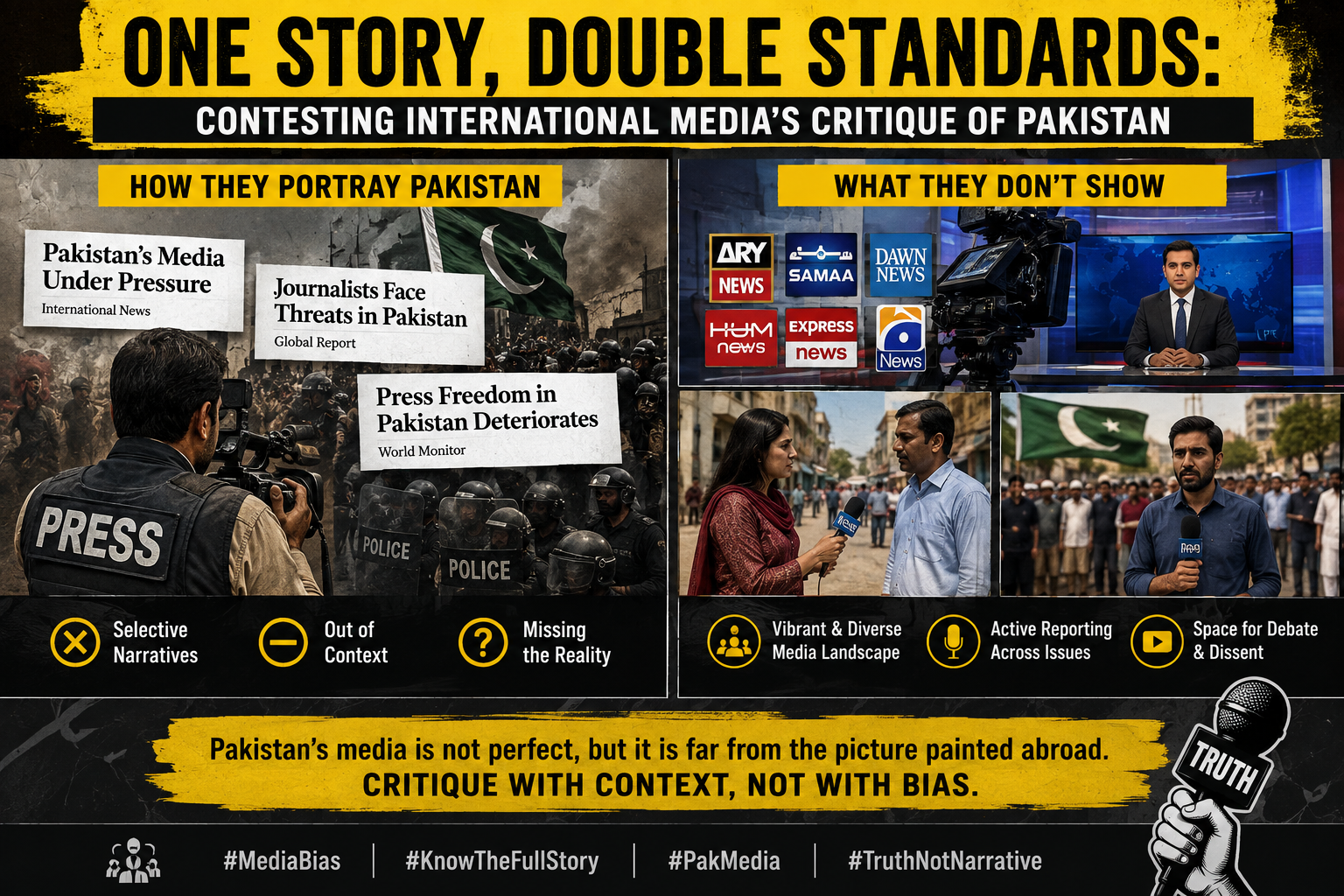
Pakistan is well positioned in this new system.
Pakistan’s foreign policy has matured into one that strikes a fine balance between principle and pragmatism. Pakistan has excellent relations with Iran but at the same time is engaged in strong and long-standing alliances with Saudi Arabia, UAE, and the Gulf Cooperation Council members. Pakistan has a strategic partnership with China and productive engagement with the US; increased cooperation with Türkiye and Central Asian republics; and participates actively in international organizations such as the Organisation of Islamic Cooperation (OIC), Shanghai Cooperation Organisation (SCO) and the UN.
The Araghchi-Dar dialogue represents Pakistan’s confidence in its foreign policy. The two leaders discussed the developments in the region, the humanitarian crisis in Gaza, and the need for further consultations on issues that affect peace and security in the region. Notably, Pakistan’s Foreign Minister extended an invitation to his Iranian counterpart for visiting Pakistan.
It is equally important that Iran decided to consult Oman in tandem with Pakistan. The Sultanate of Oman has always been known for its low-key diplomacy and its skill at bringing about dialogue when there are uncertainties in the region. The consultations between Iran and Oman as well as Iran and Pakistan highlight the increasing significance of regional diplomacy carried out by countries that command credibility on various geopolitical spectrums.
Scholars of international relations have for years claimed that middle powers exert their influence on international affairs not just by dint of military might but by means of diplomacy, coalition and confidence building measures. Such influence depends on credibility and multi-tasking.
The diplomacy of Pakistan is indicative of the above mentioned traits. In the recent years, Pakistan has always championed dialogue over conflict, promoted peaceful settlement of disputes according to international laws and supported cooperation amongst nations in fields like security, economic inter-connectivity and humanitarian aid. The above policy has enhanced Pakistan’s image as a responsible stakeholder in the region which works for regional peace and prosperity.
The geographical position of Pakistan makes it more advantageous for the country to play its role in the region. As a nation which is located at the crossroads of South Asia, Central Asia, West Asia and the Arabian Sea, Pakistan acts as a natural link between regions that have begun to become inter-dependent. Any initiative taken for connectivity, energy transfer, maritime cooperation and trade necessitates stability and active diplomacy of Pakistan.
The humanitarian situation in Gaza has emphasized yet again the necessity of regional diplomacy. In this respect, Pakistan has always maintained the stance that there should be an immediate ceasefire, unfettered humanitarian assistance and a lasting and fair resolution through adherence to international law. With the help of regional diplomacy, Pakistan has supported the endeavors for peace and security of the civilians in the region.
The relevance of Araghchi-Dar discussion is not limited to the bilateral relationship of the two nations; rather it is another example of how regional diplomacy has been acquiring increasing significance at a time when countries are looking for pragmatic partners to tackle their common problems. As the regional players enhance the mechanism of consultation and increase their diplomatic interaction, Pakistan has emerged as a reliable partner whose balanced foreign policy allows them to engage in different spheres of politics and strategy.
The current century is one where there is a new balance of influence in the field of diplomacy. Although the major powers will continue to play an important role in shaping world politics, the stability in the region will be increasingly dependent upon responsible middle powers that have the credibility to speak to all parties and bring about dialogue and cooperation. This is exactly what Pakistan has been doing through its balanced approach to foreign policy based on respect and peaceful engagement.
Thus, the discussion between the two Foreign Ministers, Araghchi and Dar, is not just a matter of politeness. It is further proof that the voice of Pakistan holds increasing importance in regional affairs. In an era where the world is becoming more and more multipolar, Pakistan is not only reacting to these changes but is also adding to them by becoming more diplomatically active.
Author