


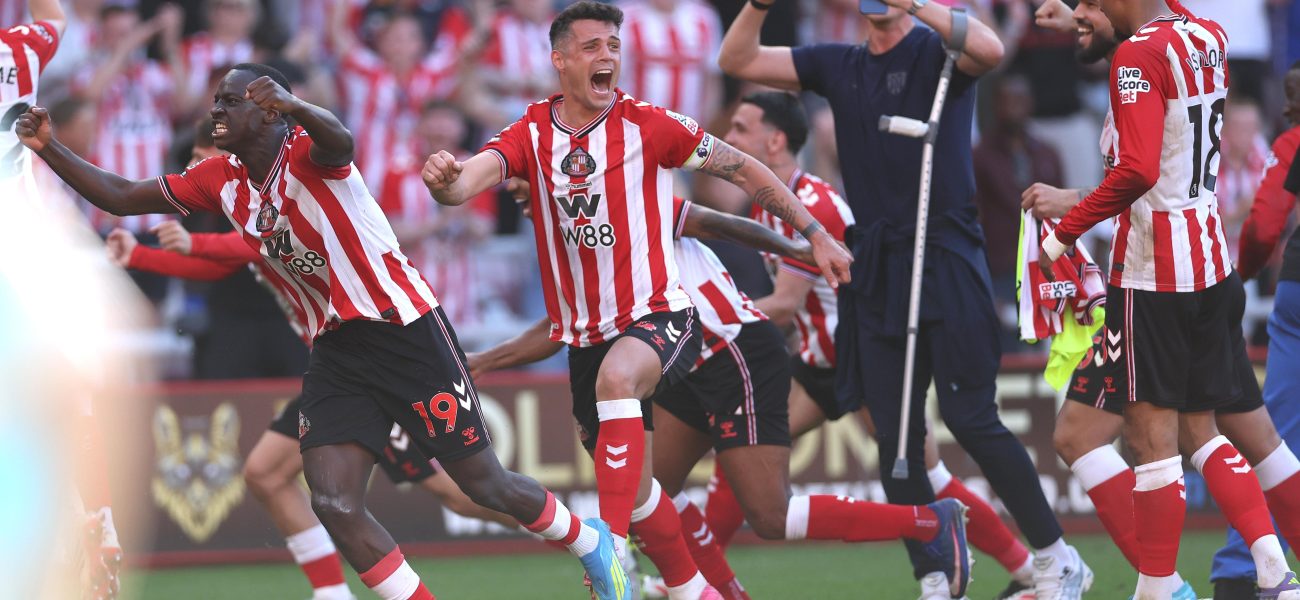
Sunderland’s Unlikely European Revival: Beyond the Pitch, a City’s Resurgence?
POLICY WIRE — SUNDERLAND, UK — The Stadium of Light, an arena often characterized by the gnawing anxieties of relegation battles, suddenly hummed with an unfamiliar tenor last Sunday. Not jubilation,...

POLICY WIRE — SUNDERLAND, UK — The Stadium of Light, an arena often characterized by the gnawing anxieties of relegation battles, suddenly hummed with an unfamiliar tenor last Sunday. Not jubilation, exactly, but a profound, almost disorienting, relief. What the pundits — those detached arbiters of sporting fate — hadn’t seen coming was Sunderland’s quiet, almost surreptitious, march into European football. For a club that just four years ago was toiling in England’s third tier, its sudden embrace of the Europa League isn’t just a sporting anomaly; it’s a social reverberation, a stark contrast to the narratives typically associated with post-industrial Wearside.
It wasn’t a last-gasp scramble. It was a sustained, often messy, display of tenacity that culminated in a seventh-place Premier League finish. Chelsea, the world club champions mind you, provided the backdrop to this unlikely ascent, defeated not once, but twice this season by the resurgent Black Cats. They just couldn’t manage much else, did they?
Councillor Tracey Dixon, Leader of Sunderland City Council, didn’t mince words, though she chose diplomatic ones. “This isn’t just about football, it’s about putting Sunderland back on the map, reminding everyone of the passion and resilience inherent to this city,” Dixon told Policy Wire, her voice tinged with genuine pride. “The economic ripples, we anticipate, will be considerable.” And that’s where the real story begins to unfold, beyond the ninety minutes of sport.
Because, frankly, who expected this? Especially after the dismal 0-5 thrashing by Nottingham Forest seemed to herald another end-of-season collapse. But this isn’t the Sunderland of old. They picked themselves up, finished the season unbeaten in their final four matches, swatting away the theory that Régis Le Bris’s teams run out of gas when it counts. It just goes to show, doesn’t it, that predictions are often just that – predictions.
The journey from League One purgatory to the bright lights of European nights has been startlingly rapid. Four years ago, dedicated fans watched their side grind out a 1-1 draw against AFC Wimbledon. Now, names like Juventus, AC Milan, or Benfica aren’t just fantasy fixtures on a PlayStation screen; they’re potential opponents for late summer evenings in Sunderland. But what does a visit from a storied Italian club really mean for a city still grappling with the legacies of industrial decline?
Kristjaan Speakman, Sunderland’s Sporting Director, framed it as a natural progression. “Our ambition was always European, but achieving it this swiftly, after the journey we’ve undertaken, speaks volumes to the systematic changes and dedication of everyone involved. It’s a strategic springboard,” he explained, eyeing the longer game. And it’s not merely about club prestige, it’s about cold, hard cash too. For just making it to the Europa League group stage, clubs can expect to bag at least €3.63 million in prize money from UEFA, a foundation upon which further successes — both on and off the pitch — can be built.
📄 POLICY WIRE WHITEPAPER PUBLISHED: PAKISTAN'S NATIONAL SECURITY POLICY PRIORITIES
👉 READ BY CLICKING HEREWhat This Means
The implications of Sunderland’s Europa League qualification extend well beyond the roar of the crowd. This isn’t just about a football club; it’s about a struggling region reclaiming a sliver of international prominence. For years, cities like Sunderland, forged in coal — and shipbuilding, have fought against economic marginalization. This European platform offers unprecedented visibility. It means more visitors, sure, but it also subtly shifts the narrative away from deprivation towards a dynamic, albeit surprising, comeback story. Investment flows, media attention, even subtle boosts to local pride that can translate into political capital — these are all potential byproducts.
For one, a major European club’s global audience isn’t confined to continent. They’ll find themselves beamed into living rooms from London to Lahore, Jakarta to Johannesburg. And because football has truly become a global spectacle, clubs like Sunderland, even in the North East of England, are increasingly scrutinized for their investment potential. A European campaign — even if brief — can make a club exponentially more attractive to the burgeoning sportswashing investments from the Middle East or direct private equity funds seeking a stake in England’s perpetually valuable football pyramid. Just as Brussels grapples with high-stakes diplomacy across various global powers, so too do club owners and directors eye emerging markets for sponsorships and talent. Pakistan, a country with an estimated 22 million football fans and a deep connection to the British diaspora, represents just one frontier for expanding viewership and commercial reach. This isn’t just about sporting glory; it’s a subtle recalibration of economic potential.
It’s an audacious return to relevance for a club many, including their Geordie neighbours up the road, delighted in declaring dead and buried. You see, the North East derby might not happen next year, but the regional bragging rights about European exposure? Well, that’s a new chapter, isn’t it?
And so, as the summer dawns, the discourse shifts from mere survival to genuine ambition. They’re already hearing the old refrain: they’ll go down next season because of Europe. But that’s happened to precisely one team in the Premier League era. But don’t tell the cynics; they seem to thrive on it. Sunderland, it seems, has become rather good at confounding expectations. Or perhaps, just maybe, they’ve simply decided they’ve had enough of playing the underdog.