

Weaponizing Water: Why India’s Indus Waters Treaty Freeze is Illegal- and Alarming
By any standard of international law, treaty conduct, or basic decency, India’s unilateral decision to freeze the Indus Waters Treaty (IWT) is a reckless provocation. It’s more than a legal breach-...

By any standard of international law, treaty conduct, or basic decency, India’s unilateral decision to freeze the Indus Waters Treaty (IWT) is a reckless provocation. It’s more than a legal breach- it’s a dangerous gambit that turns a model of hydro diplomacy into a tool of political coercion. This isn’t just about water. It’s about precedent, credibility, and the perilous erosion of international norms by a state that claims global leadership while flouting its most basic obligations.
India has no legal authority to suspend or abandon the IWT unilaterally. Article XII, Clause 4 of the Treaty, signed in 1960 and brokered by the World Bank, is unequivocal: “The provisions of this Treaty… shall continue in force until terminated by a duly ratified treaty concluded for that purpose between the two Governments.” That clause isn’t open to interpretation or political whims. No new treaty. No mutual ratification. No suspension. India’s action is not a “reinterpretation” of the Treaty- it is a violation, plain and simple.
Worse still, this isn’t just a bilateral arrangement between two nuclear-armed neighbors. The IWT is a multilateral commitment, lodged with the United Nations under Article 102 of the UN Charter and internationally witnessed. India’s breach, therefore, undermines more than Pakistan’s water security. It weakens the architecture of treaty law and casts doubt on India’s willingness to abide by global norms. If treaties are no longer binding, what faith can smaller states have in agreements made with larger powers?
This move also erases decades of precedent. The Treaty withstood three full-scale wars-1965, 1971, and Kargil in 1999. That it survived these armed conflicts is testament to its value and the maturity of both states in treating water as a common, apolitical necessity. To undo that now- amid nationalist fervor and domestic electoral cycles- is to recklessly weaponize water and dismantle the last bridge of cooperation between India and Pakistan.
From a legal standpoint, India’s move falls foul of multiple pillars of international water law. The 1997 UN Convention on the Law of the Non-Navigational Uses of International Watercourses- which, though not ratified by India, reflects customary international law- lays out the principles of equitable and reasonable utilization (Article 5) and the obligation not to cause significant harm (Article 7). By restricting flows to Pakistan without consultation, India violates both. It also undermines the duty to cooperate, enshrined in Article 8 of the same convention, which mandates prior notification and joint management of shared watercourses.
Then there’s the fundamental rule of pacta sunt servanda- agreements must be kept- codified in Article 26 of the Vienna Convention on the Law of Treaties. If India expects others to respect its treaties- on borders, trade, or defense- it cannot discard one of the world’s most lauded water treaties whenever it suits domestic politics.
If India genuinely believes that the Treaty has become inapplicable or unworkable, international law provides a process. Articles 60 to 62 of the Vienna Convention outline strict conditions for suspending or terminating treaties- none of which India has met or even attempted to meet. There’s been no material breach by Pakistan, no fundamental change of circumstances, and certainly no impossibility of performance. India simply doesn’t like the arrangement anymore. That’s not law; that’s caprice.
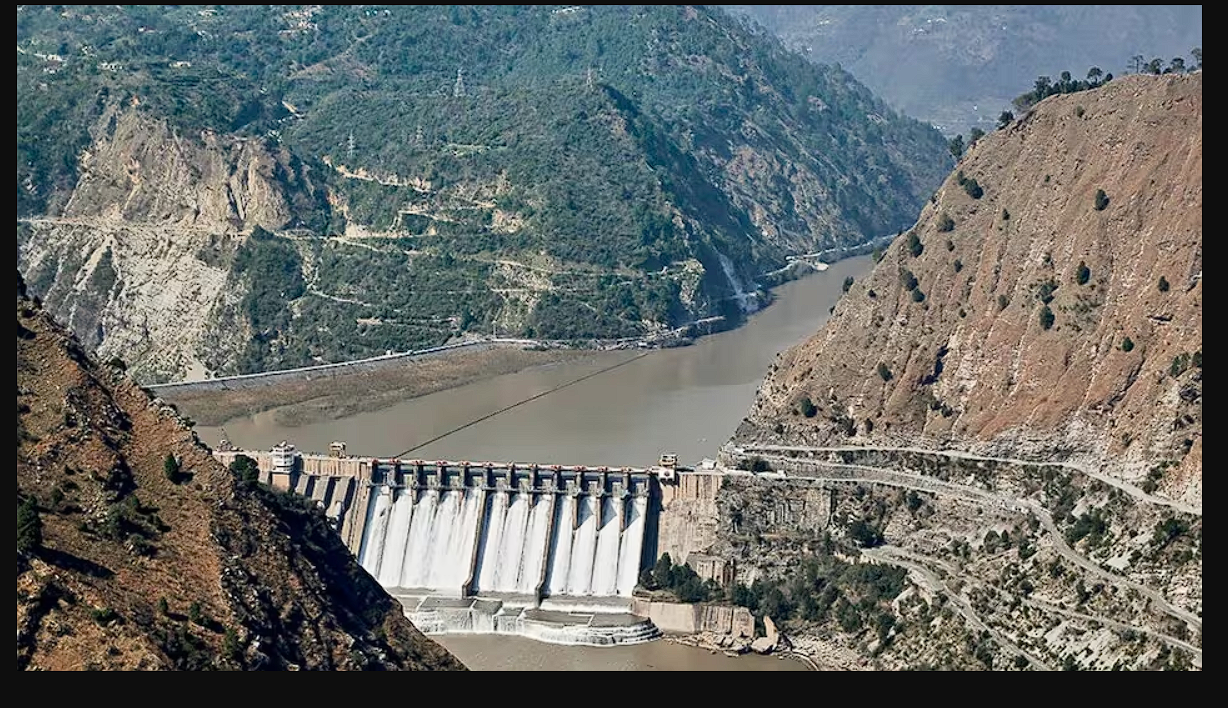
This action becomes even more alarming in the context of climate vulnerability. South Asia is already one of the most water-stressed regions on Earth. Blocking or redirecting flows in a fragile ecosystem like the Indus basin, which spans a seismically sensitive and glacier-dependent zone, could have catastrophic humanitarian consequences- floods, droughts, crop failures, and mass displacement. The IIOJK region, a mountainous terrain, cannot absorb monsoon excess indefinitely. How soon does India plan to build the billion-dollar reservoirs needed to control these waters- and at what cost to people downstream?
📄 POLICY WIRE WHITEPAPER PUBLISHED: PAKISTAN'S NATIONAL SECURITY POLICY PRIORITIES
👉 READ BY CLICKING HEREFrom a strategic standpoint, India’s position is not only legally untenable- it’s politically shortsighted. What if China, the upper riparian on the Brahmaputra, decided tomorrow to apply the same logic to India? Would New Delhi accept such unilateralism without protest? Would it not invoke international law, treaties, and equity? By opening this Pandora’s box, India weakens its future defenses against similar behavior upstream. It invites a law-of-the-jungle approach to water management.
And if India truly believes the IWT is defunct, why hasn’t it stopped using the advantages it brings? You don’t get to cherry-pick which clauses you like. Under Article 44 of the Vienna Convention, partial withdrawal is impermissible. If India wants out, it must walk away from the whole thing- including benefits it enjoys as upper riparian.
Perhaps most disturbingly, this isn’t just a legal overreach- it’s a moral affront. According to UNGA Resolution 64/292, access to clean water is a human right. By using water as leverage in a disputed territory, India risks violating principles of collective punishment, prohibited under international humanitarian law. It transforms a technical disagreement into an instrument of coercion- targeting not governments, but millions of ordinary civilians.
Pakistan has every right- and indeed, a responsibility- to challenge this decision through international legal forums: arbitration under the IWT itself, the International Court of Justice, and even the UN Security Council, if necessary. The World Bank, as a guarantor and facilitator of the Treaty, must not remain passive. Its silence would amount to complicity.
India’s decision to freeze the Indus Waters Treaty is a test- not just for South Asian diplomacy, but for the future of international treaty law itself. If the world lets this stand, it signals that treaties are mere suggestions, not commitments. That international law bends to domestic political winds. And that water, the most essential of human needs, can be turned into a weapon with impunity. It’s time to speak out- legally, morally, and globally.
Author