


Rubio’s South Asia Gambit: From Grand Alignment Hopes to Gritty Reality Check in New Delhi
POLICY WIRE — New Delhi, India — The heady scent of jasmine and the clatter of auto-rickshaws don’t quite mask the quiet unease settling over the corridors of power here. When Marco Rubio was...

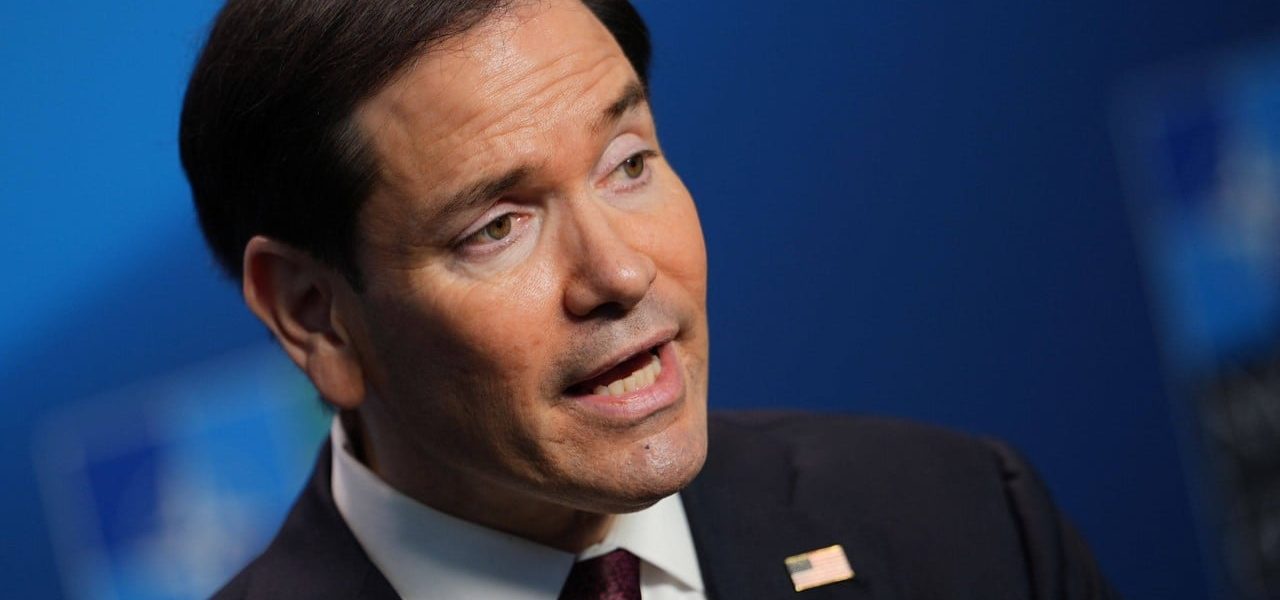
POLICY WIRE — New Delhi, India — The heady scent of jasmine and the clatter of auto-rickshaws don’t quite mask the quiet unease settling over the corridors of power here. When Marco Rubio was confirmed as US Secretary of State last year, fireworks of optimism went off in New Delhi. They really did. The establishment had pinned its hopes, rather conspicuously, on a grand strategic marriage, imagining a future where American diplomatic might—and a particularly vocal former senator—would finally align Washington’s policy full-square with India’s geostrategic ambitions.
Policymakers, it was often whispered in the capital’s air-conditioned enclaves, anticipated an unprecedented alignment. But now, as Secretary Rubio touches down for a four-day whirl through Kolkata, Agra, Jaipur, and the capital itself, that initial ebullience feels a touch quaint. He enters a relationship strained by transactional politics, structural deadlock and mounting strategic unease over Washington’s recent—some would say erratic—pivot to prioritize its own domestic concerns and global hotspots that have little to do with the Indo-Pacific’s perceived rising sun. It’s not the grand procession New Delhi dreamt of; it’s more like a particularly awkward family reunion after a year of whispered grievances. [QUOTE_PLACEHOLDER]
And let’s be frank, that hope for a unified front, so robust only a year ago, now appears as flimsy as an umbrella in monsoon season. New Delhi’s mandarins have watched, with a mix of fascination and chagrin, as Washington navigates a complex world where the neatly defined camps of yore simply don’t exist. China, that ubiquitous specter, remains a point of friction, yes. But American actions, or inactions, on other fronts have India wondering about the reliability of any partner, no matter how vociferously anti-Beijing they might be. This isn’t just about the optics of diplomacy; it’s about the underlying architecture of global power.
Because while New Delhi wants a strong American hand against Beijing, it also craves strategic autonomy. It wants to carve its own path. The notion that India would simply fall in line, a junior partner in a US-led global enterprise, has always been a rather naive reading of its foreign policy doctrine. And frankly, some analysts here note, America’s sometimes-unpredictable Mideast engagements, for example, have a way of echoing across the continent. Regional stability, or its lack thereof, tends to ripple, hitting countries like Pakistan with specific gravitas and requiring complex balancing acts. Pakistan, often caught in the broader geopolitical currents between regional heavyweights, eyes these shifts warily, concerned about what Washington’s deepening India ties might mean for the fragile regional power dynamics, particularly concerning military assistance and influence.
One cannot forget the regional nuances. The US military aid to Pakistan, while significantly reduced from its Cold War peak, still registered around $700 million between 2002 and 2020 for counter-terrorism efforts alone, according to Congressional Research Service data. That’s a statistic New Delhi never forgets — and which feeds a certain strategic mistrust. But Rubio isn’t here to mend fences with Islamabad, he’s here to ‘align’ with New Delhi. The very notion of which seems increasingly abstract as the geopolitical landscape fragments. His four-day itinerary isn’t just tourism; it’s a charm offensive—a necessary one, it appears—to salvage what has become a rather messy strategic entanglement.
📄 POLICY WIRE WHITEPAPER PUBLISHED: PAKISTAN'S NATIONAL SECURITY POLICY PRIORITIES
👉 READ BY CLICKING HEREHe’ll likely speak on cybersecurity. Perhaps some bluster about shared democratic values. But beneath the platitudes, India is looking for tangible commitments, an acknowledgment that its priorities, its historical perspectives, and its unique neighborhood concerns—from the Himalayas to the Indian Ocean—are genuinely integrated into America’s calculus. Not just rhetorically. The recent strategic unease Washington’s policy has created is less about a failure of personal diplomacy and more about a systemic shift, where alliances are less about shared ideology and more about immediate, transactional gains. The sheen, you see, has worn off a bit. New Delhi expected Rubio to brief on the Xi-Trump summit during this trip; instead, he finds himself explaining American foreign policy writ large to a nation that increasingly questions its consistency.
He’ll have to articulate a vision that transcends the rather simplistic good-guy-bad-guy narrative that propelled his rise. Because South Asia, for all its grand promises, is stubbornly complicated. India’s burgeoning influence across the Muslim world—think its economic ties with Gulf states or its soft power projection in places like Indonesia—adds another layer of complexity. These aren’t mere footnotes; they’re integral to India’s burgeoning global identity and its calculations regarding external partners. An ‘unprecedented alignment’ seems far-fetched if it doesn’t account for India’s own diverse diplomatic playbook.
What This Means
Rubio’s visit isn’t about reaffirming an alliance so much as re-calibrating a relationship that has become unwieldy, caught between idealized aspirations and the grubby reality of shifting global power. Politically, his task is to reassure India without making firm, expensive promises Washington might later struggle to keep. Economically, any major deals will be couched in language protecting American jobs, a significant concern in an election year. This points to a trend of ‘America First’ diplomacy being, in many ways, indistinguishable across administrations. From a broader perspective, this signals a further fragmentation of global power blocs; nations like India aren’t picking sides anymore but building ad-hoc, issue-specific coalitions. Washington’s expectation of India as a natural, compliant partner against China feels increasingly dated. Instead, we’re seeing the emergence of a multi-polar, multi-vector South Asia, where every nation, from India to Pakistan, plays its own intricate game, leveraging all available partners without truly committing to any single hegemon. The fireworks are gone, replaced by a more pragmatic, if less romantic, dance of nations. It’s diplomacy by spreadsheet, not by shared dreams.