


Sanctuary Under Siege: New York Codifies Peace at Faith’s Doorstep
POLICY WIRE — New York City, USA — The quiet sanctity of a house of worship, long taken for granted, is no longer a given here. It’s frayed thin, tested by the raw edges of geopolitics — and urban...

POLICY WIRE — New York City, USA — The quiet sanctity of a house of worship, long taken for granted, is no longer a given here. It’s frayed thin, tested by the raw edges of geopolitics — and urban dissent. And because of that — because what once was tacit respect has turned into public confrontation — New York City, always at the vanguard of… well, *everything*, has formally decided to step in.
It’s now a misdemeanor, punishable by fines and even jail time, to intentionally obstruct someone from entering or exiting a place of worship in the Empire State. You see, the government’s not just politely asking anymore; they’re laying down the law, literal bricks in the sand to delineate where protest ends and where prayer, presumably, begins.
This isn’t some abstract legislative musing; it’s a direct response to a very loud, very visible problem. Protests, fueled by deep-seated anguish over the ongoing Israel-Hamas conflict, have increasingly taken to the streets, occasionally, deliberately, planting themselves right at the gates of synagogues. These weren’t just general demonstrations; they were specific, pointed. The air around these sacred spaces, historically zones of reflection, transformed into crucibles of anger — and anxiety. Lawmakers couldn’t simply pretend it wasn’t happening.
“We can’t have our sacred spaces turned into zones of intimidation. It’s simple common decency, isn’t it?” commented Mayor Eric Adams, whose administration has wrestled with the balancing act between free expression and public order. “This city thrives on its diversity, its freedom. But that freedom doesn’t include blocking your neighbor from practicing their faith in peace. It just doesn’t. Our job, ultimately, is to protect everyone’s right to worship safely, without fear or harassment.”
But the conversation, as always, isn’t so simple. Advocates for the law argue it’s a necessary bulwark against what many perceived as targeted harassment and anti-Semitism. And they’ve got some data to back that up. The Anti-Defamation League (ADL) recorded a jarring 1,323 antisemitic incidents across New York State in 2023 alone. That’s a staggering 110% jump from the previous year, an ugly, hard number that gives this new law a grim sort of stark relevance.
Yet, critics, some civil liberties champions among them, warn about potential overreach. What constitutes ‘obstruction’? Could a fervent, noisy protest, technically off-property but within earshot, fall foul of interpretation? They’re right to be wary; these lines are always fuzzy when civil liberties butt heads with public order.
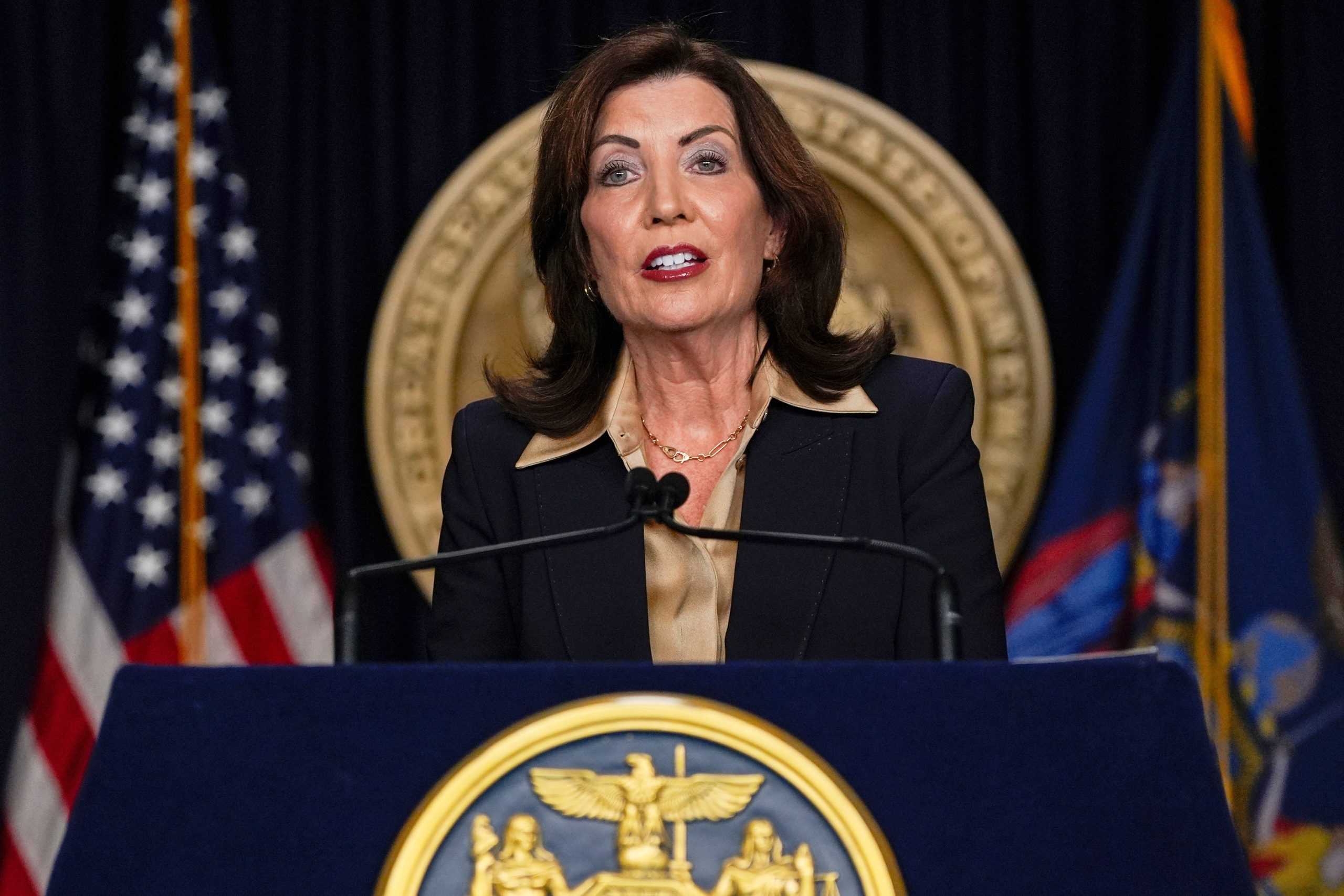
But Governor Kathy Hochul, in a rare moment of unequivocal political clarity, signed the measure. She acknowledged the complexities. “This isn’t about stifling legitimate dissent. Our First Amendment is ironclad,” Hochul said, reportedly during the signing, “However, the right to peaceful protest doesn’t, and cannot, infringe upon an individual’s fundamental right to religious freedom. We’re protecting New Yorkers who simply wish to enter their houses of worship without fear.” It’s a statement that, in its essence, tries to walk both sides of the street.
This legislative move resonates far beyond New York’s five boroughs. Look eastward, for instance. From the hallowed al-Aqsa Mosque compound in Jerusalem — a perennial flashpoint for geopolitical tension — to the quiet Christian churches nestled among Muslim communities in Lahore, Pakistan, the sanctity of religious spaces is a profoundly sensitive matter. The global community watches, often aghast, as sectarian tensions routinely boil over, leading to clashes often centered around who gets access, and under what conditions, to sites considered holy. Pakistan, for one, has grappled for decades with its own complex interfaith dynamics, where even perceived disrespect towards religious institutions can ignite furious public outcry, requiring careful state intervention to maintain order.
And so, New York’s new law, though ostensibly about managing local protests, touches upon this universal, sometimes explosive, relationship between belief, access, and societal peace. It’s a pragmatic recognition that when basic societal trust frays, even the most fundamental freedoms can look like conflict zones.
What This Means
The immediate political implication is clear: Albany—and by extension, City Hall—is drawing a hard line. This legislation won’t end the protests, that’s not its purpose, nor could it. But it does signal an explicit preference for the protection of religious observance over the full, unfettered expression of protest right on a house of worship’s doorstep. For Jewish communities, especially, it’s a symbolic, perhaps even practical, reassurance in a period of heightened apprehension. For progressive groups, however, it’s likely to be seen as an incremental chilling of public dissent, another curb on the few remaining places where ordinary people can project their frustration. Economically, while not directly impactful on Wall Street, this measure speaks to a city trying to maintain its global image as a diverse, albeit occasionally fractious, haven. Unhindered religious practice is, for many, a bedrock element of quality of life, something the city’s economic vibrancy indirectly depends upon. But whether it merely shifts the problem, rather than resolves it, remains to be seen. You can push protesters away from the door, sure. But can you extinguish the outrage that puts them there in the first place? That, my friends, is a much taller order. It suggests a certain, well, practical limit to how much law can really fix deeply embedded societal rifts, even when facing complicated questions of faith and power.