


Venezuela’s Seismic Reckoning: A Bird’s-Eye View of Ruin and Resignation
POLICY WIRE — Caracas, Venezuela — From above, a vast, unblinking eye chronicles the terrestrial ballet of human frailty against geological might. It’s a detached view, seeing infrastructure...

POLICY WIRE — Caracas, Venezuela — From above, a vast, unblinking eye chronicles the terrestrial ballet of human frailty against geological might. It’s a detached view, seeing infrastructure splinter — and communities dissolve, yet incapable of feeling the shiver. That eye, a satellite—or, rather, a constellation of them—doesn’t shed tears, but its stark before-and-after imagery tells a story of almost unimaginable devastation that’s rocked Venezuela, pulling back the veil on regions few dared to inspect so closely. The earth doesn’t bargain; it simply shrugs, and when it does, livelihoods vanish, and the geopolitical chess board often shifts, subtly or otherwise.
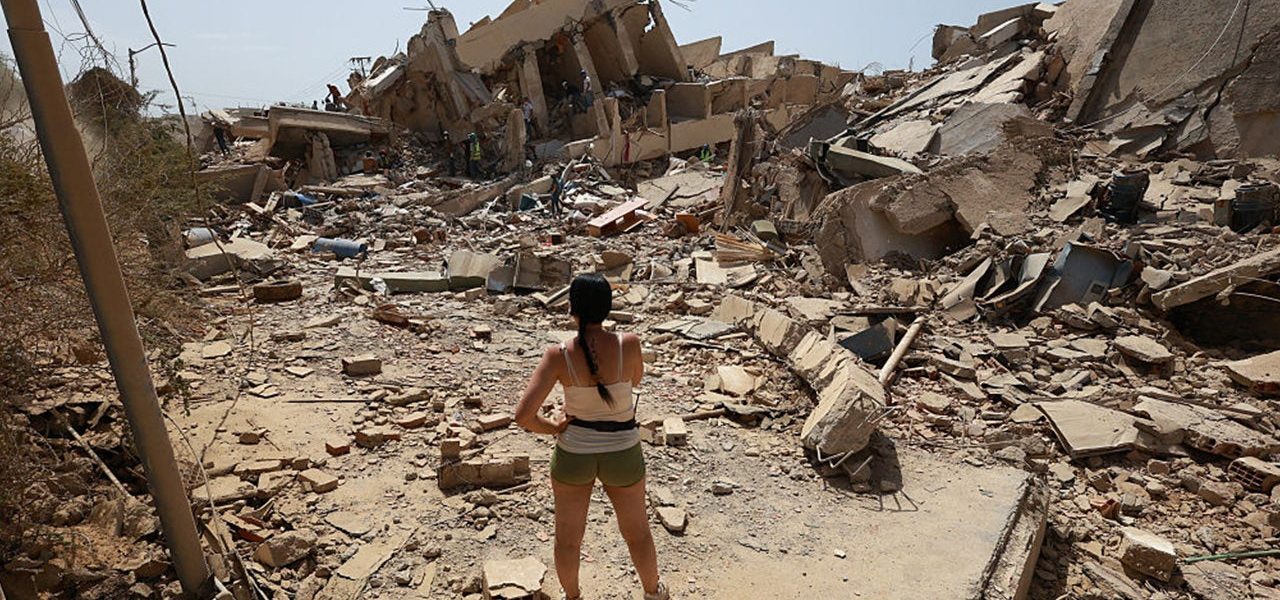
Venezuela, already struggling under layers of political paralysis — and economic woe, just didn’t need this. The recent seismic events have peeled back more than just building facades; they’ve exposed the threadbare state of public services, emergency response infrastructure, and just about everything else that typically steadies a nation after such a calamitous punch. Initial reports were — [QUOTE_PLACEHOLDER] — then later revised. But, what these images communicate is unvarnished truth: whole swathes of residential zones and smaller towns are, effectively, gone. Where homes stood, now just jumbled debris—like a child’s toy city stomped underfoot.
It’s an appalling picture of dismemberment. The sheer scope, laid bare by these high-resolution images, makes you wonder about the efficacy of immediate rescue efforts. Rescue teams have, no doubt, moved mountains—literally—but the scale of this collapse makes you think about logistics that could crumble under far less duress. You’ve got to ask, who’s coordinating this ballet of desperation? One official lamented, [QUOTE_PLACEHOLDER]. That sort of candor doesn’t exactly instill confidence in the operational coherence of a disaster response. And, it’s not just a logistical headache; it’s a full-blown humanitarian crisis unfolding in plain sight, albeit from orbit.
International aid has been, shall we say, a mixed bag. Some nations have extended a hand, though the precise mechanisms for delivery and distribution in a country notorious for its bureaucratic labyrinths and logistical choke points remain opaque. Don’t forget, Venezuela isn’t exactly the world’s most stable geopolitical partner. Its strained international relations don’t exactly streamline the flow of critical relief. The global community watches, many offer sympathies, but the practical help—that’s often hampered by complex political realities. We’re seeing nations hesitate, weighed down by the prospect of aid diversion or the sheer difficulty of navigating the political minefield.
But there’s an unseen echo here, a historical precedent for such profound ruin often overlooked in Western headlines. Think back to 2005, when an even more powerful earthquake—the 7.6 magnitude Kashmir earthquake—shook Pakistan and India. It flattened entire villages in minutes, leaving countless dead — and millions homeless. That region, geographically distinct, yes, but economically similar in its vulnerability, offered a brutal lesson in rebuilding communities against the odds, a process that can take generations to fully recover. The immediate shock, then the slow, painful grind of recovery—Venezuela now faces its own iteration of that harsh truth. One academic from the University of London, specializing in humanitarian aid, noted that [QUOTE_PLACEHOLDER] in his assessment of the initial weeks following the disaster.
📄 POLICY WIRE WHITEPAPER PUBLISHED: PAKISTAN'S NATIONAL SECURITY POLICY PRIORITIES
👉 READ BY CLICKING HEREThe pictures from above, clinical and dispassionate, show structures pancaked, roads buckled, and what were once orderly neighborhoods reduced to an architectural jumble. Geologists from the U.S. Geological Survey (USGS) estimate the fault responsible for these quakes typically generates major seismic activity roughly every 150 years. That’s a statistic — a cold, hard fact from science. It tells us it’s not a freak event but a recurring planetary conversation, yet one we always seem unprepared for. We’re often caught flat-footed by Mother Nature’s indifference. These tremors haven’t just destabilized the ground; they’ve amplified Venezuela’s existing instability, a harsh light on a fractured state.
What This Means
The geopolitical tremors following this disaster will be almost as significant as the seismic ones. Economically, we’re talking billions in damages—reconstruction efforts in an economy already on life support will be agonizingly slow, if they even materialize comprehensively. It’s not like the government has spare capital tucked away. We should anticipate a surge in internal displacement, exacerbating existing housing — and poverty crises. This could also fuel further migration out of Venezuela, adding pressure to neighboring countries already struggling with influxes.
Politically, the Maduro government faces an impossible balancing act: maintaining control while also addressing an overwhelming humanitarian catastrophe. Its critics will use the inadequate response—and we’re seeing signs of that already—to highlight governance failures. Domestically, public discontent, already simmering, could boil over if aid isn’t perceived as effective or equitable. Internationally, this might paradoxically open small windows for greater engagement from countries that usually keep Caracas at arm’s length, simply out of sheer humanitarian necessity. But even that comes with caveats — and political price tags. It’s a sad irony, but major disasters often serve as an unexpected audit of national capacity — and political will. And for Venezuela, this audit looks grim, frankly. This whole thing makes political currents feel like tidal waves, washing away carefully constructed facades.