


Mountains of Shame: One Man’s Sentence, a Planet’s Reckoning
POLICY WIRE — London, UK — Here’s a bit of an inconvenient truth: the battle for the planet’s ecological future doesn’t always unfold in grandiose UN summits or on the gleaming...

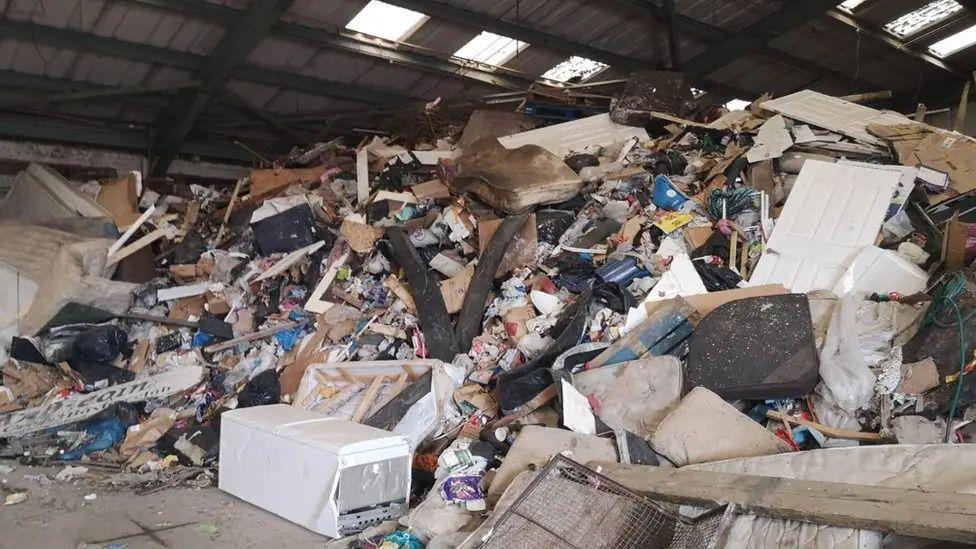
POLICY WIRE — London, UK — Here’s a bit of an inconvenient truth: the battle for the planet’s ecological future doesn’t always unfold in grandiose UN summits or on the gleaming white-collar fronts of corporate responsibility reports. Often, it gets decided in grimy industrial lots, at illegal dump sites, or in the bleak ledger of a courtroom as someone—just one guy—faces the consequences of a monumental mess. And yeah, we’re talking about a mess. A very big one.
Someone, somewhere, recently drew a prison sentence for orchestrating the illegal dumping of what’s said to be 367 tonnes of waste. Think about that for a second. That’s a staggering heap of refuse. But it isn’t just about a local rogue operation. It’s a snapshot—a tiny, inconvenient glimpse—into a far more expansive problem, one that stretches its insidious tendrils from bustling European industrial parks straight into the less-regulated corners of the developing world. [QUOTE_PLACEHOLDER]
It’s the kind of thing that makes you raise an eyebrow, isn’t it? The casual audacity of moving such a colossal amount of refuse under the radar. But these aren’t isolated incidents. They’re symptoms of an ailing system, of economies wrestling with waste disposal capacity, and of illicit networks thriving on regulatory gaps. You see this same shadow trade playing out in places like Pakistan, where environmental safeguards often lack teeth and enforcement struggles against sheer economic pressure. Think of the ships — ‘end-of-life’ vessels, usually — that arrive on Pakistani shores, ostensibly for scrapping, but often carry a hidden payload of toxic waste, quietly absorbed into the informal economy, slowly poisoning land and labor alike. It’s the exact same disregard for due process, just on a grander, more tragic scale.
There’s a gritty realism to it all, actually. We want to believe our rubbish vanishes when the bin lorry trundles off. But it doesn’t. It just moves. And when legitimate avenues become too expensive, too inconvenient, or too difficult, the illicit ones spring up like weeds in a neglected garden. Environmental crime, often seen as a secondary concern, is big business. It’s an issue with transnational connections, financing networks that would make a conventional banker blush, and human costs that are genuinely, devastatingly real. A recent report from the United Nations Environment Programme (UNEP) and INTERPOL suggested environmental crime is worth up to USD 281 billion per year, making it the fourth-largest criminal sector globally. Just ponder that figure. It’s huge.
But the real problem? The market. There’s demand. Countries in the global North produce immense quantities of waste, while nations in the global South, sometimes desperate for revenue or lacking stringent controls, become unwitting or even complicit recipients. This creates an unholy alliance, a twisted symbiosis where one nation’s refuse becomes another’s—well, another’s problem, eventually. The sheer scale of material involved means it takes organized effort, whether that’s in rural England or the bustling port cities of Karachi.
This single sentencing? It barely scratches the surface, you know. It’s like arresting one street dealer when the cartel leadership is sipping champagne miles away. And it’s complicated. You can’t just slap a few fines — and call it a day. We’re talking about deeply embedded systems, financial incentives, and regulatory patchwork that practically invites opportunists to exploit the cracks. We’re also seeing the very real ramifications on public health and local ecosystems—the stuff of documentaries and academic papers, yes, but also of real people living near polluted waterways and struggling with chronic illnesses.
📄 POLICY WIRE WHITEPAPER PUBLISHED: PAKISTAN'S NATIONAL SECURITY POLICY PRIORITIES
👉 READ BY CLICKING HEREWhat This Means
Politically and economically, this lone prison sentence isn’t an isolated event; it’s a stark reminder of an escalating global challenge. On one hand, it’s a win for rule of law, showing that authorities can and will prosecute those who cut corners and poison the planet for profit. It reinforces the notion that environmental transgression isn’t merely a civil infraction, but a serious criminal enterprise with custodial consequences. This might deter some—at least for a little while.
On the other hand, its very existence highlights systemic failures. Economies—developed or developing—aren’t properly incentivized or equipped to handle the sheer volume and complexity of modern waste streams. The black market for waste thrives because the legitimate market is either too expensive, too bureaucratic, or lacks sufficient capacity. This creates perverse incentives, encouraging the export of pollution to poorer nations, a form of neo-colonial exploitation that extracts not resources, but a dumping ground.
For nations like Pakistan, caught in the throes of their own development and often grappling with governance issues, the allure of cheap disposal or processing fees for international waste can be hard to resist. But it’s a Faustian bargain: short-term financial gain often comes at the long-term cost of environmental degradation, public health crises, and a compromised international standing. It also diverts resources away from genuine sustainable development, trapping these nations in a cycle of environmental damage and remedial efforts. And honestly, it puts a big fat question mark on the collective global commitment to sustainability. Just check out how interconnected these issues are in The Weight of Debris: One Man’s Conviction, a Continent’s Conundrum. That’s a good place to start understanding this. It’s a continuous balancing act between economic necessity and ecological imperative, and frankly, we’re not doing a great job.
The solution, if one exists, won’t be found in isolated prosecutions alone. It needs robust international cooperation, harmonized waste management policies, strict enforcement across borders, and substantial investment in sustainable waste infrastructure globally—especially in those regions often exploited as the world’s unofficial dustbin. Otherwise, we’ll keep seeing these headlines, only the tonnage will get bigger, and the environmental debt will compound. You bet it will.