

Velocity’s Vices: Motorcycle Daredevils and the Global Pursuit of High-Stakes Reward
POLICY WIRE — ELKHART LAKE, USA — Not many professions require one to rationalize a missing bone from a finger — or what passes for one, post-accident — as an occupational hazard. But for elite...

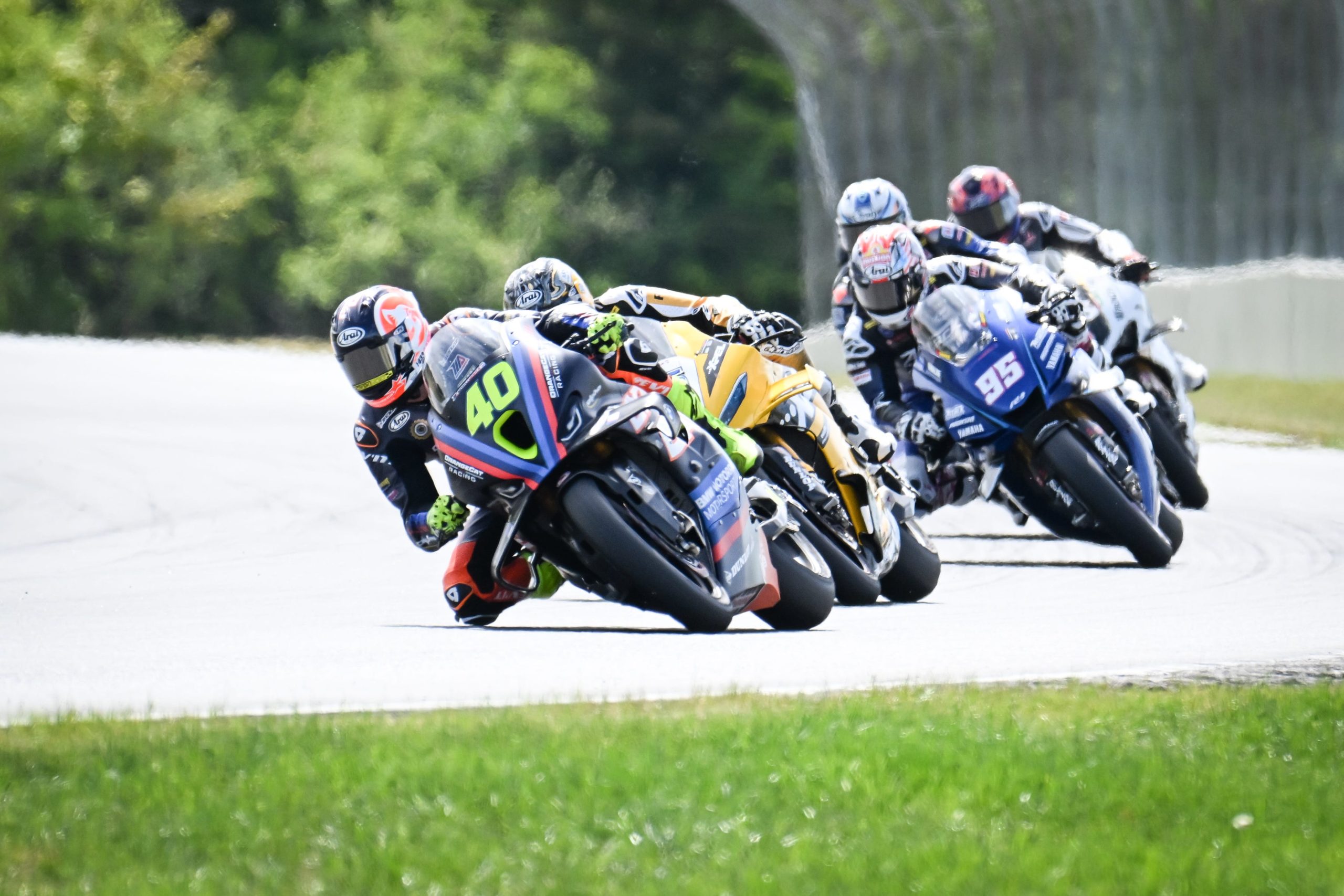
POLICY WIRE — ELKHART LAKE, USA — Not many professions require one to rationalize a missing bone from a finger — or what passes for one, post-accident — as an occupational hazard. But for elite motorcycle racers, such grim accounting is simply part of the job. At the storied Road America circuit, amidst the cacophony of engines pushing two-wheeled machines to nearly 200 miles per hour, the human cost was tallied, not with ambulances, but with stark, dry humor from men who regularly flirt with disaster.
It was a scene at once ordinary for the sport — and utterly surreal for anyone watching from the sidelines. The dust had settled after a MotoAmerica weekend, and the podium finishers – PJ Jacobsen, Bobby Fong, and Sean Dylan Kelly – weren’t swapping stories of glorious passes. Instead, the discourse centered on gnarly injuries, the kind that would send mere mortals straight to long-term disability. Jacobsen, for instance, has a bone piece missing from his left index finger, a consequence of the current season’s relentless grind. That’s the same hand, mind you, with a pinky nearly obliterated at age eleven. Fong? He’s sporting a torn rotator cuff, an annoyance he admits hurts worse getting out of bed than when he’s wrestling a bike at triple-digit speeds.
And then there’s Kelly. He’s navigating the complexities of racing with a chip fracture in his right middle finger. Doctors told him no pressure on it. So, he just uses his index finger, thank you very much, to clamp down the brake lever — and shed 190 mph on a BMW. Makes perfect sense, doesn’t it? These weren’t tales of heroism; they were matter-of-fact descriptions of continued functioning despite bodies that were, quite frankly, rebelling. But there’s a cold, hard logic at play here, — and it’s one you see echoed in many other high-stakes endeavors.
These racers, for all their daredevilry, are professionals in a brutal industry. They’re acutely aware of the line forming behind them. Bobby Fong, a Yamaha rider who snagged a pair of third-place trophies that weekend, laid it out with unvarnished candor. [QUOTE_PLACEHOLDER] It’s a cutthroat environment. Fong even admitted, “Sometimes I wonder why the hell I’m doing this. But leaving the track knowing that you had a good result is the best feeling in the world.”
That particular weekend saw Kelly notch his first win of the season and second overall in the premier Superbike class, adding to a runner-up spot earlier. Jacobsen trailed by a mere 0.381 seconds. The emotional — and physical investment is staggering. And these men, often in pain, can’t exactly ring up HR. “We can’t call in sick. It is a very stressful job, for sure.”
The shared vocabulary of pain is, well, something else. There’s a morbid gallows humor that keeps morale, such as it’s, afloat. Imagine Jacobsen, eyeing Kelly’s broken finger, quipping: [QUOTE_PLACEHOLDER] Kelly, not missing a beat, responded: [QUOTE_PLACEHOLDER] It’s a harsh laugh in the face of what’s genuinely terrifying. Fong couldn’t believe Kelly’s resilience, expressing a degree of awe that speaks volumes about the baseline for ‘normal’ in this particular circus. Jacobsen, ever the jester, then declared, mostly joking, that he might not have any fingers left soon. He says, “I’ve just got to grow this confidence and the injury, put that aside and just keep working through all that stuff. We race motorcycles, we’re all strong here, and we’re all in the same mindset of doing these same things.”
This isn’t just an American spectacle. This single-minded, often dangerous pursuit of advantage resonates globally. Consider the informal economies thriving across South Asia, from the rickshaw drivers weaving through Dhaka’s choked traffic to the porters hauling impossible loads through the mountains of Pakistan. For them, ‘calling in sick’ often isn’t an option either. The economic reality mandates showing up, injured or not, because someone else is always ready to take their place for even meager wages. The calculation, like a racer’s, weighs dire risk against the desperate necessity for survival or, in the racer’s case, status and fortune. It’s an inverted parallel; one is for thrill — and immense monetary gain, the other for simply making it to the next day. Both demonstrate a profound human capacity to push through pain, to internalize risk as merely an ingredient of success.
When the front wheel tucks at 180 mph – a speed akin to what NASCAR or IndyCar machines achieve on four wheels, with their drivers enclosed in safety cells, according to various motorsport analyses – there’s a momentary, gut-wrenching realization. One racer confessed to feeling a ‘pucker up’ moment. But once the crisis passes, the rationalization kicks back in. Kelly succinctly summed up the collective delusion, or perhaps the truth: [QUOTE_PLACEHOLDER] That mental trick helps. “When you pass somebody [who’s just] sitting there at 180, obviously that’s pretty scary, but when you’re next to another guy that’s also going 180, 190, then you don’t really notice.” And that, friends, is how the elite manage the seemingly unmanageable: by normalizing the extreme. And for the next race, they’ll just keep on keeping on.
What This Means
This deep dive into the physiological and psychological costs borne by professional motorcycle racers offers a micro-narrative of a much larger, global economic phenomenon: the intersection of extreme risk and opportunity. While the glamour and sponsorship money of Superbike racing create a stark contrast to the grim, high-stakes informal labor markets of developing nations – imagine a brick kiln worker in rural Punjab, facing crippling lung disease daily – the underlying calculus isn’t dissimilar. In both cases, individuals make decisions that appear irrational from a position of comfort and safety, but are entirely logical within their specific constraints.
Economically, these sports are a brutal zero-sum game, mimicking the winner-take-all dynamics seen across industries. For every highly-paid champion, countless hopefuls literally crash out, sometimes permanently. This concentration of reward incentivizes extraordinary risks. Politically, the narrative highlights society’s complex relationship with risk. We laud daring athletes but often neglect to address systemic risks faced by marginalized populations, including millions across the Muslim world and South Asia, forced into dangerous livelihoods due to inadequate safety regulations or lack of viable alternatives. The riders are willing to risk life and limb for glory and wealth, while others, in vastly different contexts, undertake similar levels of peril simply for a meager existence. The choice, if you can call it that, ultimately underscores how economic desperation, or the allure of extraordinary success, warps our perception of what constitutes an acceptable gamble. It’s a stark reminder that resilience, often praised, can also be a product of harsh necessity.