

Unseen Scars: Putin’s Drone Denial Rattles NATO’s Eastern Flank
POLICY WIRE — Bucharest, Romania — A silence hangs heavy over Romanian wheat fields along the Danube—a silence now routinely punctuated by the rumble of Russian air power, however distant. So, when...

POLICY WIRE — Bucharest, Romania — A silence hangs heavy over Romanian wheat fields along the Danube—a silence now routinely punctuated by the rumble of Russian air power, however distant. So, when bits of a drone, apparently belligerent and certainly uninvited, turn up in this NATO nation’s backyard, it’s more than just debris. It’s a jolt.
It wasn’t a sudden, earth-shattering impact. Nope. It was the creeping realization that fragments of what looked very much like a military drone, potentially from Russia, were strewn across the rural landscape, deep inside a country that’s pledged to collective defense. And that, folks, doesn’t sit well with anyone in Bucharest or Brussels.
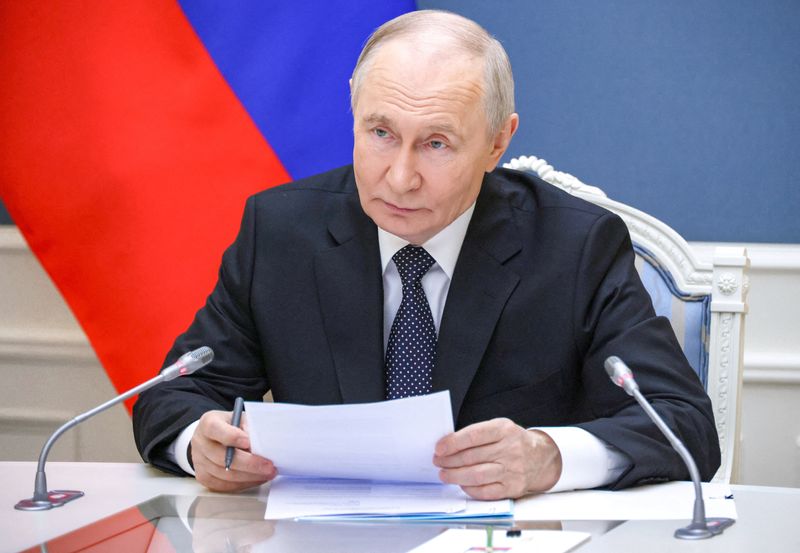
The immediate reaction from Moscow? A shrug. President Vladimir Putin, ever the master of diplomatic equivocation, declared it was "too early to say" if the uncrewed aerial vehicle was Russian. This isn’t exactly the firm, declarative statement one might expect after what appears to be a direct, albeit accidental, violation of a sovereign state’s airspace, particularly that of a NATO member. But then again, surprise isn’t really Moscow’s style these days, is it? More like deliberate ambiguity, designed to keep everyone guessing.
General Mihai Ionescu, Romania’s Minister of National Defence, didn’t mince words—even if he chose them carefully. "This incident, regardless of origin, presents a serious concern for our nation’s security and sovereignty," Ionescu stated earlier this week from his ministry in Bucharest. "We’ve launched a full investigation, coordinating with our NATO allies, because protecting our citizens and our skies is our paramount duty. It’s not something we take lightly."
And what’s NATO’s take on this persistent proximity problem? "We monitor the situation closely, continually reinforcing our eastern flank capabilities," affirmed General Theron Vance, Supreme Allied Commander Europe, in a terse virtual briefing. "Any violation of Allied territory is a profound concern. Article 5 remains the bedrock of our alliance, and we won’t hesitate to defend every inch of it." He didn’t have to spell out the ‘Russian’ part. Everyone just knew.
The truth is, this sort of unsettling event—these ghost-like intrusions—aren’t isolated. Not anymore. Because Ukraine borders Romania, debris from Moscow’s merciless shelling campaigns and anti-air responses has already tumbled onto Romanian soil before. Each instance ratchets up the tension, prompting uncomfortable questions about defensive protocols and the actual red lines of engagement.
This episode serves as a chilling reminder of the inherent instability the conflict in Ukraine breeds across borders. From the Baltics to the Black Sea, nations are perpetually on edge. This regional instability, of course, has broader global ramifications. The disruptions to grain shipments, the fluctuating energy markets, and the ever-present specter of escalating geopolitical tensions impact economies and societies far removed from Eastern Europe. Nations like Pakistan, for instance, heavily reliant on imported energy and struggling with their own economic headwinds, feel these tremors keenly. Any fresh spark in Europe further strains already fragile global supply chains and exacerbates inflationary pressures felt in markets as distant as Karachi, making the daily struggle for ordinary people just that much harder.
What This Means
The diplomatic dance following this drone incident highlights the fine line NATO treads. They can’t overreact — and risk wider conflict; they can’t underreact and appear weak. Putin’s ‘don’t know’ defense is a classic move, intended to deny culpability while subtly sending a message: Russia operates near you. The economic implication isn’t just about damaged crops (though that matters to a farmer). It’s about investor confidence in Eastern Europe, which, for nations bordering a war zone, is a constantly eroding asset. Every incident, no matter how minor in isolation, chip-chips away at the perception of stability. And when investors get nervous, capital shrinks, affecting everything from infrastructure projects to job creation. The cost of ‘business as usual’ around a conflict zone keeps getting pricier.
Historically, even ‘accidental’ incursions have served as tests of resolve. Back in 2022, NATO nations reportedly spent a combined 2.4% of their GDP on defense, an increase driven largely by Russia’s renewed aggression. (Source: NATO Annual Report, 2023). That’s a serious chunk of change, aimed squarely at deterring incidents like this. But it appears deterrence is a complex, sometimes frustrating, beast when faced with a regime content to feign ignorance and push boundaries.
The message to Brussels isn’t just about what happened on the ground in Romania. It’s about Moscow’s intent—or lack thereof—to control the collateral damage of its aggression. Because if even Russia itself can’t (or won’t) account for its equipment, then how can NATO trust that such ‘stray’ incursions aren’t deliberate probes, meant to gauge reaction? It makes one think, doesn’t it? Perhaps Putin knows exactly where his drones go, — and saying ‘it’s too early to tell’ is precisely the point.