


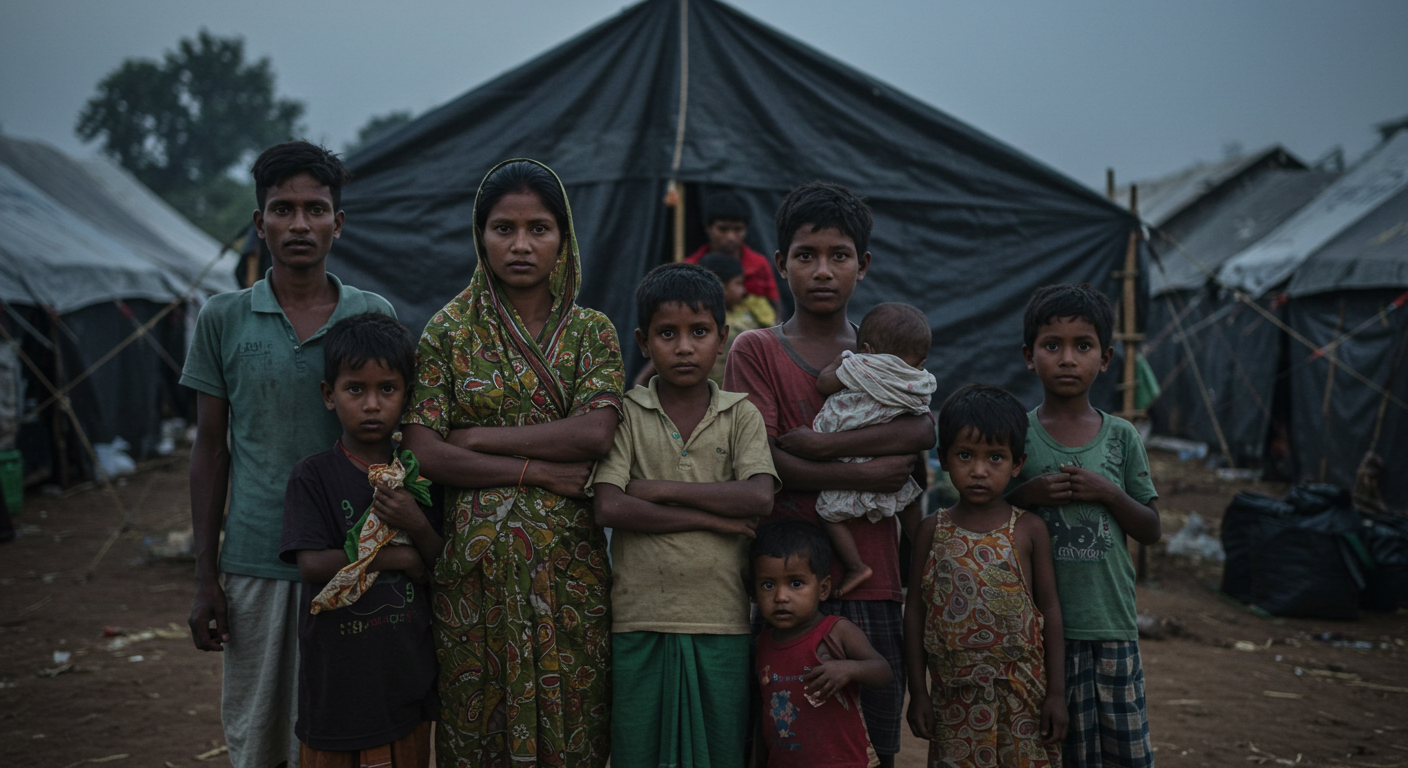
Unseen and Unacknowledged: India’s Rohingya Rejections and the Erosion of Refugee Protections
In a troubling chapter of May 2025, Indian authorities allegedly forced at least 40 Rohingya refugee’s women, children, and the elderly into the Andaman Sea after detaining them in New Delhi. This...

In a troubling chapter of May 2025, Indian authorities allegedly forced at least 40 Rohingya refugee’s women, children, and the elderly into the Andaman Sea after detaining them in New Delhi. This act represents not only a gross violation of fundamental humanitarian principles but also a chilling erosion of the sacred norm of non‑refoulement, further exposing the fragility of refugee protections in South Asia
A Desperate Exodus, A Cruel Return
On May 6, 2025, Rohingya families many of whom held UNHCR-issued refugee cards were summoned to a “biometric verification” in Uttam Nagar, Delhi. Within days, on May 8, they were blindfolded, air‑lifted to the coast, and handed over to the Indian Navy. Provided life jackets, they were cast into the sea near Myanmar. Some swam ashore; their fate thereafter remains unknown
UN experts condemned the act as “outrageous” and a “blatant disregard for the lives and safety of those who require international protection.” They emphasized it violated non‑refoulement, a core customary norm under international law that forbids returning individuals to institutions where they face harm even when a state is not a signatory to the 1951 Refugee Convention
India’s Policy Vacuum: A Recipe for Injustice
India, which hosts an estimated 40,000 Rohingya, remains outside the 1951 Refugee Convention. Approximately 22,500, per UNHCR registrations, live in precarious limbo; other estimates cite even 32,379 individuals acknowledged by UNHCR, underlining confusion and absence of consensus.
Without a legal framework for refugees, India relies on colonial-era laws like the Foreigners Act (1946) and Passport Act (1967), allowing broad discretion to detain and deport Rohingyas as “illegal migrants.” In contrast, other groups like Tibetans or Sri Lankan Tamils are afforded refugee certificates or long-term visas. This unequal treatment reflects a growing intolerance against Muslim Rohingya refugees
Judiciary’s Retreat from Humanitarianism
Despite India’s judiciary historically extending Article 21 (right to life and liberty) protections to non-citizens grounded in Gandhian-Nehruvian ethos recent rulings signal a reverse slide.
On May 8, 2025, the Supreme Court ruled that the “right to reside” is exclusive to Indian citizens, effectively denying Rohingyas refuge despite compelling appeals by senior lawyers citing their genocide risk in Myanmar.
Moreover, when PILs sought to halt deportations, the court rebuffed repeated filings, admonishing lawyers for lacking new evidence and effectively shutting judicial relief doors for Rohingyas. As of July 31, 2025, the Court finally agreed to examine whether Rohingyas ought to be designated as refugees or illegal entrants, an overdue step, but limited in scope
Human Cost Behind the Headlines
Behind these legal and diplomatic maneuvers lies profound human suffering. Rohingya families, already scarred by genocide in Myanmar, now face rejection and peril. School-age children in Delhi are routinely denied education despite UNHCR cards, exacerbating generational marginalization.
Testimonies from those deported reveal heartbreaking details, parents torn from their children, naked abandon in open seas, survival hanging on borrowed phones to reach relatives. The non‑acknowledgement of these tragedies, coupled with silence by military or political establishments, speaks volumes of the moral void in India’s current posture.
Expert Voices & Legal Contestation
- UN Human Rights Office launched an inquiry over the incident, labeling such actions “respectable to human decency”.
- Amnesty International put out an urgent call: “India must ratify the 1951 Refugee Convention,” and halt deportations immediately
- The Salimullah vs Union of India case remains pending; its outcome may define whether non‑refoulement and Articles 14 & 21 protections extend to Rohingyas, albeit the court has allowed deportations so long as procedures are “followed”.
Conclusion: A Call to Action
The May 2025 deportation episode is more than an incident; it is a symptom of institutional erosion. It exposes a judiciary closing doors to justice and a government abandoning moral capital for political expedience.
Only by confronting injustice head-on rather than ignoring it can South Asia preserve its moral credibility. The Rohingya are not just unwanted guests; they are living symbols of humanity’s failure or grace.
Author