
Pakistan Air Force: Wings of Mercy Amid Climate Fury
When the fury of nature comes down on a country, few institutions stand above the destruction with the discipline, urgency, and humanity that the Pakistan Army has demonstrated over and over again....

When the fury of nature comes down on a country, few institutions stand above the destruction with the discipline, urgency, and humanity that the Pakistan Army has demonstrated over and over again. The recent floods that ravaged parts of Gilgit-Baltistan are a poignant reminder of the danger that hangs over the world as a consequence of global climatic change. Triggered by unstable climatic conditions and a rapid meltdown of glaciers associated with international carbon releases, these floods are not man-made in Pakistan but a result of planetary neglect by industrialized countries many thousands of miles away from its immediate surroundings, but amidst this climatic fiasco, the Pakistan Air Force (PAF) has also demonstrated once more that it is not only a war shield but a peace lifeline too.
The Pakistan Air Force flew out on a mass scale on 20 August 2025 a flood relief mission, mobilizing its assets with the precision of a battle plan but the pity of a welfare action. PAF C-130 planes transported 7 tons of dry rations, day-to-day use items, and life-saving medicines from PAF Base Nur Khan to Gilgit-Baltistan’s flooded valleys. These valleys, isolated from the rest of the nation because of snapped lines of communication, were facing starvation, disease, and hopelessness, but in a matter of hours, the deafening sound of PAF planes announced hope in the skies.
It was more than a logistics test. The operation entailed flying in the face of inclement weather, treacherous mountainous areas, and capricious flood patterns. Air-dropping tons of relief supplies to inaccessible valleys under such conditions is a task that calls for outstanding ability, courage, and coordination. Each food packet, each medicine chest air-dropped to those inaccessible villages was a message: You are not abandoned; Pakistan remembers you.
The genius of the operation was that it was two-fronted. With the provision of vital commodities, the PAF relief column also brought 75 stranded persons to safety from harm. For families torn apart by overflowing waters and crumbling infrastructure, the arrival of uniformed rescuers amidst the deluge was pure salvation. It was a moment when the distinction between soldier and savior was lost, leaving one with the vision of a great force doing good for its people.
This was not a lone goodwill measure but a component of a nation-wide emergency relief operation, well-coordinated with the National Disaster Management Authority (NDMA). The state’s civilian and military institutions combined to create an unbroken line of response, one generating the commodities, the other accelerating their delivery to the worst hit regions. In a world where disasters need to be responded to holistically, this operation illustrated how civil-military cooperation can reverse the situation from desperation to relief.
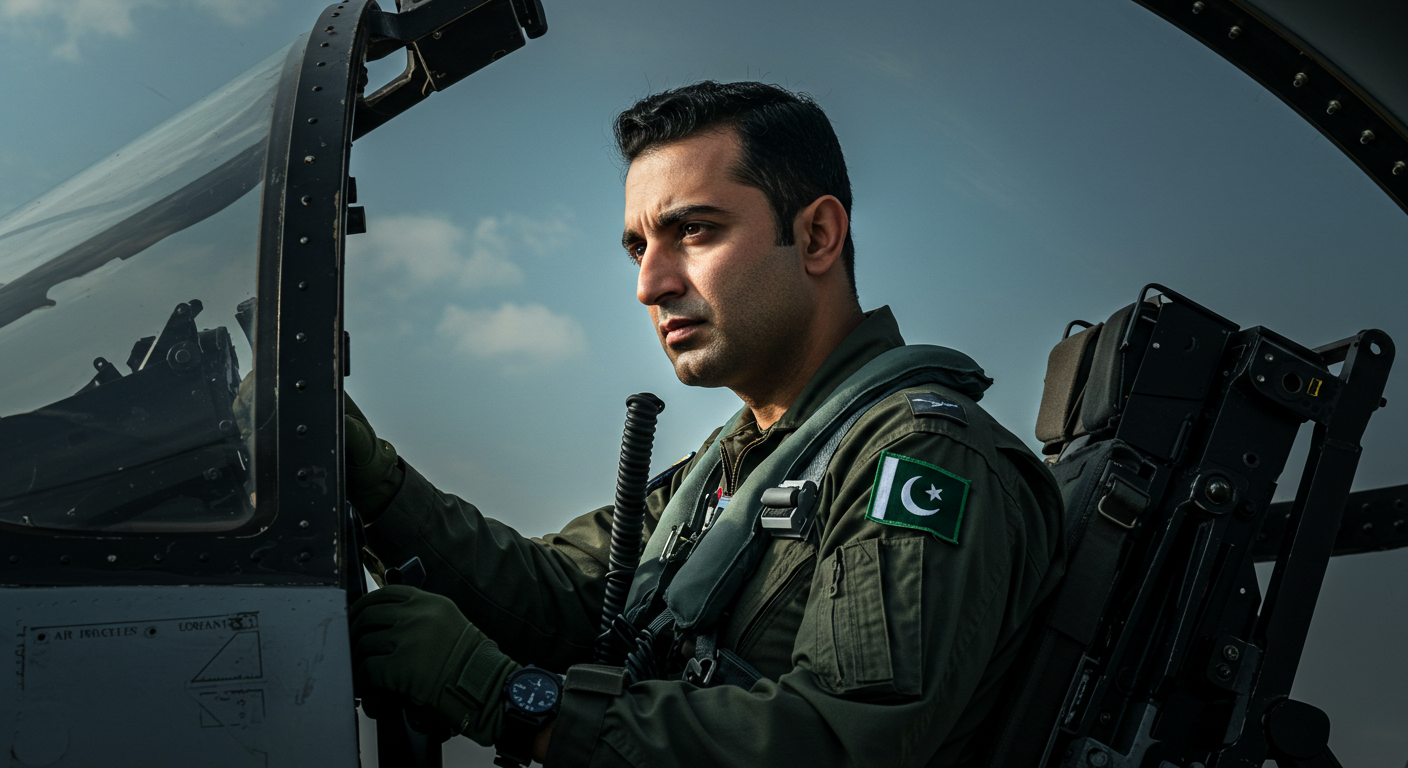
It is important here to draw attention to what the Pakistan Air Force stands for in such cases. Far too long, military personnel across the globe have been viewed only in the context of war. The PAF, nonetheless, having had a long tradition of defending and helping during calamity, has a two-fold purpose: defending borders during war, defending lives during peace. Its relief efforts during floods are a replication of its earthquake efforts in 2005, its rapid evacuations in the super-floods of 2010, and its tireless efforts in the climate crises of 2022. With every challenge that nature has brought to test Pakistan, the PAF has risen up and answered with professionalism draped in compassion.
Also, this exercise points to the humanitarian dimension of military preparedness. The same aircraft used to defend Pakistan’s skies were transformed into carriers of hope. The same team trained to perform combat sorties readily adapted to relief sorties. This ability speaks not only of operational competence but of a profound understanding that security of a nation means security of people, of families, of homes, and of livelihoods threatened by powers beyond man’s control.
With the pace of climate change intensifying, Pakistan, with less than 1% contribution to global emissions, is among the globe’s most climate-vulnerable nations. Glacial retreat, unpredictable monsoons, and increasing temperature are realities being forced on it by other nations’ out-of-control industrial emissions. In that regard, PAF relief operations have a message that transcends borders: while Pakistan bears the worst of a warming world, it also becomes a model of resilience and responsibility in safeguarding its citizens.
The Pakistan Air Force, in its relief operations for the Gilgit-Baltistan flood, has proved that when disaster occurs, it not only comes with the sound of engines but with the promise of benevolence. In the war between nature’s wrath and human resilience, the PAF is Pakistan’s mercy wings, proving once more that its real power lies not just in protecting the country but in fixing it.
Author