

From Arctic Blast to Monsoon Mirage: New Mexico’s Climate Crisis Echoes Global Instability
POLICY WIRE — Albuquerque, U.S.A. — While much of America was flipping calendar pages toward what’s supposed to be meteorological summer’s warm embrace, a peculiar Arctic hangover chilled parts of...

POLICY WIRE — Albuquerque, U.S.A. — While much of America was flipping calendar pages toward what’s supposed to be meteorological summer’s warm embrace, a peculiar Arctic hangover chilled parts of New Mexico. Angel Fire, a spot accustomed to brisk mornings but not quite so in June, recorded lows that didn’t just tickle; they broke the thermometer’s spirit for the lower 48 states. A bracing 22 degrees and then 24 degrees in quick succession, these weren’t whispers of winter but rather its shouted encore on what should be early summer mornings, according to data first highlighted by KOB.com. That’s not normal, even for high elevations. Not when you’re talking about summer.
But that brief, unexpected snap, however shocking, quickly gave way to a different kind of extreme. It’s a Jekyll and Hyde routine playing out over the state, morphing from frosty high-altitude mornings into the muggy promise of early monsoon-type conditions across the high desert. Tropical moisture from the distant Gulf of Mexico, it seems, just couldn’t wait for the official kickoff of monsoon season in a mere 13 days; it’s already oozing into south-central and eastern New Mexico.
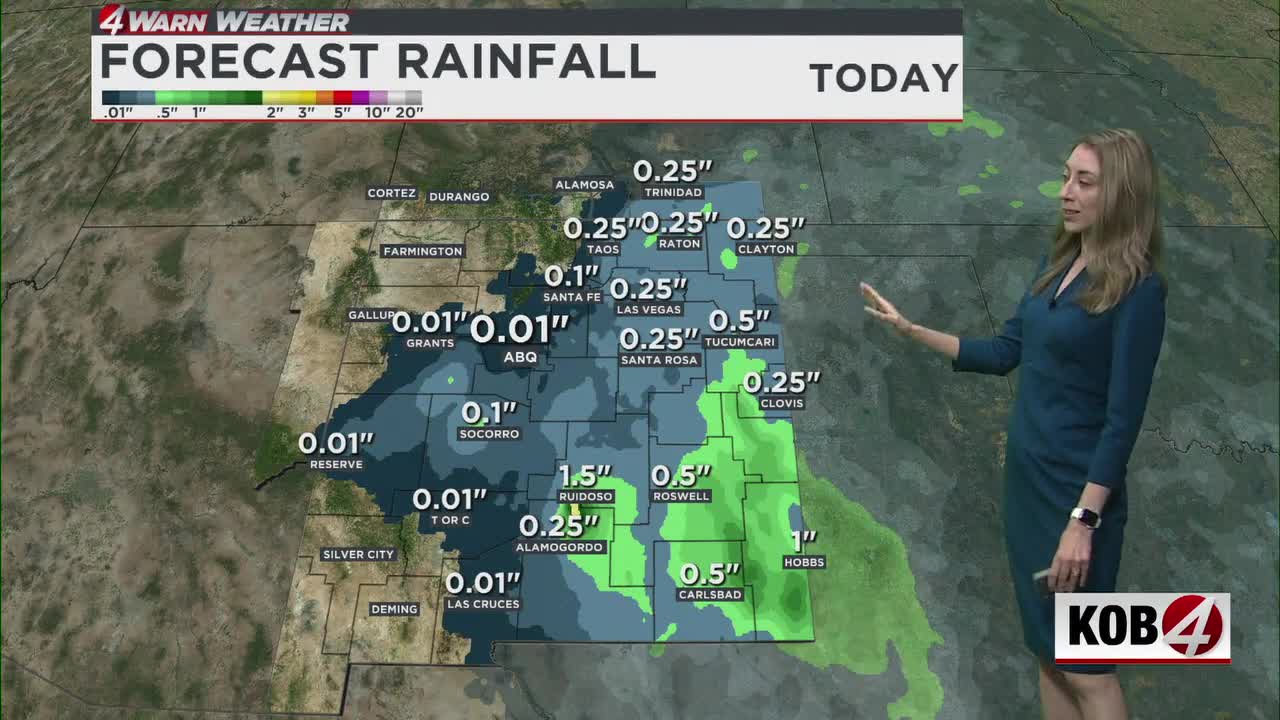
And with that moisture comes peril. It’s a binary choice in New Mexico’s summer: too dry, or too much, too fast. We’re staring down the barrel of flash flooding potential—a genuine, honest-to-goodness threat. The eastern side of the state, particularly the South Central Mountains—including towns like Ruidoso and Capitan—are bracing themselves. These aren’t just typical summer storms; they’re the kind that can dump over an inch of rain per hour. Think about that: a whole lot of water hitting already-dry ground, maybe even over burn scars from past wildfires. That’s a recipe for disaster, for mudslides, for ruined homes, for folks getting swept away. Low-lying areas, those poor drainage spots, your local creeks and rivers, places that always flood—they’re all at risk. That’s why the powers-that-be, as early as today, have issued a Flood Watch starting at 11 a.m. and running through 9 p.m. for some of these zones.
It’s not just a localized problem either. The flash flooding risk isn’t politely staying put. Oh no, it’s decided to stretch its arms, reaching further east, north, — and northwest from the Sacramento Mountains. Even Albuquerque, the state’s biggest metropolitan sprawl, has landed itself in a marginal risk category for flash flooding. Residents there are told to expect the heavens to open sometime after 1 p.m. A forecaster on a local news station, Meteorologist Amanda Goluszka, put out her full prediction, detailing the nuances. It’s not exactly beach weather, is it?
But this isn’t just some local weather report. We’ve seen this script play out before, in different languages, on different continents. Think of Pakistan, a nation where similar unpredictable, aggressive monsoon patterns annually claim hundreds of lives and displace millions. Its infrastructure, perpetually under strain, often buckles under the sheer force of these deluges. One recent season saw record rainfall, triggering devastating floods that affected 33 million people, wiping out entire villages and agricultural land – a clear echo, albeit on a far grander scale, of the infrastructure challenges we glimpse here.
What New Mexico is experiencing, from its startling cold snaps to its impending monsoon chaos, isn’t an anomaly. It’s an American microcosm of a planetary crisis. Global climate change isn’t a theory; it’s the guy who’s rearranging your furniture when you’re not looking—and sometimes, when you are. The shifting Jet Stream, ocean warming, intensified hydrological cycles—these are the big gears turning behind the scenes, creating these localized dramas. The Southwest, after decades of drought, now faces not just water scarcity, but often too much water, all at once, in places unprepared to handle it. It’s a stark reminder that even seemingly isolated weather events are strands of a much larger, increasingly frayed, global environmental fabric. For the latest local conditions, you might click [QUOTE_PLACEHOLDER]. Finding weather alerts? [QUOTE_PLACEHOLDER]. Interested in the interactive radar? [QUOTE_PLACEHOLDER]. Or perhaps you’d like to share photos — and videos, [QUOTE_PLACEHOLDER].
What This Means
The erratic climate behavior seen in New Mexico isn’t merely an inconvenience; it carries profound political and economic implications. For one, you’ve got to ask about resource allocation. Local — and state budgets are already tight, you know? How much more can they stretch to shore up vulnerable infrastructure? We’re talking everything from flood control systems to burn scar stabilization—a financial drain that diverts funds from education, healthcare, or other vital social programs. It’s a vicious cycle where immediate environmental crises cannibalize future investments.
Then there’s the long-term impact on regional economies. New Mexico’s identity, its tourism, its agriculture, even its property values are inextricably linked to a predictable climate. When tourists eye reports of flash floods, they might just decide to visit someplace else. But, also, imagine the insurance nightmares for homeowners — and businesses in these high-risk areas. Premiums skyrocket. Development stagnates. This sort of climatic whiplash creates a sort of rolling instability, hitting everyone from individual landowners to large corporations.
And it raises bigger questions about policy. Why aren’t we seeing more aggressive statewide — and federal adaptation strategies? You’ve got to figure this out, because federal disaster aid—when it arrives—is usually a reactive Band-Aid, not a proactive shield. Compare this to regions like Pakistan or Bangladesh, where climate instability translates into food insecurity, mass migration, and sometimes, even political unrest. While New Mexico’s challenges are, of course, on a different scale, the underlying lesson is identical: nations that don’t prepare for their new climatic reality risk not just property, but the very fabric of their social and political stability. You can see how an India’s new convenience economy, while seemingly separate, grapples with its own environmental pressures that dictate daily life. Ultimately, these localized weather disruptions demand a global perspective on policy—a perspective that acknowledges the inescapable link between the environment, economics, and national resilience.