


Ukrainian Forces Execute Historic First Aerial Drone Medical Evacuation
Ukrainian military units successfully rescued a wounded soldier using a modified heavy-lift drone, marking a potential world-first in combat medical extraction.

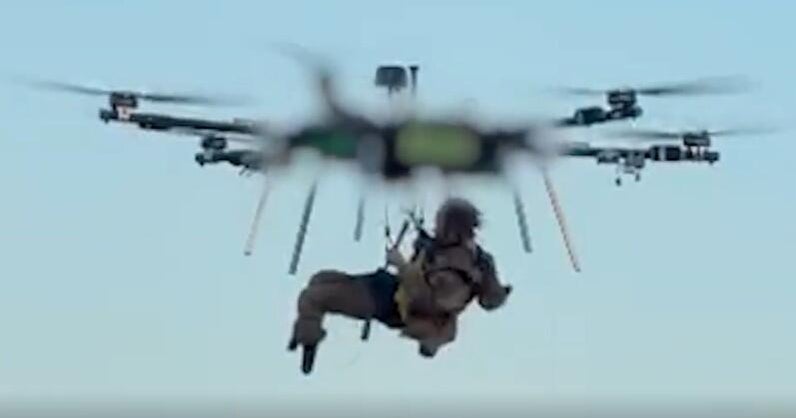
POLICY WIRE — Kyiv, Ukraine — The Ukrainian military has successfully conducted what appears to be the world’s first front-line medical evacuation using an aerial drone, a milestone for the nation as the conflict with Russia approaches its five-year mark.
The 92nd Assault Brigade of the Ukrainian Ground Forces announced on Monday that they utilized a heavy-lift unmanned aircraft to retrieve a wounded soldier from the battlefield.
The soldier, Konstantyn Vlasenko of the 30th Separate Brigade, had been stranded for nearly 500 days. Dense minefields and persistent Russian drone surveillance had rendered the position inaccessible to traditional ground forces or standard robotic units.
Reports indicate that Vlasenko sustained injuries from a Russian drone strike earlier this year. While trapped, he was forced to perform partial self-amputations on both of his legs while awaiting extraction.
The rescue mission employed a Ukrainian-made Gurzuf Defence heavy hexacopter. Although the craft was originally designed as an attack drone for dropping munitions, the manufacturer provided it to the military at no cost for this specific operation.
Technical specialists collaborated with the manufacturer to modify the hexacopter, ensuring it could transport a human passenger without dangerous swinging or instability. The configuration underwent rigorous testing before the mission was greenlit.
The complex operation required seven days of preparation and involved four separate Ukrainian brigades. The actual flight lasted approximately one hour and 15 minutes, covering a distance of nearly 40 miles while other Ukrainian units deployed drones to distract Russian forces.
Prior to the successful aerial flight, the 2nd Mechanized Battalion attempted to reach Vlasenko using a ground-based drone, but that vehicle was destroyed during the approach.
Regarding the future of such missions, officials noted that while the drone’s payload capacity allows for rescue, aerial evacuation is unlikely to become a routine practice. The risks to wounded personnel while in the air remain significant, and the method is intended strictly as a last resort when no other life-saving options exist.
Upon landing, Vlasenko described the flight as calm and expressed relief at returning to friendly territory.
Reporting by Policy-Wire (PW)