
UK Trade Envoy’s Visit Signals a New Chapter in Pakistan-UK Partnership
Visit of the British Trade Envoy, Mohammad Yasin, is a major event in an otherwise healthy bilateral economic relationship. Pakistan is keen to enhance its connections all over the world and is...

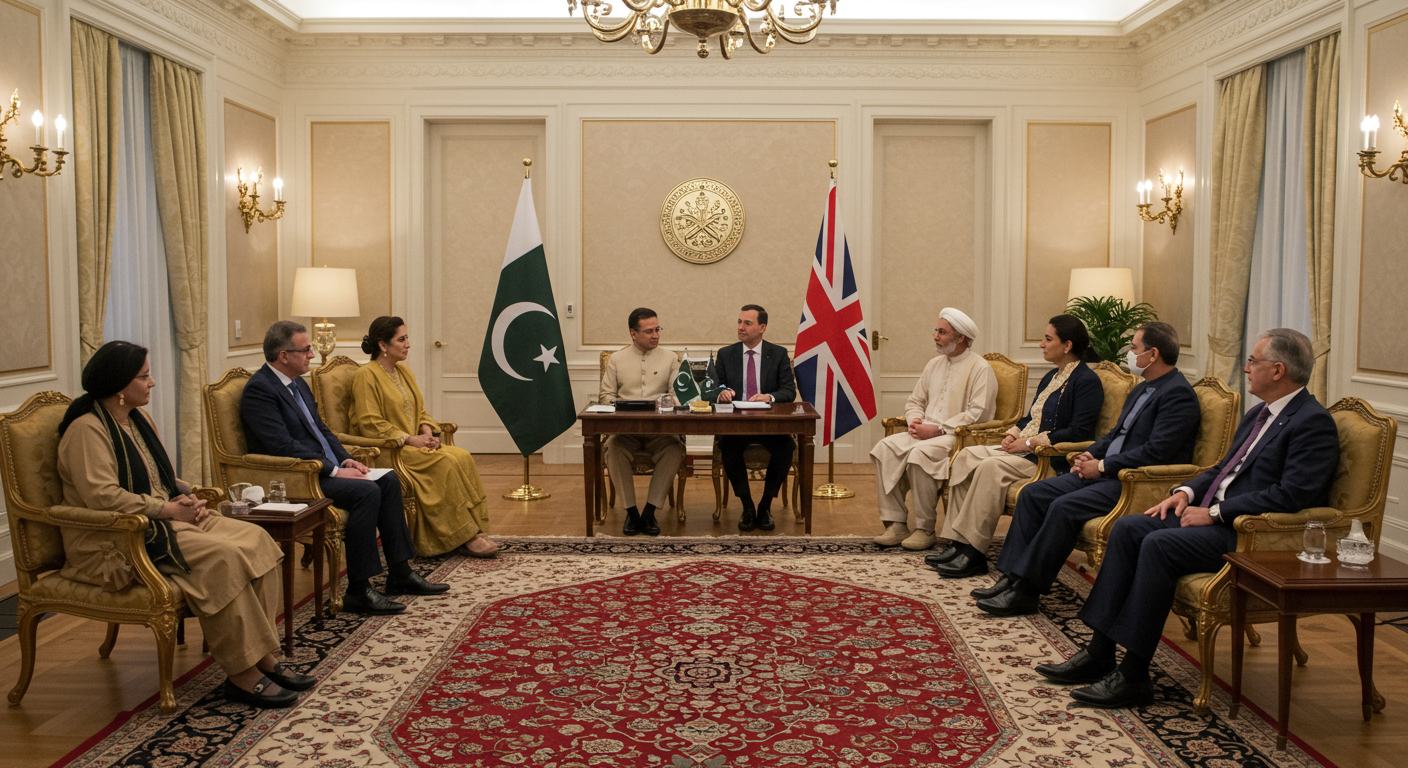
Visit of the British Trade Envoy, Mohammad Yasin, is a major event in an otherwise healthy bilateral economic relationship. Pakistan is keen to enhance its connections all over the world and is interested in foreign investment and expanding trade for economic resilience, and in this regard, this visit is a strong statement of confidence in the future of Pakistan. The riches of the bilateral links between both countries and the still very much unrecognised potential of having a stronger, more strategic economic cooperation can be underlined.
The United Kingdom is already one of Pakistan’s top economic partners. It is Pakistan’s largest European export market and the third-largest in the world. Over 200 UK firms have operations in Pakistan across a wide range of sectors, from financial services and energy to pharmaceuticals, chemicals, cement, and publishing. They are no token presences. The top five account for a combined one percent of Pakistan’s GDP, a testament to their scale and deep-seated place in Pakistan’s economy. However, as Mr. Yasin rightly said, much more can be achieved collectively. The journey, therefore, is not ceremonial in nature. It will pave the way for the UK-Pakistan Trade Dialogue, set to be launched later in the year, and will most likely construct a roadmap for greater cooperation, more efficient trade flows, and more investment opportunities.
Drawing from the economy restructuring aspect, Pakistan has pursued economic reforms incessantly. Faced with complex issues, Islamabad has doubled the stakes for diplomacy and economic interaction as key pillars of foreign policy-both regionally and globally. The much forward-looking agenda embraces reviving ties with traditional allies such as the United Kingdom but goes much further in creating an investment-friendly environment through regulatory overhaul, fiscal incentives, and institutional reform. The UK trade envoy visit, in a sense, fits in the larger envelop of this strategy. It is a moment to consolidate trust, explore possibilities for joint ventures, and streamline commercial priorities involving areas that both the partners consider strategic interest sites.
That said, the UK sees Pakistan not just as a developing economy but also as a potentially frontier market. Pakistan is a sizeable country-populous as the fifth in the world, with a growing middle class, a huge young skilled workforce, and an entrepreneurial environment able to keep pace with technological advancements. Its geopolitical and economic significance are made the more so against the backdrop of Pakistan’s extraordinary location straddling South Asia, Central Asia, and the Middle east. For UK businesses seeking to diversify supply chains and access high-growth emerging markets, Pakistan offers opportunity and scale. In addition, Pakistan’s needs for infrastructure, energy, clean technologies, and education align where the UK already has strengths. It is a win-win opportunity waiting to be seized.
The diaspora link also nurtures bilateral relations. The UK is home to over 1.6 million Pakistani origin individuals. They have made great contributions to the economy, culture, and public life of the UK, thus, acting as a sustenance link between the two countries in the trade, cultural exchange, and investment domains. Most of the business personalities in diaspora have played a major role in bringing UK investment into Pakistan in the housing, retail, and food sectors. Likewise, the UK remains one of the best destinations for Pakistanis for higher studies, with thousands of them going there every year for postgraduate studies. Thus, they are a generation of future diplomats, inventors, and professionals to further consolidate bilateral relations. The upcoming UK-Pakistan Trade Dialogue will provide a platform of institutions to address issues hindering trade and investment. These include regulatory roadblocks, taxation, and ease of doing business issues. It is comforting to know that both sides are not only willing to identify these problems but also solve them in conjunction. The UK possesses the capital and brains. Pakistan has the market and desire. The convergence of these abilities can set free shared prosperity if driven by vision and commitment.
The timing of the envoy’s visit is also politically opportune. As Pakistan seeks to rediscover itself within the global economic order, stronger economic relations with countries like the UK will help diversify its options and reduce over-reliance on a single region in isolation. With greater multipolarity in the international system, economic diplomacy is a vital tool of statecraft. Pakistan’s re-engagement with the UK is a testament to its dedication to harnessing equitable and sustainable development through economic diversification. The Pakistani government, particularly its Commerce Ministry and Board of Investment, must leverage the momentum left behind by Mr. Yasin’s visit. A clear and unambiguous message of transparency, openness, and policy stability must be communicated to potential investors. Previous efforts at investment promotion have been marred by red-tape delay or whimsical regulatory contexts. It is essential that this opportunity is not lost to the dynamics of yesterday. A credible sequel to this visit, culminating in the actual launch and rollout of the UK-Pakistan Trade Dialogue, will set the parameters for how far such intentions can be translated into actions.
📄 POLICY WIRE WHITEPAPER PUBLISHED: PAKISTAN'S NATIONAL SECURITY POLICY PRIORITIES
👉 READ BY CLICKING HEREThe significance of private sector engagement is no less. Pakistani entrepreneurs and business chambers must be proactive in showcasing their strengths, in engaging into partnerships, and in putting themselves at par with international standards. Business-to-business diplomacy and government-to-government drives are essential for the success of such initiatives. It is the time to identify newer cooperative areas of activity in newer sectors instead of depending on conventional ones. Renewable energy, financial technology, climate adaptation technology, vocational training, and digital infrastructure are potential areas where UK expertise and Pakistani demand can come together.
One can focus on the numbers and business reports too much, but it is people who generally sustain economic ties. Trade is not merely tariffs and treaties. Trade is people’s contacts, confidence, and long-term partnership. In that spirit, this visit is also an affirmation of the previous connection between the two countries. It is a show of shared values of enterprise, innovation, and respect. It is a promise of economic engagement not defined by dependency, but by partnership. In today’s interconnected world, economic diplomacy cannot be a sideline. It is the centerpiece of country development.
Pakistan’s choice to meaningfully and intentionally engage with a dominant economic power like the United Kingdom must be welcomed and nurtured. The visit to Pakistan by Mohammad Yasin is not just another item on the diplomatic agenda. It is a gesture of continuity, an affirmation of will, and a message that the doorway to deeper connections remains wide open. For Pakistan, it is not merely foreign capital. It is creating a more outward-facing, inclusive, and dynamic economy that is competitive in the world. The United Kingdom can be a valuable friend along the way. What is needed now is to translate goodwill into action. This visit may well signal the beginning of that change.
Author