

Semi-Truck Driver’s Plea: Justice, Logistics, and a System Under Strain
POLICY WIRE — Washington D.C., USA — The slow, grinding machinery of justice often moves with an almost deliberate inertia, particularly when confronting the complex realities of modern commercial...

POLICY WIRE — Washington D.C., USA — The slow, grinding machinery of justice often moves with an almost deliberate inertia, particularly when confronting the complex realities of modern commercial transport. On a Friday, from a phone line miles away in Florida, a routine legal maneuver unfolded in New Mexico, scarcely hinting at the profound ripple effects such incidents unleash across state lines and, indeed, continents.
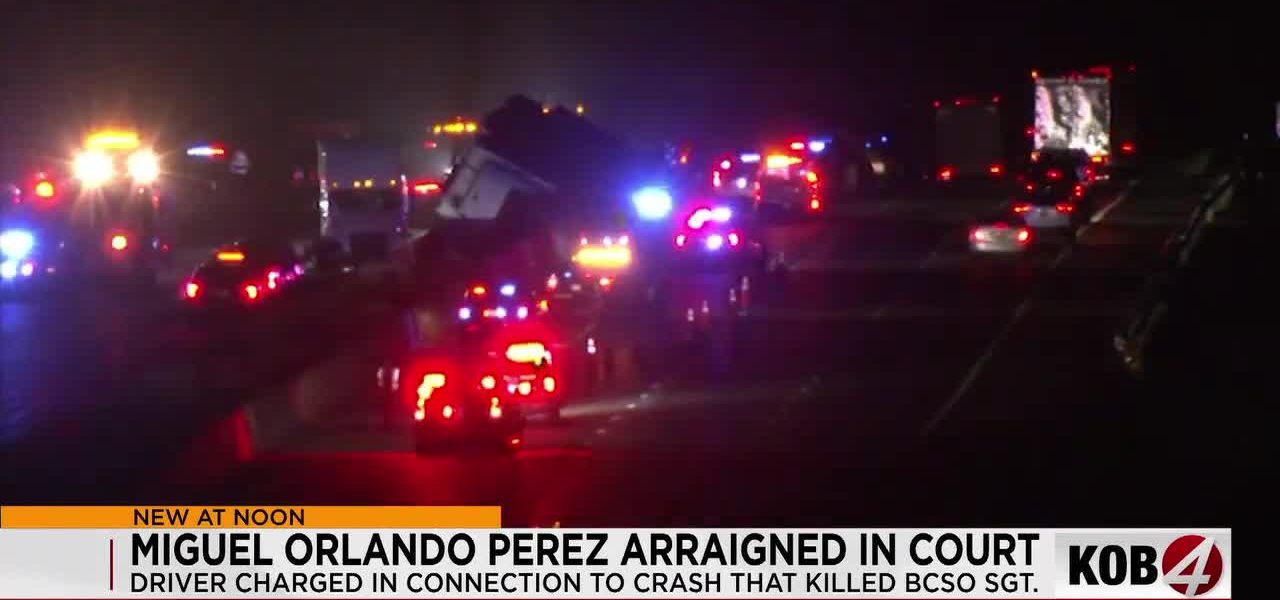
It was here that Miguel Orlando Perez, the man behind the wheel of a semi-truck involved in a February collision that claimed the life of a Bernalillo County Sheriff’s sergeant, communicated his defense. Perez appeared by phone with his lawyer entering a not guilty plea for him. This wasn’t some grand courtroom drama; rather, a stark, procedural confirmation that the legal battle ahead promises to be protracted, thorny, and—frankly—messy. The judicial process, you see, often moves at the pace of paperwork and, sometimes, spotty internet connections. [QUOTE_PLACEHOLDER]
Initially, Perez was supposed to appear virtually on Zoom but his lawyer said he had connection issues. They proceeded with him on the phone as the lawyer entered the plea. One can almost picture the scene: a remote plea, a technical hiccup, all while the specter of a deadly incident hangs heavy. And, just like that, the legal gears grind on, regardless of bandwidth woes.
Perez is charged with careless driving — and operating a vehicle on approach of an emergency vehicle. But this isn’t just about a local traffic infraction. The crash, a devastating collision on I-40, saw Perez’s semi-truck slammed into Schlattman’s patrol vehicle. The sergeant, Michael Schlattman, was conducting a stop there when the tragedy occurred. But how does accountability truly function when the alleged culprit is thousands of miles away, and the digital courthouse is prone to freezing pixels?
The judge decided he can remain in his home state of Florida. However, he has to check in virtually until trial. This arrangement, while seemingly pragmatic, casts a long shadow over the efficacy of jurisdiction when an alleged crime transcends state borders and involves operators critical to the nation’s supply chains. It also raises questions about fairness—both to the accused and to the community seeking redress. After all, a first-time careless driving charge carries up to 90 days in jail — and up to $500, if convicted. The financial burden is minimal, but the human cost isn’t.
This incident, far from isolated, is a stark reminder of the perils on American highways. According to data from the Federal Motor Carrier Safety Administration (FMCSA), there were 5,921 people killed in crashes involving large trucks in 2022. That’s a staggering number, each statistic representing a life irrevocably altered or extinguished. It isn’t just a US phenomenon, either. Nations from South Asia to the Arabian Peninsula grapple with similar, if not more pronounced, challenges in regulating massive commercial vehicle fleets that crisscross vast and often perilous road networks. Think of the intricate dance of heavy goods vehicles on the Grand Trunk Road through Pakistan, where diverse state regulations or, sometimes, the sheer absence of enforceable standards can lead to catastrophic outcomes, paralleling the American West’s sprawling interstate systems in their unforgiving nature.
📄 POLICY WIRE WHITEPAPER PUBLISHED: PAKISTAN'S NATIONAL SECURITY POLICY PRIORITIES
👉 READ BY CLICKING HEREThe systems might look different, the climates might be harsher, but the human element—the pursuit of commerce often outstripping the patience for safety—remains a universal constant. The very idea of an absentee defendant in such a grave matter might seem outlandish to some judicial systems overseas, particularly those accustomed to more immediate, localized forms of justice or detainment post-arraignment. Yet, here, it’s just another day in America’s legal saga. But what does it truly signify?
What This Means
This virtual courtroom appearance, culminating in a remote not guilty plea, is more than a procedural footnote. Economically, it points to the increasing tension between the rapid, geographically dispersed nature of the commercial trucking industry and the slower, more regionally bound mechanisms of justice. Drivers, who might live — and operate across dozens of states, pose a unique challenge for accountability. Legislators, then, must grapple with harmonizing state laws to ensure that justice isn’t merely theoretical but tangible, regardless of where an eighteen-wheeler—or its operator—calls home.
Politically, the case raises the persistent question of enforcement and oversight for the crucial but often overlooked freight sector. It’s a national security issue, you could say. Because every such incident fuels public skepticism, intensifying calls for stricter regulations, enhanced driver training, and more robust cross-state judicial cooperation. The reliance on virtual check-ins, while necessary for some, won’t soothe a populace yearning for clear accountability when a public servant is lost.
For policymakers, it highlights the need for a national dialogue on modernizing legal frameworks to keep pace with the realities of interstate commerce. This isn’t just about ensuring traffic safety, though that’s paramount. It’s also about upholding public trust in a justice system that, for all its grand ideals, often struggles with the practicalities of a hyper-connected, yet paradoxically fragmented, society. It’s a dry, sober assessment, but then again, that’s the nature of things when human lives intersect with colossal machines and ancient laws.