


Eriksen’s Repeat Scare: The Unseen Costs of Glory on the World Stage
POLICY WIRE — Copenhagen, Denmark — Another high-profile fixture, another collective gasp from millions across the globe. You’d think by now, the sheer force of medical science, coupled with...

POLICY WIRE — Copenhagen, Denmark — Another high-profile fixture, another collective gasp from millions across the globe. You’d think by now, the sheer force of medical science, coupled with billions poured into sports performance, would immunize elite athletes from sudden, terrifying collapses. But Christian Eriksen, the gifted Danish midfielder, just proved us all tragically wrong once more. For the second time in his storied, yet suddenly precarious, career, he succumbed to an on-pitch medical emergency. This isn’t just a sports story; it’s a chilling policy brief on human limits versus commercial demands.
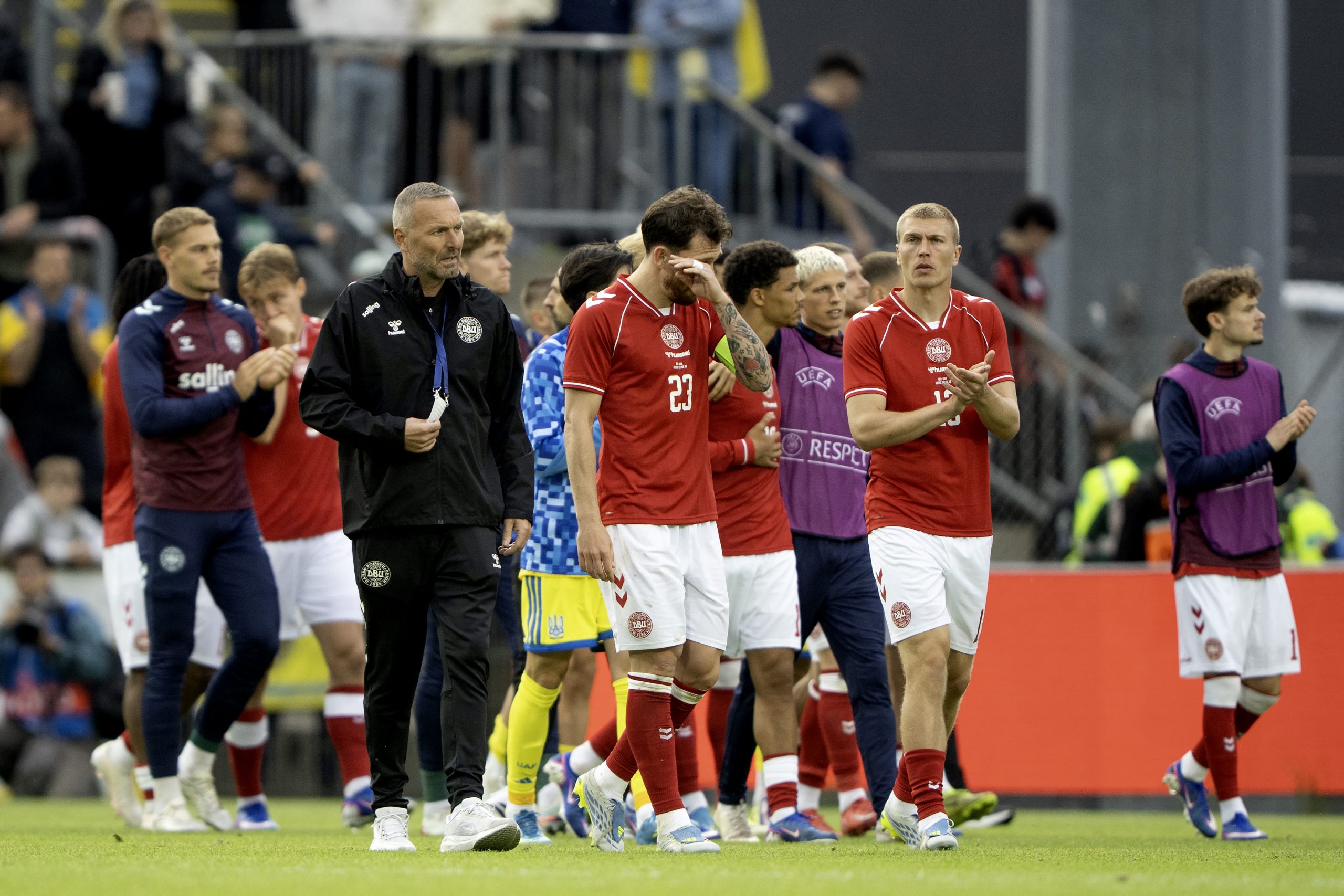
It was Sunday, during an international outing against Ukraine, when the former Manchester United man went down. The familiar, dreadful tableau unfolded: teammates forming a protective ring, medics rushing on, the hushed terror from the stands. If you’ve followed football at all, you remember the gut-wrenching silence from Euro 2021 when he first collapsed against Finland. That harrowing memory was still too fresh, an inconvenient truth nobody wanted replayed. Yet, there it was.
Thankfully, the initial reports suggest Eriksen is — astonishingly — okay. Morten Boesen, the Danish national team doctor, offered the cautiously optimistic prognosis on Monday morning. “Look, we’re all just incredibly relieved,” Boesen told reporters, a visible weight lifted from his shoulders. “Christian’s not only stable; he’s cracking jokes, believe it or not. The swift medical response, both on — and off the pitch, made all the difference here, plain and simple. We expect him home soon.” But that ‘simple’ reality belies a complex web of implications.
Because while Boesen’s words offer a much-needed sigh of relief for fans from Esbjerg to Karachi—where legions follow European football with religious zeal—the recurring nature of Eriksen’s episodes forces us to confront uncomfortable questions. How much risk is acceptable in the pursuit of sporting glory? And who truly bears the burden when a body, finely tuned as it may be, falters?
This isn’t a uniquely European quandary. Across Islamabad and Lahore, where football’s siren call captivates millions despite cricket’s dominance, the footage of Eriksen’s collapses resonates deeply. It’s a moment that transcends mere sport; it raises questions about athlete welfare in an industry where many nations, especially those in the Gulf with their immense investments in European leagues, are pouring billions into a sport that sometimes seems to treat its human capital as expendable commodities. The physical toll on these athletes is something many in developing nations, dealing with far more basic healthcare struggles, can only imagine.
The incident shines a harsh light on the relentless schedule, the travel, the intense competitive pressure — factors that push even the most robust human physiology to its limits. Statistics don’t lie. A study published in the Journal of Sports Sciences found that the incidence of sudden cardiac death in elite athletes, while rare, stands at approximately 1 in 40,000 to 1 in 80,000 athlete-years. Small numbers, perhaps, but with devastating personal — and public impacts when they occur on live television.
But the numbers only tell part of the story. The human cost, the trauma inflicted on teammates — and families, is immeasurable. And what about the long-term mental health impact on players who witness these moments or those who carry on despite underlying health concerns? It’s a dark undercurrent to the glitzy facade of professional sport.
“These incidents – and we’ve seen them too many times – aren’t isolated medical anomalies; they’re symptoms of an industry pushing human physiology to its breaking point,” asserted Dr. Aisha Rahman, head of the Global Athlete Welfare Initiative. She didn’t mince words, echoing sentiments heard from Riyadh to Jakarta. “We have to ask ourselves: are the profits — and prestige worth sacrificing a player’s well-being? It’s a question for governing bodies, certainly, but also for governments who increasingly view sports as a national asset.”
The focus on Eriksen’s rapid recovery is, of course, paramount. But beyond the headlines of relief, there lurks a policy void that cries out for attention. We’re talking about a player who, just months ago, returned from a similar crisis, fitted with an Implantable Cardioverter Defibrillator (ICD) – essentially, a tiny internal paramedic. His very presence back on the pitch, post-ICD, was meant to be a triumph of modern medicine — and personal fortitude. Instead, it’s now a second alarm bell ringing loud — and clear.
What This Means
This latest scare with Eriksen isn’t just another medical footnote in sports history; it’s a stark indicator of unresolved systemic issues within professional athletics. Economically, it exposes the vulnerabilities of multi-million-dollar investments in star players whose careers can vanish in an instant, irrespective of all the scientific backing. Teams, national federations, and major leagues face immense pressure to protect their assets, but the human element frequently gets shortchanged.
Politically, the repeat incident could — and should — prompt deeper introspection among sports governing bodies like FIFA and UEFA, which wield considerable power. It pushes for renewed dialogues on mandatory health screenings, workload management, and perhaps, even clearer protocols for players with pre-existing conditions. For nations like Pakistan, where public health initiatives often grapple with limited resources, observing such an event in elite, well-funded European sports provides a fascinating, if grim, case study. It highlights how even in the most technologically advanced medical environments, life can remain fragile.
it reignites the broader ethical debate: where do individual aspirations meet — or collide with — institutional responsibility? Because as we cheer for resilience, we also have to confront whether the price of professional sports might, at times, simply be too high. That’s a conversation no medical discharge can truly resolve.