

Twelve Provinces, One Dream
The concept of dividing twelve provinces in Pakistan is not only an administrative concept, it is a vision of rejuvenation, a dream of equity, and a guarantee of prosperity. It is about providing...

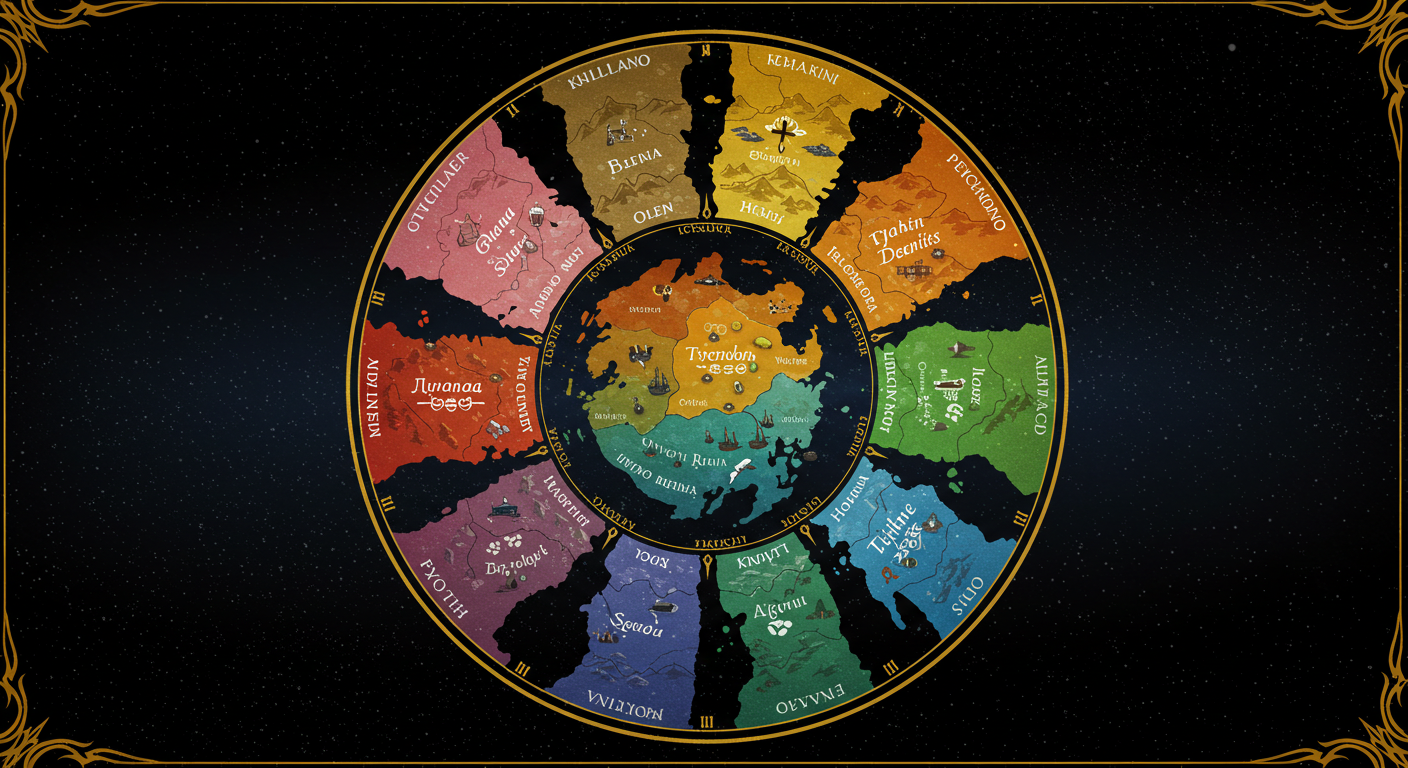
The concept of dividing twelve provinces in Pakistan is not only an administrative concept, it is a vision of rejuvenation, a dream of equity, and a guarantee of prosperity. It is about providing every Pakistani, particularly the youth, the assurance that their future is secured and opportunities are endless. It is about changing the very map of our country into a map of hope.
Each new province would bring with it new beginnings. There would be a new capital city, new government buildings, new universities to admit students, new hospitals to cure the afflicted, and new industries to offer livelihoods. They are not abstract ideas; they are living realities yet to be born. They would create thousands of jobs, provide infinite careers, and provide respectable opportunities for young Pakistanis willing to serve, to learn, and to lead.
Opportunities have been concentrated in just a handful of large cities for far too long. Far too frequently, young women and men from distant areas have to abandon their families and move to Karachi or Lahore to find employment. With twelve provinces, that narrative would be rewritten. No youth in Bahawalpur, Gilgit, or Gwadar would ever again feel excluded from the national promise. They would discover schools, training institutions, industries, and vocations where they rightfully belonged, in their hometowns.
This vision is not merely one of jobs; it is one of dignity. It is about informing a student in Turbat that he does not have to go hundreds of kilometers away from home to pursue opportunity, because opportunity will arrive where he is. It is about informing a family in south Punjab that their children will not have to leave their loved ones behind if they want to pursue a career, because both can be pursued side by side.
The advantages would extend far beyond the economic. By easing the burden from Karachi and Lahore, Pakistan’s magnificent mega-cities would have a healthier breath. Overcrowding would decrease, resources would be in balance, and the stresses of uncontrolled migration would be alleviated. People throughout the country would stay strong in their communities, families would stay intact, and cultural heritage would thrive as individuals thrive in their own neighborhoods. Each province would glitter with its own hue of progress, and collectively they would become a greater, more luminous Pakistan.
Imagine the future when each new province starts to generate leaders, professionals, and innovators of its own. Provincial assemblies would resound with the voices of young politicians keen to serve their people. Universities would churn out scholars and scientists whose perspectives are informed by the specific needs of their region. Industries would sprout out of the ground of every province, providing employment not only for the current time, but for generations to come. The innovation, the dynamism, and the genius of Pakistan’s youth would no longer be thwarted, it would be set free across the nation as a whole.
This is why the establishment of twelve provinces is not division, it is multiplication. It multiplies opportunity, multiplies access, and multiplies hope. It provides Pakistan’s youth with new platforms upon which to stand and new horizons toward which to reach. It disperses opportunity across the country like light dispelling darkness so that no part of Pakistan is left in the dark.
A twelve-province Pakistan would be a Pakistan in which each and every citizen has a sense of being seen, heard, and empowered. It would be a nation where the very map speaks words of opportunity, where each city and town becomes an emblem of progress. It would be the stamp of a nation that will not leave anyone behind, that has faith in its people, and that puts its youth at the forefront of its path forward.
This is the Pakistan our youth merit. A Pakistan that becomes more powerful by becoming more connected to its people. A Pakistan that realizes the complete potential of its most intelligent generation. A Pakistan that is prosperous, equitable, and united as never before. With twelve provinces, this is not a far-off dream, but a future within our grasp, a future waiting to be embraced.
Author