


Trump’s Drug Price ‘Mirage’: Billions in Savings, Yet the Deals Remain Shrouded
POLICY WIRE — WASHINGTON — It’s a political gamble of epic proportions, cloaked in promises of unprecedented savings and a veil of corporate secrecy. The Trump administration, battling skepticism and...

POLICY WIRE — WASHINGTON — It’s a political gamble of epic proportions, cloaked in promises of unprecedented savings and a veil of corporate secrecy. The Trump administration, battling skepticism and gearing up for bruising midterm elections, has unleashed fresh economic projections: President Donald Trump’s deals with pharmaceutical behemoths, designed to calibrate U.S. drug prices to international benchmarks, could ostensibly siphon an astonishing $529 billion from the nation’s healthcare tab over the coming decade.
But here’s the rub: these sweeping figures, calculated by White House economists for the Council of Economic Advisers, land amidst a political tempest, punctuated by demands for transparency and derisive snorts from congressional Democrats. They’re a potent talking point, sure – a fulcrum for campaign rallies where affordability concerns loom large – yet the actual mechanisms of these agreements remain tantalizingly out of public sight. Imagine a magician revealing the rabbit, but never the hat.
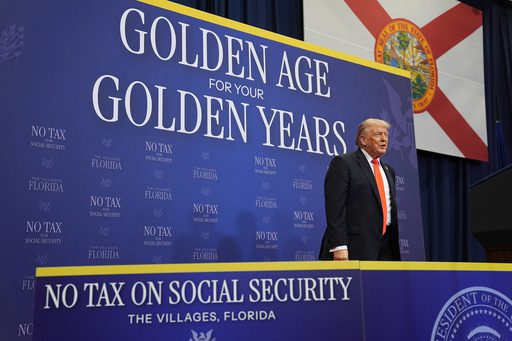
“Now you have the lowest drug prices anywhere in the world,” President Trump thundered at a recent rally before a Florida contingent of seniors, eyes undoubtedly fixed on November. “And that alone should win us the midterms.” His declaration, delivered with characteristic bravado, aims to solidify his legacy on healthcare affordability, particularly as inflation and energy costs (partly stoked by global frictions like the Iran conflict) gnaw at household budgets.
Still, the granular details of these ‘most favored nation’ policies, purportedly inked with 17 leading pharmaceutical firms, have been zealously guarded. A senior administration official, speaking on background, shot back at critics, asserting the necessity of discretion. “Our commitment remains unshakable: secure unprecedented savings for American families without compromising the very engine of medical innovation,” the official explained. “Proprietary clauses aren’t a shield for secrecy; they’re a safeguard for competitiveness – for an industry that pours billions into research every year.” (One could argue this line treads a thin path between protection and obfuscation, couldn’t one?).
And so, the chasm between White House proclamations — and public evidence widens. Senate Finance Committee Ranking Member Ron Wyden, D-Ore., reflecting the exasperation of 17 Democratic colleagues, didn’t mince words. “If these deals are so great, why is the Trump administration afraid of showing them to the public?” he charged, pushing for legislation to compel disclosure. It’s a fair query, especially when we’re discussing hundreds of billions in taxpayer — and consumer dollars.
The administration’s economists even optimistically posit that federal and state coffers could pocket an extra $64.3 billion via Medicaid savings alone over ten years. Yet, the projected savings hinge on a complex calculus, assuming new medications will emerge under this framework and that foreign countries would also shoulder a larger slice of drug development costs. Critics, however, fear a shell game: that pharmaceutical firms might simply shift costs, or that any savings won’t actually flow to patients, whose access is often mediated by insurance plans. Americans spent a staggering $467 billion on prescription drugs in 2024, according to the most recent government data available – making any genuine cost reduction a colossal prize.
Across the globe, from bustling Karachi pharmacies to remote rural clinics in Bangladesh, drug prices are a constant, often existential, point of contention. One wonders if the White House’s proclaimed ‘most favored nation’ approach, were it to truly rebalance global pricing, wouldn’t send ripples through supply chains stretching from European labs to manufacturing hubs in the Indian subcontinent. The delicate ecosystem of global pharmaceutical pricing, where U.S. consumers often subsidize research — and development for drugs sold cheaper abroad, could face a seismic shift. This isn’t just about America; it’s about the intricate silk road of data and commerce that underpins modern medicine.
Behind the headlines, Democratic lawmakers have already challenged the very premise of these claims. An analysis by staff for Sen. Bernie Sanders, I-Vt., uncovered a startling trend: 15 companies participating in these deals saw their combined profits soar by 66% over the past year, hitting $177 billion. They argue that Trump’s 2023 tax cuts conveniently “exempted or delayed many of the most expensive drugs” from Medicare price negotiations, effectively allowing pharma to feast while promising crumbs to consumers. The White House, predictably, dismisses Sanders’ critique as flawed, insisting it fixates on list prices rather than the actual, negotiated patient costs.
What This Means
At its core, this isn’t just about drug prices; it’s a quintessential election-year policy maneuver. The Trump administration desperately needs a win on an issue that directly impacts voters’ wallets, particularly those in critical swing states. The half-trillion-dollar figure, irrespective of its verifiable basis, serves as a potent campaign soundbite, designed to resonate with an electorate weary of rising costs. Economically, the theoretical shift to an international reference pricing model is compelling, but its implementation without full transparency sparks legitimate concerns about unintended consequences, including potential drug shortages or curtailed innovation if pharmaceutical companies perceive diminished returns. We’re also witnessing a fundamental clash over corporate accountability: is the public entitled to the specifics of deals impacting their healthcare, or do proprietary interests trump all? The outcome of this struggle will dictate not only the future of drug pricing in America but also the delicate balance between corporate autonomy and public interest, a dynamic that affects every nation plugged into the global pharmaceutical grid.