


Too Large to Govern as One: The Case for Dividing Balochistan
Balochistan is the largest of Pakistan’s provinces by a wide margin, covering roughly 347,000 square kilometres, close to 44 per cent of the country’s land area. It is also the emptiest,...

Balochistan is the largest of Pakistan’s provinces by a wide margin, covering roughly 347,000 square kilometres, close to 44 per cent of the country’s land area. It is also the emptiest, home to fewer than fifteen million people at the last census and the lowest population density in the country. That combination, an enormous and thinly settled territory administered as a single province, is at the centre of a problem that is usually discussed only in the vocabulary of security. Before it is anything else, Balochistan is a governance problem, and the shape of the province is part of it.
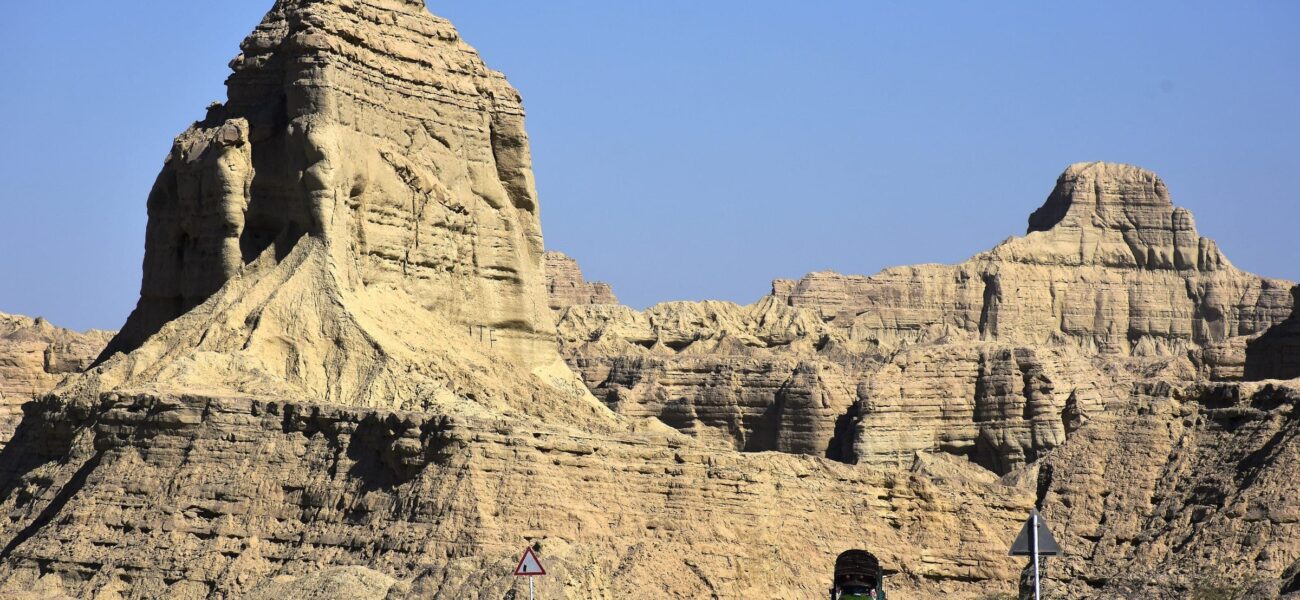
The geography alone tells much of the story. Balochistan is governed from Quetta, a city tucked into the far north-eastern corner of the province, closer to the Afghan border than to most of the territory it administers. The coastal district of Gwadar, the site of the province’s most publicised development project, sits roughly nine hundred kilometres from that capital, a day’s hard drive across desert and mountain. The districts of the Makran coast and the vast, near-empty expanse of the Rakhshan region are governed at a remove that would strain any single administration. A provincial government in Quetta reaching Gwadar is attempting something closer to running a distant colony than a neighbouring district.
Distance of that order does not stay neutral. It becomes neglect. Development, services, and the everyday presence of civil administration concentrate around the capital and thin out with every hundred kilometres from it, until in the farthest districts the state is encountered mainly through its security forces rather than its schools, clinics, or courts. A population that meets the state only in uniform, and rarely in the form of a functioning administration, develops a particular relationship with it, and that relationship is the reservoir from which alienation, and eventually insurgency, draws.
The long-standing Baloch complaint captures this directly. It holds that the province’s natural wealth, its gas, its minerals, and now its coastline, is drawn out while its people remain among the poorest in Pakistan. Whatever one makes of the specific claim, its substance is a question of governance and distribution rather than of ideology. A region that felt its own administration was setting its own priorities and spending its own budget within reach of its own people would have far less to resent. The grievance is, at bottom, about a government that is too far away to be answerable, and distance is a structural condition, not an attitude.
A single provincial structure also flattens a province that is not, in any real sense, one place. The north around Quetta and Zhob is predominantly Pashtun. The south and centre, across Makran, Kalat, and Rakhshan, are Baloch and Brahui. These regions differ in language, economy, and need, and forcing them into a single contest for a single budget decided in a single capital serves none of them well. A coastal district oriented toward fisheries and a port has little in common with an upland Pashtun district on the Afghan frontier, yet both must appeal to the same overstretched government hundreds of kilometres away.
The remedy that follows is administrative rather than military. Dividing Balochistan into smaller provinces, or at minimum devolving real authority and real budgets to an empowered divisional and local tier, would bring government within physical and political reach of the governed. A Makran province, or a genuinely empowered Makran administration, could set coastal priorities that a distant Quetta cannot see clearly and does not prioritise. Proximity delivers accountability as well as access, because a government answerable to a million people in its own region can be held to account in ways that a provincial capital governing fifteen million across a near-continental expanse cannot.
This is the political dimension of a problem that has been approached overwhelmingly as a security one. Security operations can suppress an insurgency’s capacity, but they cannot manufacture the thing whose absence sustains it, which is a state the periphery can actually reach. Administrative recognition, a province or an empowered unit of one’s own, with its own legislature and its own development budget, is one of the few instruments capable of converting a region’s grievance into a stake in the federation. A closer government is not a slogan. It is the missing half of a strategy that has leaned almost entirely on the other half.
The objections are real and worth stating. New provinces can entrench local elites and multiply patronage rather than improve services, and some argue the genuine fix is empowered local government rather than the redrawing of boundaries. Balochistan needs both, and the answer to elite capture is the same proximity that makes accountability possible in the first place. There is a further sensitivity specific to this province, which is that its ethnic map makes boundary-drawing fraught in a way it is not in Punjab. A province defined along the Pashtun-Baloch line touches questions of demographic balance and the Afghan frontier that require great care. For that reason the case is best made for the principle, smaller and closer units of government, rather than for any particular set of lines drawn from Islamabad.
That last point is the decisive one. Any restructuring imposed on Balochistan from the centre, without the consent of the people it reorganises, would become simply another grievance layered on the existing ones. The value of division lies in bringing government closer to the governed, and that value is lost entirely if the division is itself an exercise in distance. The reform has to be led with Baloch participation, or it defeats its own purpose.
Balochistan’s instability has many sources, and no single measure resolves them. But one source is structural and rarely named. A province this large, this diverse, and this thinly populated cannot be governed well as a single unit from one corner of itself, and the estrangement that distance breeds is not incidental to the province’s troubles. A state that administers close to half its territory and its most alienated population from a remote capital should not be surprised that the distance is felt as neglect. Bringing the state nearer is not a complete answer. But no answer that keeps it this far away is going to work, and on this question the map is part of the problem.
Author