
UK Supreme Court Warned Palestine Action Ban Eroded Anti-Terror Law Confidence
Legal teams tell the Supreme Court that banning Palestine Action caused a crisis of confidence in anti-terror laws and sparked mass civil disobedience.

POLICY WIRE — London, UK — The Supreme Court has been informed that the designation of Palestine Action has caused a “crisis in confidence” regarding British anti-terrorism statutes and led to unprecedented acts of civil disobedience by ordinary citizens.
In a major legal challenge launched last year to overturn the group’s banned status, attorneys representing co-founder Huda Ammori argued that no other organization for protest has faced such a level of state treatment.
The legal team informed the five justices that the nation’s highest tribunal had never been tasked with determining whether banning a group under terrorism laws conflicts with the rights to protest and free speech.
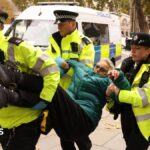
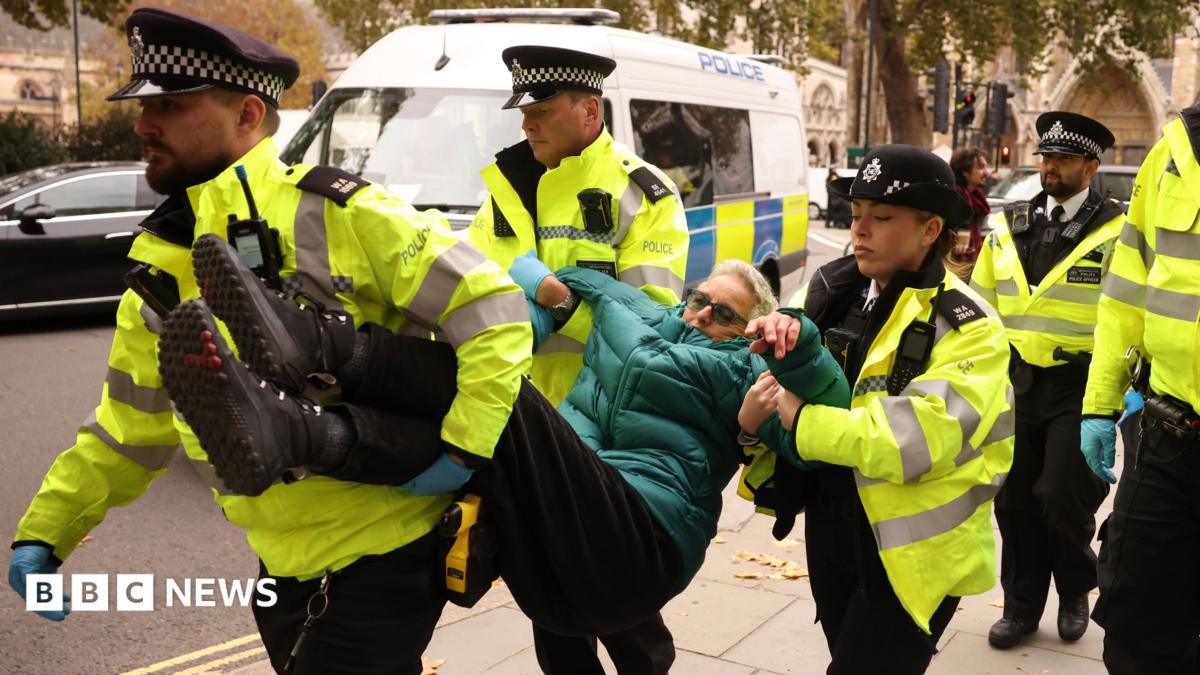
The Metropolitan Police reported that twenty-seven protesters were detained outside the Supreme Court on Wednesday while the proceedings were underway.
Counsel for Ammori noted that thousands of elderly individuals, including many who are veterans of various radical movements, have been arrested for simply displaying signs that support the group since it was proscribed.
Home Office data obtained by the BBC reveals that over 4,000 arrests have occurred at demonstrations where individuals held signage in favor of the organization.
In reality, many participants have faced multiple arrests, with prosecutors having authorized 1,200 charges to date. These legal cases remain pending the resolution of the current Supreme Court appeal.
Henry Blaxland KC told the court that the proscription achieved the exact opposite of its intended effect, rather than discrediting the group’s brand or depriving it of public attention.
He stated, “All it is done is to pour fuel on to a fire of one of the most publicly-contested issues of our time,” asserting that the move was completely unnecessary and disproportionate.
During intense questioning from the bench, Ammori’s lawyers acknowledged that Palestine Action cannot be classified as a peaceful protest group. They argued members engaged in direct action by occupying or vandalizing businesses linked to Israel.
Of 385 incidents, only three were categorized by the Home Secretary as offenses under the Terrorism Act. While the UK definition of terrorism includes significant property damage, at least two break-ins at defense firms resulted in millions in losses.
Raza Husain KC, representing Ammori, argued judges must look past the criminal allegations to evaluate if the Home Secretary’s decision-making process was proportionate. He noted the group was banned based on less than one percent of its activities over five years actually falling within the legal definition of terrorism.
The Home Secretary’s own experts admitted the vast majority of these actions—such as graffiti, minor vandalism, and lock-ons—would not constitute terrorism. While one member was jailed for breaking a police officer’s back, the legal team maintained the group never advocated for violence.
While free speech campaigners argue the ban interferes with the right to protest, a coalition of Jewish groups argued Palestine Action is a sinister entity targeting their community interests.
Adam Wagner KC, representing the Jewish groups, stated the Court of Appeal correctly identified the group as a violent terrorist organization. He claimed their activities are often covert and lack restraint, showing an escalating trajectory of seriousness since their proscription.
Wagner argued that the group’s focus shifted from the firm Elbit to various institutions deemed Zionist because activists view most British Jews and Jewish institutions as complicit” with Israel, a stance that threatens the mainstream Jewish community. The case is scheduled to continue on Thursday.
Reporting by Policy-Wire (PW)em>