


Titans of Tech Clash: A Public Feud, Corporate Chess, and the Global AI Race
POLICY WIRE — San Francisco, USA — When titans stumble, the ground beneath shakes, sometimes in unpredictable ways. And lately, the tech firmament has felt tremors not from innovation, but from...

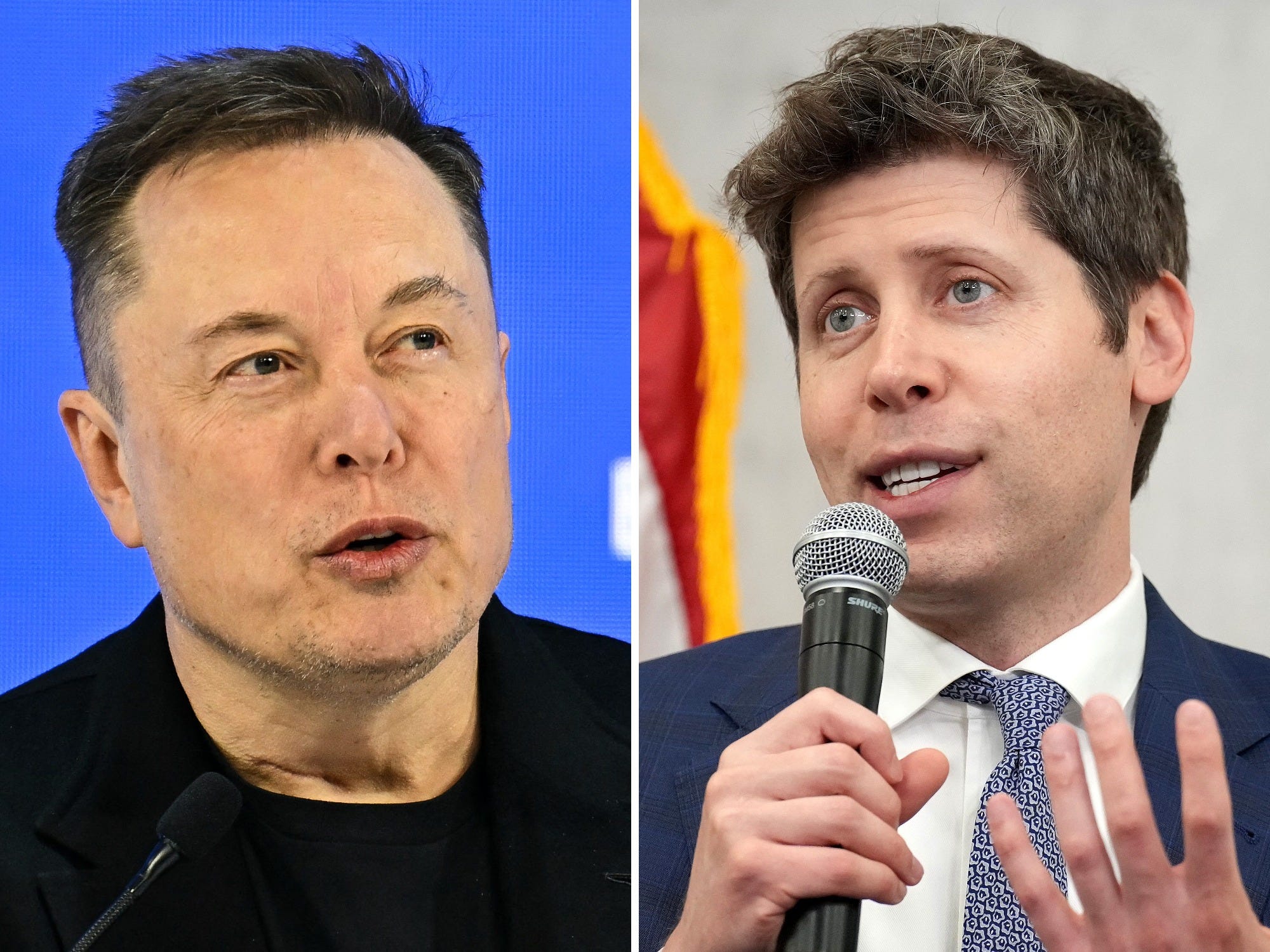
POLICY WIRE — San Francisco, USA — When titans stumble, the ground beneath shakes, sometimes in unpredictable ways. And lately, the tech firmament has felt tremors not from innovation, but from public animosity between its most verbose, powerful players. We’re not talking about some new algorithm shaking up the markets, but the enduring, personal friction between Elon Musk and Sam Altman, figures who, in their respective corners, wield influence that shapes industries and nation-states alike. This isn’t just about code or market share; it’s a spectacle, a raw, bare-knuckle brawl unfolding in the digital town square, drawing in the unsuspecting like moths to a particularly bright, burning flame.
It’s become almost a recurring spectacle, hasn’t it? Like a forgotten Greek tragedy played out with smartphones — and satellites instead of oracles. But it’s not just tech gossip; these aren’t garden-variety squabbles. Musk, the flamboyant visionary behind Tesla and SpaceX, recently filed a lawsuit alleging that OpenAI, under Altman’s stewardship, has strayed irrevocably from its foundational, non-profit mission of developing AI for the benefit of humanity. The claim? That the entity has transformed into a profit-driven subsidiary of Microsoft, effectively becoming a closed-source leviathan focused on maximizing returns. A bitter pill, certainly, for anyone who believed the initial, altruistic pitch. You gotta wonder if anyone still buys that narrative these days anyway. [QUOTE_PLACEHOLDER]
The core of Musk’s grievance appears to be that OpenAI, originally conceived as an open-source, non-profit endeavor—an antidote, really, to the looming dangers of superintelligent AI—has utterly abandoned its initial compact. He’s reportedly got documents. He’s got receipts. The legal filing reportedly detailed an initial agreement, forged when both Musk and Altman were integral to the organization’s inception, stipulating a transparent, open-source approach to AGI development. Instead, he claims, we’ve got secrecy. We’ve got a closed ecosystem. It’s a tale as old as time, or at least as old as Silicon Valley: money, influence, and the relentless march of commercialization eroding idealism. And in a sphere where data is power, where AI promises to reshape societies, this erosion isn’t just disappointing; it’s genuinely concerning.
Altman — and his camp, naturally, don’t see it that way. They’ve got their own story, their own spin, implying that Musk himself has made choices that betray a fundamental hypocrisy—perhaps attempting to pivot the venture for his own gain at one point. The response to the lawsuit came swift, a sort of public shaming from OpenAI, which unveiled private communications to suggest that Musk’s memory might be, shall we say, conveniently selective about past discussions on commercial viability and scaling needs. They put it right out there, challenging his narrative. It’s a bold move, exposing internal talks, turning the tables with a vengeance.
But consider the global implications, beyond the high-drama soap opera. The trajectory of AI development isn’t a purely Western affair, you know. Nations across the Muslim world, from the burgeoning tech hubs in Dubai to research initiatives in Malaysia, and the incredibly complex political landscape of Pakistan, are keenly watching this space. These are countries heavily invested in AI for everything from national security to economic diversification. When the very foundations of leading AI research become subject to internal strife and legal battles over ethics versus profit, it creates ripples. It raises questions about trust, about access, about who ultimately controls the levers of what might be humanity’s most powerful tool. And you know governments across South Asia are probably already drafting white papers on sovereign AI, fearing a monopolistic future driven by a select few in California.
It’s not just a debate between two incredibly wealthy men, remember. It’s a proxy war over the architecture of our future digital existence. The terms, the control—it all filters down. For instance, the demand for highly specialized AI talent has exploded. Data from LinkedIn suggests a 60% increase in job postings related to AI engineering and research over the past year globally, yet the talent pool capable of working on foundational models remains concentrated. This isn’t just a U.S. problem; it’s a global crunch, exacerbated by the uncertainties now playing out publicly. We’re watching a geopolitical tech conflict unfold, cloaked as a personal vendetta. It really does put everything into perspective, doesn’t it?
The stakes are incredibly high. It’s not just bragging rights at play. It’s the entire philosophical underpinning of artificial general intelligence — and its deployment. We’re seeing powerful individuals, driven by their beliefs—and perhaps egos—scrambling to define who owns the narrative, who owns the technology, and ultimately, who dictates the very terms of engagement with the machines that will redefine our species. This isn’t some quaint academic debate; it’s the legal system grappling with techno-philosophy on a scale we haven’t quite processed yet. And that, dear reader, is precisely what makes this saga so endlessly fascinating — and terrifying all at once. What kind of future are we building when the architects are too busy duking it out?
What This Means
This public fracas isn’t just Twitter fodder; it carries hefty political — and economic implications. For one, it’s a wake-up call for regulators, already scrambling to understand — and govern AI. This legal battle explicitly questions corporate governance in the burgeoning AI sector, especially the murky lines between non-profit mission and commercial imperatives. Governments worldwide, particularly those eager to carve out their own AI dominance or ensure equitable access—think nations aiming to bypass Western tech monopolies—will scrutinize the outcomes here. If OpenAI is seen to have deviated, it weakens the argument for open-source and potentially fuels greater governmental control over domestic AI development, a trend already underway in places like China and the UAE.
Economically, this sort of high-profile contention introduces significant uncertainty. Investors, partners, and even the talent pool will undoubtedly weigh the risks associated with an industry that appears to lack internal consensus on its most basic principles. It could chill investment in foundational AI research that isn’t directly tied to a clear profit model. the reliance on external capital, particularly from mega-corporations like Microsoft, highlights a delicate balance between funding breakthrough innovation and preserving ethical guardrails. The resolution of this specific dispute could set a precedent for how future AI companies structure themselves, how their missions evolve (or don’t), and ultimately, who gets to truly define and direct artificial intelligence for the masses. It’s a blueprint being drawn in real time, — and we’re all watching it, hoping it’s not sketching out a dystopia.