
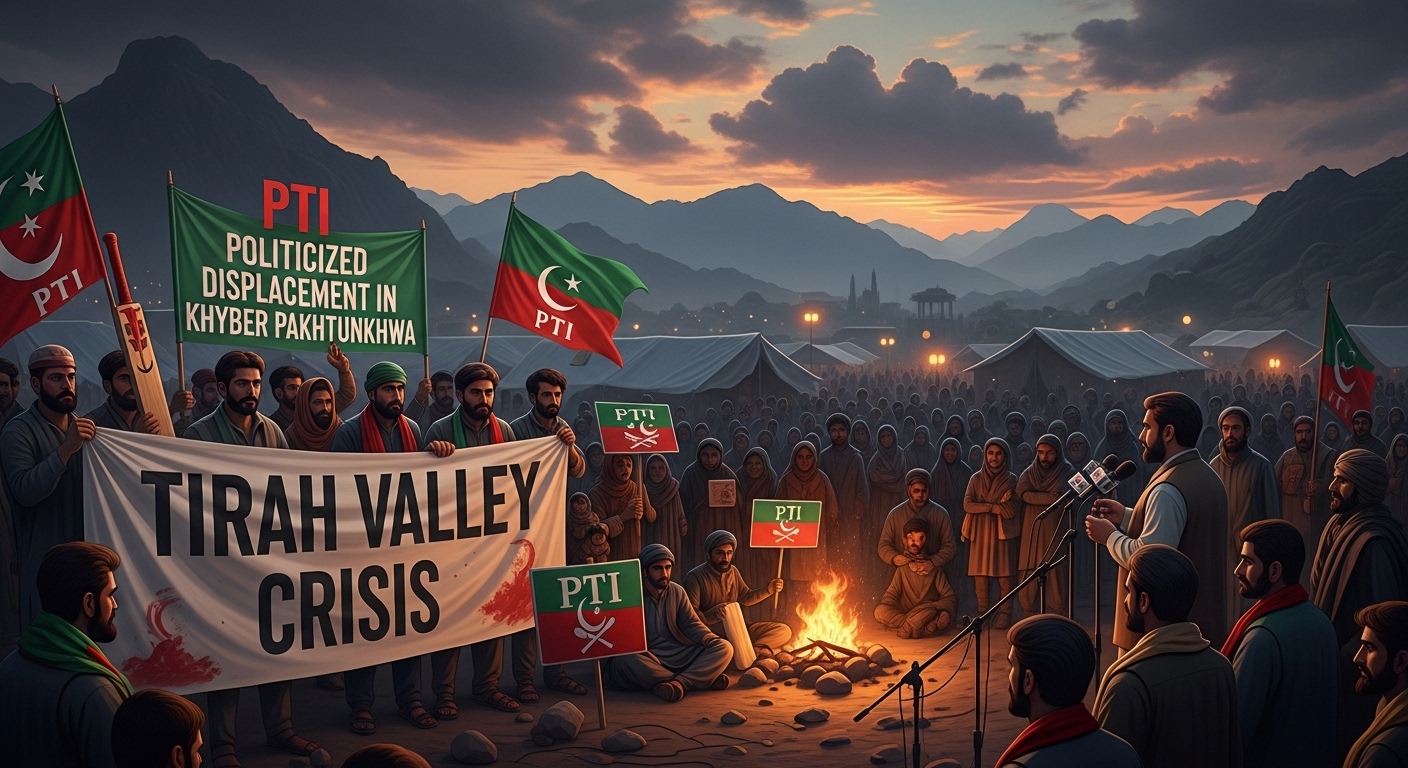
Tirah Valley Crisis How PTI Politicized Displacement in Khyber Pakhtunkhwa
The Tirah Valley dispute exposes a familiar political method inside Khyber Pakhtunkhwa. Crisis language replaces administrative clarity. Fear messaging replaces data. Pakistan Tehreek e Insaf...
The Tirah Valley dispute exposes a familiar political method inside Khyber Pakhtunkhwa. Crisis language replaces administrative clarity. Fear messaging replaces data. Pakistan Tehreek e Insaf leadership uses displacement narratives to regain relevance after electoral decline. The state faces security challenges near the Afghan border. PTI converts those challenges into political capital. Tirah Valley holds strategic weight. The region sits along porous mountain routes linking Khyber District to eastern Afghanistan. Terrorist used those routes after the collapse of border control during the last Afghan transition. Security agencies tracked movement through intelligence surveillance since mid-2024.
Federal officials stress limited intelligence based actions under the National Action Plan. Those actions differ from full scale military operations. Talal Chaudhry addressed the issue with precision. Federal records show no authorization for a new operation. Defense Ministry briefings confirm the same position. Weather conditions worsened during winter months. Heavy snowfall blocked supply routes. Local elders requested relocation timelines during jirga consultations. Provincial authorities approved relocation funds worth four billion rupees.
Displacement followed administrative notices from district offices. Those notices carried provincial seals. No document cited army orders. Audit trails later revealed payment irregularities. Senior finance officials confirmed diversion of relief funds through local contractors linked with political intermediaries. The Auditor General raised red flags during internal review meetings. PTI leaders framed displacement as forced evacuation. Social media teams amplified claims of secret military planning. Party spokespeople blamed Islamabad. Chief Minister Sohail Afridi echoed resistance language. The message targeted emotional memory from earlier counterterror operations. The method worked before. Public reaction forced institutional silence during past crises.
Political behavior under Imran Khan shaped this pattern. During his tenure as prime minister the National Action Plan expanded intelligence operations. KP government endorsed those measures through apex committee meetings. Cabinet minutes show provincial consent. Present claims deny that record. The contradiction weakens credibility. Security analysts interviewed for this report reject claims of a new operation. A retired corps commander described current actions as routine surveillance driven by threat alerts. A former interior secretary explained displacement dynamics during harsh winters. Communities often relocate temporarily for access to food and medical aid. District administrations manage those movements.
Economic incentives drive political messaging. PTI faces shrinking fiscal space inside KP. Federal transfers tightened after audit objections. Development budgets suffered cuts. Tirah funds offered relief and leverage. Control over allocation shaped political loyalty. Exposure of fund misuse threatened that control. Political escalation followed. Social consequences deserve attention. Families left homes during peak winter. Women and children faced shelter shortages. Relief camps operated under district supervision. NDMA data shows gradual stabilization after the first week. Health units treated cold related illness. Security agencies escorted convoys through mountain passes.
Federal officials stress transparency. Talal Chaudhry highlighted document review. Khawaja Asif reiterated policy alignment. Statements followed constitutional boundaries. No attack targeted security institutions. The narrative supported civilian oversight. The approach reduced friction between civil and military arms. Media amplification played a central role. PTI aligned outlets repeated evacuation claims without verification. Independent field reporters documented weather damage. Snowfall trapped residents across Tirah. Rescue teams evacuated stranded groups. Those reports received less airtime.
Expert opinion points toward structural fixes. Administrative coordination between province and federation requires strengthening. Real time disclosure of notifications reduces rumor spread. Independent audits of relief funds restore trust. Parliamentary oversight committees require activation with cross party presence. Security policy remains consistent. Intelligence based actions continue nationwide. The military follows civilian authorization. No deviation appears in Tirah. Officials emphasize early warning and containment. The strategy avoids mass displacement and collateral harm.
📄 POLICY WIRE WHITEPAPER PUBLISHED: PAKISTAN'S NATIONAL SECURITY POLICY PRIORITIES
👉 READ BY CLICKING HEREPolitical responsibility demands restraint. Crisis zones require calm language. PTI leadership chose confrontation. The choice reflected electoral strategy rather than ground reality. Public confidence suffered. Local elders expressed frustration during jirga sessions recorded by district officials. Data from the FATA Secretariat shows displacement patterns repeat each winter. Tirah witnessed similar movement during 2019 without military operations. Records support administrative explanations. Ignoring history fuels panic.
Solutions exist within constitutional frameworks. Provincial leadership must release fund utilization reports. Federal ministries should publish relocation criteria. Media houses must verify field data before broadcast. Political actors must separate governance from agitation. Pakistan faces persistent border threats. State institutions respond through coordinated policy. Politicization weakens that response. Tirah Valley deserves stability. Residents deserve clarity. National security demands unity of purpose. The Tirah episode reflects a broader lesson. Governance failures invite political diversion. Transparency blocks manipulation. Responsible leadership strengthens public trust. Pakistan’s state structure holds firm when facts guide policy.
Author