


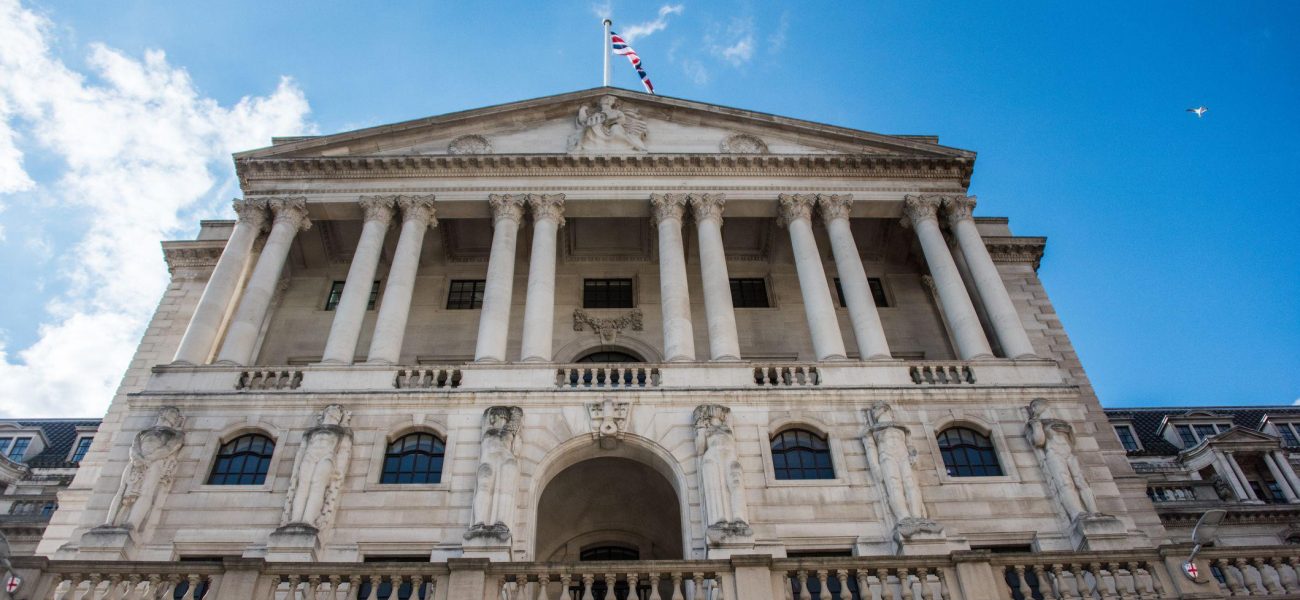
Threadneedle Street’s Ominous Nod: BoE Brace for Impact as Mideast Inferno Kindles Rate Hike Fears
POLICY WIRE — London, UK — The subtle shudder in global energy markets — a tremor that’s grown into a persistent vibration — has finally elicited a decisive, albeit carefully phrased, response from...

POLICY WIRE — London, UK — The subtle shudder in global energy markets — a tremor that’s grown into a persistent vibration — has finally elicited a decisive, albeit carefully phrased, response from the Bank of England. It’s no longer a matter of ‘if’ but ‘when’ and ‘how much’ for borrowing costs, as Threadneedle Street intimates an increasingly hawkish stance. The culprit? An escalating conflagration in the Middle East, its fiery tendrils reaching far beyond the Strait of Hormuz to choke supply lines and inflate prices on a global scale.
Behind the headlines of distant skirmishes and diplomatic maneuvers lies a stark economic reality: war isn’t just about casualties and borders; it’s about the relentless march of inflation. And that, it seems, has become the Bank’s singular preoccupation. Policy mandarins, typically masters of understatement, have abandoned much of their usual equivocation. They’ve seen the writing on the wall, etched in crude oil futures and surging shipping costs, pointing directly to a painful tightening of monetary policy.
And what a tightening it promises to be. Consumers, already smarting from a cost-of-living squeeze, should brace themselves. Mortgage repayments, credit card interest, business loans — they’re all set to climb. The Bank’s Monetary Policy Committee (MPC) isn’t merely reacting to domestic pressures; it’s grappling with the brutal arithmetic of global instability. «We won’t flinch from the necessary decisions to bring inflation back to target, even if those decisions are uncomfortable in the short term,» Governor Andrew Bailey is understood to have remarked privately to close associates, echoing his public commitments.
But the ‘short term’ in this equation feels increasingly protracted. The ongoing conflict involving Iran has fundamentally altered the calculus for central banks worldwide. It’s not just a regional spat; it’s a direct assault on the arteries of global commerce. Oil benchmarks, notoriously sensitive to geopolitical turbulence, have soared, pushing pump prices and manufacturing costs ever higher. This isn’t just abstract economics; it’s felt in every grocery bill — and utility statement.
Still, the implications stretch far beyond Britain’s shores. In Islamabad, Karachi, and other urban centers across South Asia, the ripple effects of every barrel of crude oil rising another dollar are acutely felt. Pakistan, for instance, a nation perpetually navigating a treacherous economic tightrope, relies heavily on imported energy. A sustained hike in oil prices, fueled by the Mideast cauldron, could easily ignite its already incendiary inflation rates, potentially destabilizing an economy striving for fragile recovery. The human cost there, though geographically distant, is inextricably linked to the geopolitical maneuvers unfolding thousands of miles away. It’s a stark reminder that prosperity in one part of the world is often contingent on tranquility in another.
«The Mideast cauldron isn’t just a humanitarian catastrophe; it’s an economic contagion, and its vectors are energy prices and supply chain integrity,» observed Dr. Anya Sharma, a senior economist at the London School of Economics, during a recent Policy Wire seminar. «Central banks like the BoE are essentially trying to douse a global fire with a garden hose, knowing full well the flames originate from a much larger, more volatile source.» It’s an unenviable position, isn’t it?
📄 POLICY WIRE WHITEPAPER PUBLISHED: PAKISTAN'S NATIONAL SECURITY POLICY PRIORITIES
👉 READ BY CLICKING HEREThe latest data underscores this predicament. The Office for National Statistics (ONS) reported that UK annual inflation, despite recent dips, remains persistently above the Bank’s 2% target, registering 3.2% in the most recent period – a direct challenge to complacent assumptions about price stability. So, the Bank finds itself pinned between a rock and a hard place: hike rates to curb inflation, thereby risking a domestic slowdown, or hold steady and watch purchasing power erode further. It’s a lose-lose proposition, made infinitely more complex by forces entirely beyond its control. The unspoken cost of this volatility is already palpable across European markets, mirroring a wider regional anxiety.
What This Means
At its core, the Bank of England’s recent pronouncements signal a profound shift in its battle against inflation. This isn’t a mere cyclical adjustment; it’s a structural response to a geopolitical crisis that shows no immediate signs of abating. For ordinary Britons, this translates directly into higher borrowing costs across the board. Mortgage holders on variable rates, or those facing remortgaging, will see significant increases in their monthly outlays. Businesses, too, will find credit more expensive, potentially stifling investment and hiring, thereby risking a slowdown in economic growth.
Politically, the implications are equally weighty. A tightening monetary policy, particularly one spurred by external conflicts, places immense pressure on the incumbent government. They’ll face public outcry over rising costs and a stagnating economy, with limited fiscal levers to counteract the Bank’s actions. The narrative shifts from post-pandemic recovery to crisis management, all while the specter of a broader Middle East conflict looms, further complicating energy security and trade routes. This situation underscores the interconnectedness of global finance and geopolitics, where a flare-up in one region can send consequential economic tremors across continents. It’s a harsh reminder that economic stability isn’t just forged in spreadsheets, but on battlefields far from home.