


Aftershocks of Negligence: Italy’s Morandi Bridge Verdict and the Peril of Public Trust
POLICY WIRE — Genoa, Italy — There’s a certain grim ballet in waiting for justice, isn’t there? The stage, in this instance, isn’t a grand opera house, but the sober halls of a Genoese...

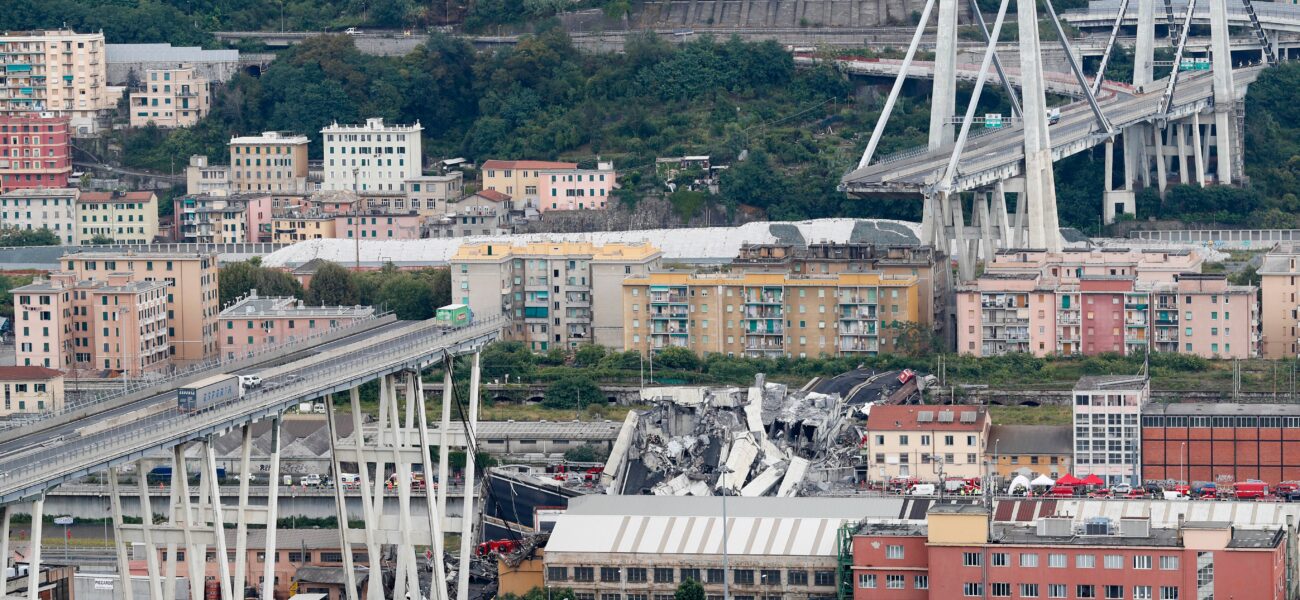
POLICY WIRE — Genoa, Italy — There’s a certain grim ballet in waiting for justice, isn’t there? The stage, in this instance, isn’t a grand opera house, but the sober halls of a Genoese courthouse. Six years after a stretch of the Morandi Bridge just… broke, sending cars and people plummeting, the final act in a grueling legal drama is upon us. You’d think a collapse of such magnitude – a veritable tear in the fabric of daily life – would yield a swift reckoning. You’d be wrong.
It was August 14, 2018, when 43 souls became statistics, swallowed by the collapsing concrete and steel that once symbolized Italian engineering prowess. Now, years of expert testimony, forensic deep-dives, and agonizing delays culminate in a verdict that will likely please few, regardless of its outcome. Because while families crave closure, this whole drawn-out affair is really a public autopsy on systemic rot, a bitter examination of where profit incentives collide, rather destructively, with basic civic duty.
The core of the legal wrangle circles back to those who maintained — or allegedly failed to maintain — the ill-fated span. Charges have flown thick and fast: multiple manslaughters, negligent endangerment, even fraud concerning the bridge’s safety reports. Autostrade per l’Italia (ASPI), the concessionaire then owned by the influential Benetton family’s Atlantia group, has been under the microscope, as have its top executives. Their defense, naturally, often leaned into the realm of “unforeseeable structural fatigue” or, in cruder terms, ‘stuff happens.’
“We can’t just shrug and call it fate when infrastructure crumbles on our watch,” stated Transport Minister Roberto Gualtieri, his voice edged with a familiar exasperation during a parliamentary hearing last year. “The trust of our citizens — their very lives — isn’t a variable to be balanced against quarterly earnings. We simply can’t accept that.” It’s a nice sentiment, but you have to wonder if it’s one shared universally in the labyrinthine corridors of private enterprise. A former ASPI operations manager, who requested anonymity during early procedural stages, was once quoted as arguing, albeit pre-trial, that “every maintenance decision was based on the prevailing industry standards and expert advice at the time. To suggest deliberate negligence is to ignore the complex engineering realities of aging infrastructure.” See? Everyone’s got a plausible story.
And Italy isn’t alone in grappling with its decaying circulatory system. Consider developing nations, places like Pakistan, where infrastructure development is rapid but often hampered by similar battles between speed, cost, and proper oversight. Questions of tendering transparency, the quality of materials, and the diligence of safety checks are often front and center in both Lahore’s rapidly expanding road network and Genoa’s collapsed bridge. This kind of systemic fragility isn’t geographically constrained. The stakes of oversight failures, digital or concrete, resonate globally.
📄 POLICY WIRE WHITEPAPER PUBLISHED: PAKISTAN'S NATIONAL SECURITY POLICY PRIORITIES
👉 READ BY CLICKING HEREThe tragedy of the Morandi was an international alarm bell, if anyone bothered to hear it above the clamor of construction bids. A European Union study from 2022 highlighted that roughly 15% of critical infrastructure bridges across member states, particularly older designs, required urgent, high-cost structural interventions, a figure often overlooked in national budgets. It’s an uncomfortable statistic, telling a tale of deferred maintenance — and fiscal myopia.
What This Means
This verdict, whatever form it takes, goes far beyond the 43 lives lost. Politically, it’s a tightrope walk for Italy’s government. A light sentence, or worse, widespread acquittals, could inflame public fury and reignite accusations of regulatory capture — where corporate influence trumps public safety. Conversely, a sweeping conviction could send shivers through other major infrastructure concessionaires, potentially driving up maintenance costs (and tolls), or even making some projects less attractive for private investment. Economically, the ramifications are palpable. We’re talking about massive companies with deep pockets. Punitive damages, while offering some compensation to victims, won’t undo the perception that public safety was negotiable.
The shadow of this disaster stretches across European capitals — and even further afield. It’s a grim reminder that our physical world requires constant, conscientious upkeep, particularly as economic pressures tempt shortcuts. But who pays the ultimate price when the structural integrity isn’t quite matched by the moral integrity? That’s the unspoken question hanging in the air over Genoa, long after the last rescue worker left the scene. And it’s a question you can bet other nations, like those across South Asia battling their own rapid growth and rickety old structures, are watching with particular intensity.