


Serena Williams: Wimbledon Exit, Legacy & Future
Serena Williams' Wimbledon withdrawal sparks reflection on her unparalleled legacy, the march of time, and global impact. Is this the end of an era?

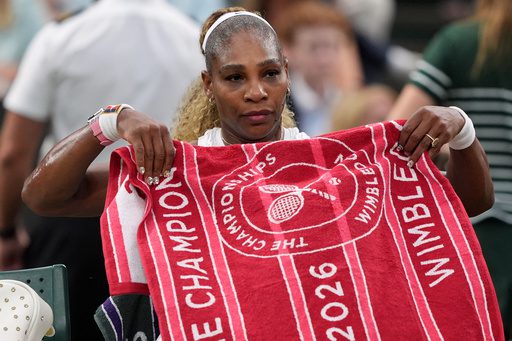
POLICY WIRE — London, UK — For a star whose career has been a seismic tremor across the sporting landscape for decades, the abrupt withdrawal wasn’t the crescendo many anticipated. No, the headlines blared something far more prosaic: a knee. But behind the clinical medical brief lies a narrative considerably richer than a simple health update. This isn’t just about Serena Williams pulling out of Wimbledon doubles; it’s a moment of forced reflection on legacy, the relentless march of time, and the surprisingly fragile nature of even the most formidable athleticism.
It was Saturday when news dropped that Serena, age 44—an astonishing figure in professional tennis—had officially withdrawn from the mixed doubles match she was to play with her elder sister, Venus, 46. And the reason, rather unglamorously, was a right knee injury. This wasn’t some minor niggle, either. It stems from a three-set loss earlier in the week during her singles return, where she fell to the much younger, 20-year-old Maya Joint of Australia in a scoreline that read 6-3, 6-7 (6), 6-3
, according to AP reports. A stark reminder, if any were needed, that youth, ultimately, always gets its turn at the top. [QUOTE_PLACEHOLDER]
The younger Williams sister didn’t mince words about her disappointment. She took to Instagram, as so many do now to communicate raw emotions, revealing her physical plight. I’m heartbroken to have to withdraw from doubles. Coming back to compete again has been a gift, and the opportunity to play alongside (at)venuswilliams once more meant the world to me. I did everything I could but unfortunately my knee just isn’t ready to compete.
But, see, it wasn’t just a lament. It was also an education into the often brutal reality of professional sports; her post also featured images of what she described as syringes that shows the fluid they drained from my knee after my singles match.
And to underscore the battle, an accompanying video depicted her walking with visible strapping on her right leg—and one of her daughters holding a cane for her. It paints quite the picture, doesn’t it?
Their careers—these two sisters, who once upon a time turned the tennis world upside down—have always been more than just about points and titles. They’re a cultural phenomenon. Their power, their presence, their unwavering fight, it resonates far beyond the meticulously manicured courts of SW19. For instance, in places like Karachi, Pakistan, where sports narratives often lean towards cricket, the sheer determination embodied by the Williams sisters has consistently captured imaginations. Young athletes, particularly girls who aspire to break traditional molds, frequently look to figures like Serena and Venus as paragons of what dedication, talent, and an unshakeable belief in oneself can achieve. Their story, of transcending societal barriers to dominate a largely elite, historically white sport, has inspired a generation of women across South Asia and the broader Muslim world to pursue their own passions, be it in sports, academics, or business. It’s not an exaggeration; their impact truly is global.
This Wimbledon turn of events means an unprecedented moment, a pause in a journey. This specific doubles pairing—six-time champions at Wimbledon—had their first-round match against Camila Osorio and Solana Sierra pushed back just to grant Serena extra recovery time. Even then, it wasn’t enough. It seems Father Time remains undefeated. Yet, ever the competitor, Serena offered a tantalizing, if vague, hint about her immediate future: All I can say,
she wrote, is stay tuned to a city near you.
One can almost hear the gears turning in her mind, plotting the next move even as her knee protested.
📄 POLICY WIRE WHITEPAPER PUBLISHED: PAKISTAN'S NATIONAL SECURITY POLICY PRIORITIES
👉 READ BY CLICKING HEREMeanwhile, Venus did get to play some tennis, competing in mixed doubles with Kevin Krawietz on Friday, though they lost in straight sets. It’s hard to imagine, though, that even this match commanded as much attention as a potential Serena and Venus doubles run. Their joint appearances, even at this advanced stage of their careers, carry a special weight, a nostalgia for a golden era that redefined a sport.
What This Means
The enduring presence, — and now, the increasing fragility, of athletes like Serena Williams isn’t just a sports story. It’s an economic indicator. It speaks to the monetization of legacy in an age of insatiable sports content. Broadcast rights, endorsement deals, event sponsorships—they all pivot around marquee names. When such figures edge closer to permanent retirement, there’s a tangible economic vacuum that broadcasters and sponsors will scramble to fill. Consider the broader market for athletes who transcend their sport, like the one discussed in The Ghost in the Draft. The draw of the Williams sisters is still immensely powerful, but how much longer can that commercial engine run? The collective sigh from Madison Avenue agents was almost certainly audible across the Atlantic.
Politically, too, the symbolism endures. For marginalized communities globally, including many in South Asia and Africa, the Williams sisters aren’t merely tennis players. They’ve long served as a representation of perseverance against systemic barriers. Their journey, often difficult and groundbreaking, provides a relatable blueprint for aspiration that few public figures can match. And because, let’s be honest, sports icons at this level are brand names, these withdrawals highlight the uncomfortable transition periods that mark the sunset of a legend. Their presence provides a counter-narrative to those who would confine women—especially women of color—to pre-ordained roles. This isn’t simply a knee injury; it’s another subtle reminder that all good things, even the truly iconic, eventually recede, leaving us to ponder who—or what—comes next.