
The Unravelling Thread: Mendy’s Injury Exposes Real Madrid’s Fragile Imperial Ambitions
POLICY WIRE — Madrid, Spain — In the gilded, high-stakes theatre of modern professional football, few things puncture the illusion of invincibility quite like a recalcitrant rectus femoris tendon....

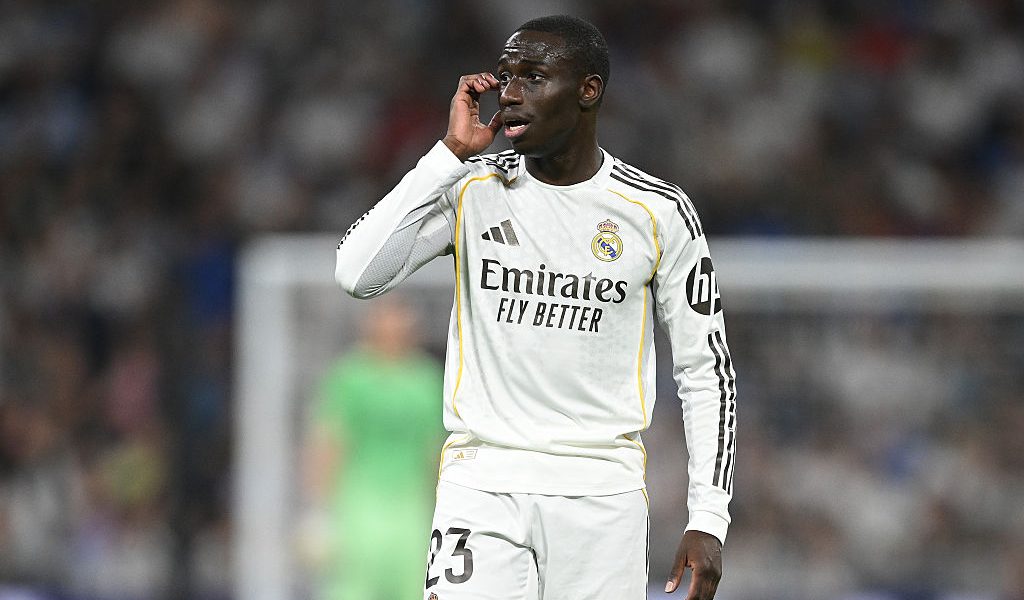
POLICY WIRE — Madrid, Spain — In the gilded, high-stakes theatre of modern professional football, few things puncture the illusion of invincibility quite like a recalcitrant rectus femoris tendon. And so, the news from Valdebebas regarding Ferland Mendy isn’t merely a medical update on a key defender; it’s a strategic tremor, reverberating through Real Madrid’s carefully constructed empire, exposing its underlying economic and sporting fragilities at a most inopportune moment.
The club’s curt, clinical statement confirmed the French left-back has sustained a rectus femoris tendon injury in his right leg. It’s a significant blow, obviously, one that has already sent ripples of concern through Carlo Ancelotti’s coaching staff. Recovery could stretch to a grueling five months, an eternity in the unforgiving cadence of elite football. This isn’t just about a player missing a few games; it’s about disrupting a crucial defensive pillar during the season’s decisive crucible, forcing a desperate scramble for tactical alternatives and, inevitably, weighing heavily on the club’s colossal balance sheet.
“It’s a trying moment, no doubt, but we’ve always prided ourselves on squad depth and resilience,” shot back Carlo Ancelotti, the venerable Real Madrid coach, when pressed on the injury’s ramifications. “Every player knows the imperative to step up, to fill the void. We don’t dwell on setbacks; we adapt.” His words, while outwardly resolute, barely mask the inherent tension. Any prolonged absence for a player of Mendy’s caliber forces the tactical chessboard to be overturned, demanding improvisational genius when consistency is paramount.
But the ramifications extend far beyond the pitch. At its core, modern football is a multi-billion-dollar enterprise, where player health is a tangible asset and injuries are unforeseen liabilities that can derail commercial ventures, broadcast deals, and ultimately, investor confidence. Real Madrid, a club boasting an astonishing revenue of €831.4 million for the 2022/23 season (Deloitte Football Money League), operates on a scale where every performance hiccup translates into potential economic erosion. The quest for trophies isn’t just about glory; it’s about safeguarding this gargantuan financial apparatus. So, for a player valued north of €40 million to be sidelined for half a season, it’s not just a coach’s headache, it’s a boardroom problem.
Behind the headlines, this isn’t merely a European football story; it’s a global one. Real Madrid isn’t just Madrid’s club; it’s a transnational corporation of soft power, its brand permeating cultures and economies worldwide. In vast swathes of the world – from Indonesia to Pakistan, across the Muslim world and throughout South Asia – the club commands a fanatical following. They’ve millions of impassioned supporters, many of whom meticulously follow every press conference, every injury update, their emotional investment as profound as any local patron’s. News of Mendy’s injury thus doesn’t just register in Spain; it percolates through countless WhatsApp groups in Lahore, sparks debates in Cairo cafes, and influences merchandise sales in Jakarta. It’s a collective blow, felt keenly by a diaspora of devotees who identify deeply with the club’s fortunes.
“This isn’t just about losing a left-back; it’s about disrupting a finely tuned machine, especially when rivals are breathing down their necks in both domestic and European competitions,” observed football pundit Piers Kavanagh for a prominent sports journal, offering a less optimistic, if more pragmatic, view. “Real Madrid, for all its history, finds itself on a perpetual transfer market tightrope, always seeking that perfect balance between financial acumen and sporting ambition.” It’s a dynamic familiar to many of Europe’s elite clubs, including its Catalan rival, constantly navigating that precarious balance. Mendy’s absence could inflate the perceived need for a costly replacement, throwing a wrench into meticulously planned summer transfer strategies.
📄 POLICY WIRE WHITEPAPER PUBLISHED: PAKISTAN'S NATIONAL SECURITY POLICY PRIORITIES
👉 READ BY CLICKING HEREWhat This Means
This injury represents more than a temporary inconvenience; it’s a test of Real Madrid’s intricate strategic architecture. Politically, it places immense pressure on club president Florentino Pérez — and Ancelotti. The club’s narrative, built on relentless success, demands immediate solutions. Failure to adequately compensate for Mendy’s absence could invite criticism, jeopardizing Ancelotti’s standing and impacting fan sentiment – a vital currency for any footballing behemoth. Will they opt for an internal solution, elevating a promising youth prospect, or will they be forced into the market for a stopgap, potentially overpaying for talent in an already inflated economic climate? The decision isn’t purely sporting; it’s a high-stakes political manoeuvre, too.
Economically, the situation is even more nuanced. A dip in form or a premature exit from major competitions due to defensive vulnerabilities could have direct financial consequences: reduced prize money, diminished broadcast revenue, and potentially lower merchandising sales. the club’s ability to maintain its global brand supremacy, particularly in burgeoning markets like South Asia where football’s popularity is skyrocketing, hinges on its consistent visibility at the pinnacle of the sport. A weakened team, even temporarily, risks diluting that carefully cultivated brand equity. The peril of imperative to win at all costs, despite such setbacks, is a constant specter hanging over these institutions.
And so, a single injury to a single player isn’t just a medical note; it’s a stark reminder of the delicate equilibrium upon which sporting empires are built – a fragile ecosystem where human biology, monumental finance, and global aspirations inextricably intertwine. It’s a moment that will define not just Real Madrid’s season, but perhaps, its strategic direction for years to come.