


AI Pricing: Is an Algorithm Charging You More?
AI algorithms are replacing fixed prices with personalized costs based on your data. Discover how this 'surveillance pricing' impacts your wallet and fairness.

POLICY WIRE — Washington D.C., USA — It’s not just your phone listening anymore. Soon enough, the corner store—or the digital storefront, more accurately—might just be sizing up your bank balance the moment you walk through the virtual doors. Forget the notion of a universal price; we’re on the cusp of an era where every transaction becomes a bespoke financial negotiation, with artificial intelligence acting as the invisible, cold-hearted merchant assessing not just product value, but *your* value as a customer.
Jamey Tucker’s recent observations shed a stark, discomfiting light on a retail future—or perhaps, present—that feels ripped straight from a dystopian novel. We’ve always assumed prices were fixed, stable things, the same for everyone. But AI, coupled with ever-more sophisticated data harvesting, makes that a quaint, rapidly fading fantasy. Think about it: every single click, every abandoned cart, every location ping from your device paints a granular picture of your spending habits and, more disturbingly, your perceived affordability. Companies may know far more about you than the shopper sitting next to you. [QUOTE_PLACEHOLDER]
And it’s already happening. Several investigations have already found companies charging different prices based on factors like a customer’s zip code. But that’s rudimentary stuff, like using a bludgeon when a scalpel is available. The real play, the one keeping consumer advocates up at night, involves facial recognition and AI to adjust prices in stores based on how much you can afford. It’s a chilling prospect. One that turns every online purchase, every in-store browse, into a potential wealth assessment.
Policymakers here in Washington are — let’s just say — contemplating this looming digital reality. Federal regulators are investigating surveillance pricing, which tells you they’re beginning to grasp the sheer scope of the challenge. Lawmakers are considering whether companies should be allowed to use personal data to determine prices in the future. Because make no mistake, the technology is already here. Critics worry the same technology could be used someday to determine not just what you see but what you pay. It’s an arms race of data, with corporations accumulating mountains of personal information, often with little to no consumer awareness or consent. For instance, a recent industry report indicated that 78% of online shoppers were unaware their data could be used for dynamic pricing based on personal attributes.
Imagine, if you will, being a new immigrant in a nation like Pakistan, where digital adoption is soaring, and informal economic sectors are vast. The lure of convenient online shopping or instant digital loans becomes immense. But what if those very systems are designed to extract more from those perceived as desperate or financially vulnerable? What if algorithms, trained on socio-economic markers—perhaps even community demographics or traditional housing patterns—systematically offer different rates for goods or financial products to a family in Karachi’s Korangi versus one in Defence Housing Authority? It’s not far-fetched. The foundational data patterns that allow for personalized pricing here could be amplified, and made even more discriminatory, in environments with fewer consumer protections and higher reliance on emerging digital infrastructures. The notion of a transparent, universal marketplace—a bedrock of trust and fairness—evaporates.
📄 POLICY WIRE WHITEPAPER PUBLISHED: PAKISTAN'S NATIONAL SECURITY POLICY PRIORITIES
👉 READ BY CLICKING HEREProving that companies are charging different prices to different shoppers based on personal information is much harder. Indeed. That’s the entire point. They aren’t going to send you a notification saying, Hey, we think you’re rich, so we bumped up your mattress price by 15 percent! My own attempts to uncover discrepancies, trying different browsers, accounts, even locations, yielded no obvious smoking gun. That’s not because it’s not happening; it’s because the algorithms are sophisticated, dynamic, — and opaque. And we’re dealing with sophisticated players, folks who’ve perfected the art of knowing more about us than we’d care to admit.
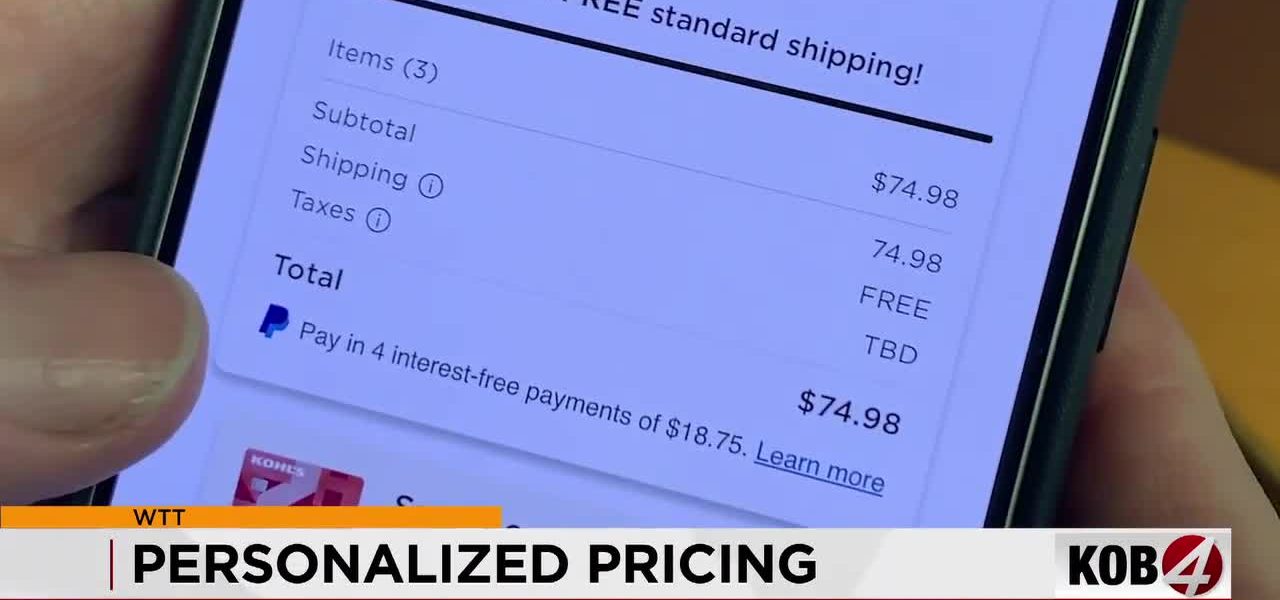
Because every time you shop online, companies may know your location, whether you’re logged into your account, what you’ve purchased before, what you’ve searched for and even what you’ve left sitting in your shopping cart without buying. These aren’t just benign suggestions for relevant products, discounts — and recommendations. It’s an information arbitrage opportunity. It’s leveraging asymmetric knowledge against a largely unsuspecting public. The power imbalance is stark.
What This Means
The rise of personalized pricing isn’t merely a business model adjustment; it’s a profound political and economic challenge. Politically, it erodes trust in the marketplace — and poses significant questions about consumer sovereignty and equity. If prices are determined not by market dynamics but by individual profiles, then market transparency, a key pillar of fair competition, becomes an illusion. Governments will face mounting pressure to establish robust regulatory frameworks, but these are difficult to draft when the very mechanisms are hidden deep within proprietary algorithms. Economically, this trend could exacerbate wealth disparities, potentially penalizing less affluent consumers who, perhaps ironically, rely more heavily on digital shopping for convenience or access. Companies say artificial intelligence can make shopping better. Sure. But improved for whom? For the companies’ bottom line, most likely. For consumers, especially those already struggling, it could mean a systematic siphoning of precious funds. This isn’t just about paying a few extra dollars for a widget; it’s about re-engineering the very fabric of commerce to a point where fairness is an unquantifiable, unenforceable metric.