


The Price of Pitching: When a Star’s Arm Shields an Empire’s Fault Lines
POLICY WIRE — Kansas City, USA — The hum of Kauffman Stadium, usually a balm for beleaguered souls, felt different yesterday. Tighter, maybe. It’s funny how an unassuming right-hander from the...

POLICY WIRE — Kansas City, USA — The hum of Kauffman Stadium, usually a balm for beleaguered souls, felt different yesterday. Tighter, maybe. It’s funny how an unassuming right-hander from the Bronx—a kid named Cam Schlittler, for heaven’s sake—can carry the weight of a multi-billion dollar enterprise, his very arm perhaps the only thing keeping the whole shiny edifice from an ignominious tumble. The New York Yankees, America’s most storied baseball dynasty, were staring down an existential abyss a mere week ago, deep into a gut-wrenching 4-10 skid. Then, they snagged two improbable wins, snatched from the jaws of defeat in the ninth inning. Yesterday’s narrow victory against the struggling Royals? Shortstop Anthony Volpe, he’d been hearing it for weeks, slammed a two-run single that changed everything. Poof. Just like that, the ledger looks a touch less grim.
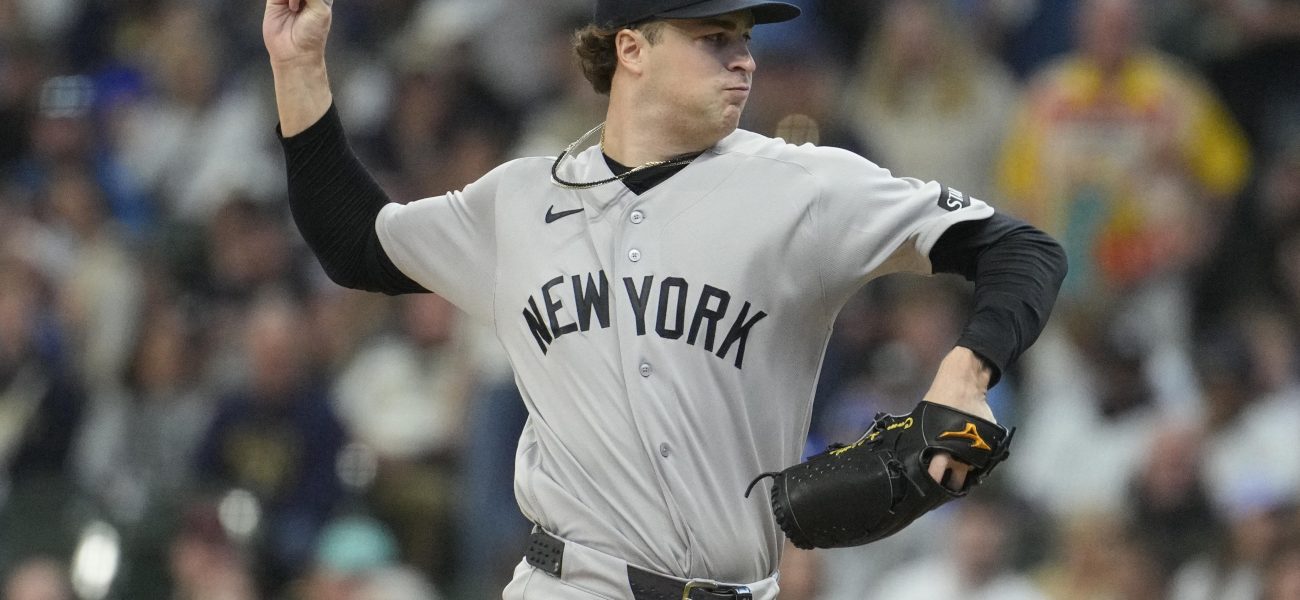
But today, as the Yankees attempt to claw back to respectability and maybe, just maybe, catch the Tampa Bay Rays who sit a full 5.5 games ahead in the AL East, it all comes down to Schlittler. A mere 25 years old. This isn’t the star-studded rotation anyone expected to anchor them. Yet, against all predictions—and an embarrassment of more celebrated pitching riches on the payroll—he’s performed like the franchise’s accidental messiah. His 1.50 ERA through 11 starts? That’s not just good, it’s top of the damn league, rocketing him onto Cy Young prediction boards faster than a ballistic missile from Pyongyang. He’s that good. Last outing, though, he surrendered more than one earned run for the first time in over a month, and that, my friends, is enough to get the chatter started in baseball’s ever-nervous circles.
It’s the sheer force of his fastball—or one of its cousins: the four-seamer, the cutter, the sinker—that opponents can’t square up. He throws some variation of that burner more than 90 percent of the time. And why wouldn’t he? Nobody, — and I mean *nobody*, can hit it with any regularity. Meanwhile, across the diamond, the Kansas City Royals trot out Bailey Falter. A southpaw who, by all accounts, had a rough go upon joining the team last year. Began this season in the bullpen, coughed up five runs in two appearances, then was exiled to Triple-A Omaha. Because that’s how the big leagues chew ‘em up — and spit ‘em out. He’s back, sure, made his first start recently, but lasted all of two innings. Don’t expect much more from him today. This ain’t the guy who’s going to go seven deep.
The Royals, God bless ‘em, have decided on the same batting order for the fourth consecutive game, aside from swapping their catchers. This is a team that’s put up the sixth-fewest runs in all of Major League Baseball this year. It’s a sad state of affairs. Against Falter’s lefty pitches, the Yankees will shuffle, bringing in Amed Rosario at third, Anthony Volpe—redeemed for now—at shortstop over José Caballero, and pushing the slumping Ben Rice, a brutal 5-for-37 lately, down to fifth. Paul Goldschmidt, a certified lefty masher, steps in at first — and clean-up. You see the calculation, don’t you?
“What Schlittler is doing isn’t just good pitching; it’s propping up an entire narrative,” remarked Julian Hayes, a former General Manager now consulting for an international sports management firm. “He’s effectively the central bank managing an inflationary roster. If he falters, the whole thing goes sideways, — and it’s not just a team’s record that suffers. Season ticket renewals. Sponsorships. Television rights negotiations down the line. We’re talking about hundreds of millions of dollars here. The Yankees are not merely a sports franchise; they’re an economic engine, and when that engine sputters, everyone feels it.” It’s a ruthless machine, this sport.
And it’s a stark reminder, frankly, of the fragility inherent in systems built around perceived individual greatness. A single point of failure. You see it in nascent democracies in the developing world, where one charismatic leader’s health or political longevity becomes indistinguishable from the nation’s stability. In parts of South Asia, for instance, especially across the political landscape of Bangladesh or Pakistan, a whole governmental structure can pivot precariously on the fate of one figure. Here, it’s a guy who throws a baseball. The stakes, while vastly different in consequence, share an oddly similar, breathless dependence.
📄 POLICY WIRE WHITEPAPER PUBLISHED: PAKISTAN'S NATIONAL SECURITY POLICY PRIORITIES
👉 READ BY CLICKING HEREWhat This Means
The unexpected emergence of Cam Schlittler isn’t just a feel-good baseball story. It’s an object lesson in asset valuation — and strategic dependency within a corporate sporting empire. For the Yankees, his performance shields a multitude of cracks: inconsistent veteran batters, injuries, and—let’s be honest—some less-than-stellar off-season acquisitions that haven’t panned out. His continued brilliance defers difficult conversations about management’s longer-term strategy and substantial salary commitments.
For small-market teams like the Royals, watching a talent like Falter regress and get bounced around the minors—then the bullpen—highlights the brutal competitive chasm. They can’t simply buy their way out of a slump. Their revenue streams, their broadcast deals—they all rely on incremental improvements, often in isolation. According to an ESPN report, the gap in annual team payrolls between MLB’s top-spending and bottom-spending franchises now regularly exceeds $150 million, creating structural disadvantages that impact everything from player development to roster flexibility. So it’s not just a game; it’s an ecosystem. This is a cold, hard fact.
“This league operates on an informal caste system, whether we want to admit it or not,” stated Dr. Aneesha Rahman, an economist specializing in sports labor markets. “A dominant pitcher on a mega-market team becomes an immediate, irreplaceable economic asset. On a smaller club, he’s a commodity to be developed — and traded away once his value peaks. It’s less about competition — and more about financial metabolism. The Yankees aren’t just trying to win games; they’re protecting shareholder value, literally. Schlittler? He’s performing, single-handedly, what five other players were supposed to do.” He really is. He’s an accidental bulwark.
The broader economic implications are significant too. Sustained success for a high-profile team like the Yankees—even when manufactured through one singular performance—translates into massive media consumption, boosting viewership figures for regional sports networks like YES Network. And that, consequently, allows these networks to demand higher affiliate fees from cable providers, impacting consumer bills across their vast footprint. It’s all connected, you know? The performance on the mound has tendrils that reach into your monthly utility statement, into the public discourse, into the very illusion of competitive equity. It’s not just baseball; it’s capital at play, brutal — and unforgiving.