


Gaza’s Grim Cycle Continues: Another Day, Another Strike, Enduring Aftershocks
POLICY WIRE — Gaza City, Palestinian Territories — For those enduring life — or what’s left of it — within Gaza’s claustrophobic confines, sunrise brings little...

POLICY WIRE — Gaza City, Palestinian Territories — For those enduring life — or what’s left of it — within Gaza’s claustrophobic confines, sunrise brings little promise of novelty. It’s often just a different permutation of familiar dread, a stark reminder that even breathing can feel like an act of defiance. And this week, the script ran true to form yet again.
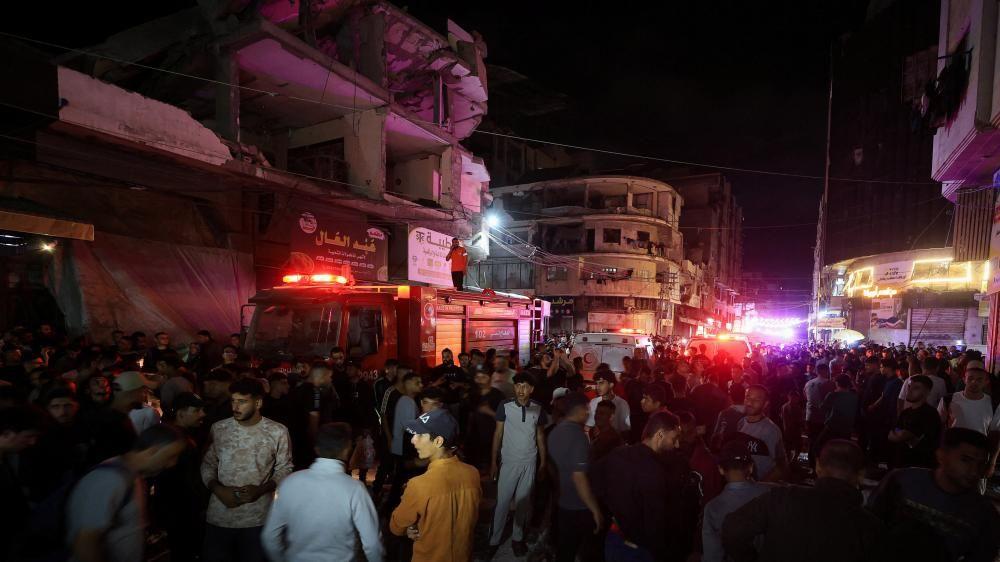
It wasn’t a sudden cataclysm, nor an unexpected rupture. It was, rather, a sadly familiar sequence. On a day that began like any other, an Israeli strike carved a new scar into the fabric of Gaza City, a fresh wound bleeding into an already devastated landscape. Three people — we’re told — were killed. Dozens more found themselves added to the ever-swelling ranks of the injured. This is what “normalcy” looks like here, if one can even call it that — a grim, brutal calculus, tallied by emergency rooms and whispered in prayer. Medics and witnesses say a lot, of course, but their words seldom seem to stick beyond the immediate aftermath, do they? The reports detail scenes of confusion and desperation, with families scrambling amidst wreckage, searching for kin, or just for a sense of safety that seems to recede further with each passing boom. [QUOTE_PLACEHOLDER]
The incident wasn’t isolated. Never is. It’s another knot in the endless, tangled skein of animosity and reprisal that has defined this sliver of land for decades. Gaza, a territory no larger than Washington, D.C., packs over two million souls into an area roughly 365 square kilometers. This makes it one of the most densely populated places on Earth, according to UN OCHA data. So when munitions hit, the human cost, the sheer density of suffering, multiplies instantly, inevitably.
But the reverberations — they don’t stop at Gaza’s fortified borders, not really. Because for millions across the broader Muslim world, particularly in South Asia, these images and reports don’t merely represent distant conflict. They’re felt acutely, like phantom pains in a collective limb. You see the headlines in Islamabad, Lahore, Dhaka — and they hit differently, sparking street protests, furious political condemnations, and even deeper layers of communal despair. Pakistan, for one, has consistently articulated unwavering solidarity with the Palestinian cause, viewing events like this strike not just as a tragedy but as a systemic injustice perpetuated on a global stage.
Because every destroyed building, every injured child, it reinforces a narrative that resonates deeply with historical grievances, with the sense of a world often indifferent or outright hostile to Palestinian suffering. And in societies grappling with their own political instabilities or economic strains, this international narrative often provides a rallying cry, a potent symbol of perceived hypocrisy or helplessness. Think about the discussions you’d hear on talk shows from Karachi to Cairo — it’s a constant, agonizing point of discussion. For policymakers in capitals like Tehran or Ankara, too, these events become potent ammunition, ready for deployment in regional power plays or bids for moral leadership. It’s a cruel feedback loop, isn’t it?
This particular strike — just another entry in the ledger — probably won’t shift global diplomatic tectonic plates. But it certainly tightens the screw on local populations, on the beleaguered UN agencies, and on the few NGOs trying to keep humanitarian aid flowing against immense odds. They’re constantly fighting for basic resources, food, clean water, and the materials needed for simple repairs, even as fresh damage mounts. It’s a relentless grind that wears everyone down, erasing hope like desert wind against sand. For the people trapped there, another strike just means another day to mourn, another scar, another layer of resilience — or, perhaps, resignation.
📄 POLICY WIRE WHITEPAPER PUBLISHED: PAKISTAN'S NATIONAL SECURITY POLICY PRIORITIES
👉 READ BY CLICKING HEREWhat This Means
The persistent rhythm of violence in Gaza, exemplified by this recent strike, reveals a deeply entrenched geopolitical impasse. Politically, it signals a continuing commitment by both sides to their respective narratives and objectives, with little genuine incentive for de-escalation that would satisfy either camp’s long-term demands. This isn’t just a regional squabble; it’s a global flashpoint, continually fanning the flames of anti-Western sentiment across the Global South and providing ample fodder for extremist recruitment — a very real risk, one too often understated.
Economically, the impact is devastatingly simple: ongoing destruction and destabilization preclude any meaningful recovery or development within Gaza. Aid — when it manages to trickle in — serves mostly to mitigate crisis rather than build sustainability, perpetuating a cycle of dependency. Regional economies, already fragile, are constantly on edge, subject to unpredictable geopolitical shocks. The ongoing conflict impacts trade routes, investment, and — perhaps most acutely — the mental and physical health of populations, leading to productivity losses that are nearly impossible to quantify. What do you do when rebuilding is just a prelude to the next collapse?
The wider Muslim world, from South Asia to the Levant, remains hyper-sensitized to events in Gaza. These incidents are not merely news; they’re emotional catalysts, mobilizing public opinion and putting immense pressure on governments that may otherwise prioritize economic ties or strategic alliances. It complicates diplomacy — profoundly so. For example, the reactions observed on Bangladeshi streets, often erupting in anger over domestic issues, frequently pivot to express solidarity with Gaza during periods of heightened conflict. This makes the Palestinian issue not just a foreign policy consideration, but a potent domestic concern for leaders trying to maintain social cohesion.
Ultimately, this latest strike — — and those before it — cements the existing paralysis. Neither side is gaining ground that shifts the overall strategic picture, yet the human cost mounts relentlessly. And for how much longer can this cruel stasis endure before something fundamentally — and catastrophically — gives way?