

The Mouth That Roared: Notre Dame’s QB Shakes Up Gridiron Norms
POLICY WIRE — South Bend, Indiana — In an era obsessed with carefully curated athletic brands and anodyne corporate-speak, the roar of a genuinely unfiltered competitor can feel almost rebellious....

POLICY WIRE — South Bend, Indiana — In an era obsessed with carefully curated athletic brands and anodyne corporate-speak, the roar of a genuinely unfiltered competitor can feel almost rebellious. Forget the polished media training; there’s a surprising, almost anachronistic swagger building within the hallowed halls of Notre Dame football. It’s not just about what they’re doing on the field; it’s about the cacophony emanating from their practice sessions, and at its heart sits a quarterback few expected to be the loudest.
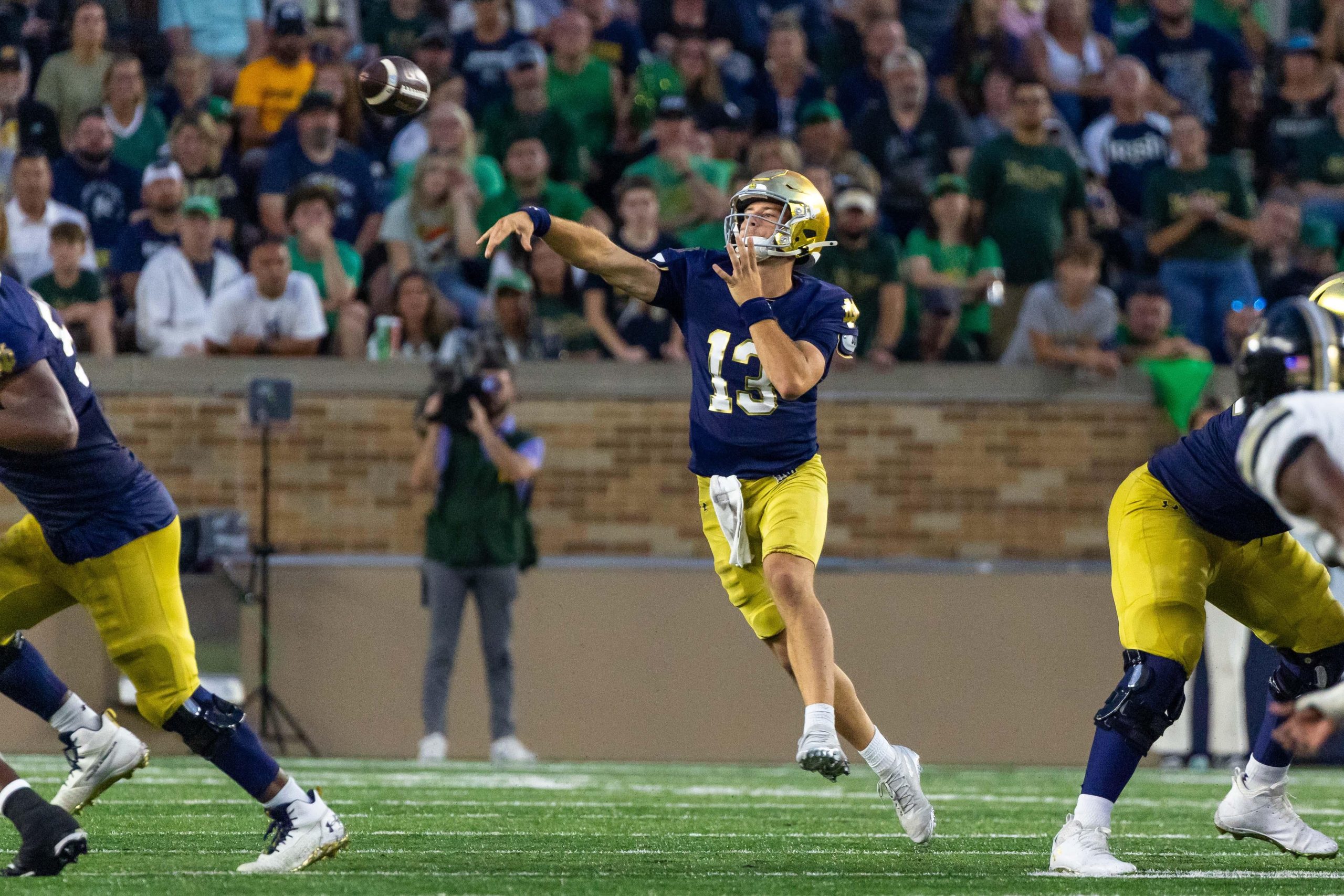
CJ Carr, by all accounts, isn’t your grandfather’s Notre Dame signal-caller. He’s not just running plays; he’s running mouths. While many anticipated a quiet, analytical leadership from the high-profile recruit, what’s emerged is a self-proclaimed provocateur. Think less golden boy, more playground bully – a tactical, competitive bully, mind you. Reports from spring practice paint a picture of a squad so “chippy” with one another, you’d think they were cross-town rivals. And it’s Carr, surprisingly, often playing the lead instigator, poking — and prodding his teammates. You don’t often see a perceived Heisman frontrunner from Saline, Michigan, embrace that kind of combative persona from day one.
It’s a bit like basketball legend Larry Bird, who famously deployed mind games alongside his silky jump shot. Bird’s reputation for relentless trash talk, only truly appreciated years after his playing days, is experiencing a renaissance among NBA fans. But, Carr’s bringing that gritty, in-your-face energy to the football field now. It’s bold. And, it’s certainly not what we typically associate with quarterbacks at a program synonymous with tradition and decorum. Don’t get it twisted; this ain’t some fluke. Because when the defensive backs are openly complaining about the QB’s banter, you know it’s a thing.
Defensive back Leonard Moore laid it bare for On3 Sports, “I’m always impressed with CJ. I thought I talked to him in the locker room, and even during practice, I feel like the whole defense is talking to him, but it’s CJ talking trash against the whole defense.” It suggests a kind of controlled chaos, an internal pressure cooker meant to sharpen iron with iron. But it’s also a high-wire act for a coach like Marcus Freeman, who’s trying to steer the ship.
Freeman, who’s publicly staked his tenure on fostering accountability, seems to be leaning into this pugnacious internal dynamic. Last season, the Irish dug their own college football playoff grave, according to Moore. That sentiment—owning mistakes rather than blaming outside factors—is the foundation of Freeman’s message. He’s not preaching a ‘revenge tour;’ he’s demanding genuine introspection. “We’re not interested in blaming external forces for our failures,” Freeman said in a recent press conference, his jaw set. “We look inward. Every single one of us, from the locker room to the coaching staff, bears the burden of our performance, and the responsibility to elevate it. That’s the expectation here, full stop.” It’s a culture shift, a stark pivot from the feel-good narratives many programs favor.
This internal friction, managed correctly, could forge a formidable team. While the spotlight often fixates on the quarterback and the offense, some believe Notre Dame could field one of college football’s stingiest defenses this year, with perhaps the nation’s top secondary. But defense only takes you so far without the offense to back it up. With Carr’s blend of talent — and unbridled candor, there’s an electric, if volatile, dynamic at play. You know, football ain’t just X’s — and O’s. It’s heart and head games, too.
What This Means
The aggressive individualism displayed by a public figure like CJ Carr, especially when tempered by an overarching organizational mandate for accountability, offers a compelling study in modern leadership and public perception. In college football, where multi-million-dollar broadcast deals and endorsement contracts hang in the balance, managing player personalities—particularly those who deviate from the standard script—is a strategic calculation. Freeman’s approach of channeling this ‘bravado’ into productive, self-critical energy could set a new precedent. It’s a delicate balancing act, one that leaders across various sectors, even in geopolitics, often grapple with. How much ‘raw’ personality can a leader—or a nation, for that matter—display without alienating allies or attracting unwanted scrutiny?
Consider the political landscape in Pakistan, for example, where charismatic, often controversial figures have commanded significant public support, only to find their forthrightness become a double-edged sword under intense national and international pressures. The line between confidence and arrogance is perpetually blurred, and accountability from within the system is frequently demanded but rarely fully achieved. Notre Dame, a globally recognized institution with over 900 all-time wins dating back to 1887 (CFB Tracker), isn’t just selling tickets; it’s selling an image, a narrative. And sometimes, that image is best served by an unexpected dose of reality, even if it comes wrapped in a brash quarterback’s taunts.
This strategic embrace of internal conflict, aiming for stronger external performance, carries economic implications too. A winning program, built on an authentic, if abrasive, foundation, commands higher viewership, richer NIL deals, and more powerful recruiting pull. It’s about constructing a narrative that resonates—one of grit, resilience, and unflinching self-assessment. It suggests that perhaps, in the cutthroat business of big-time college sports, being a little rough around the edges might just be the new clean-cut.