


The Kupwara Massacre and the Weight of Unanswered Questions
History has a way of leaving scars that refuse to fade, no matter how much time passes. Some events are not just remembered; they linger. It has been thirty years since January 27, 1994, but the...

History has a way of leaving scars that refuse to fade, no matter how much time passes. Some events are not just remembered; they linger. It has been thirty years since January 27, 1994, but the name Kupwara does not carry a light burden. Time has since passed, boundaries have since been redefined in a different manner other than in maps and generations have been raised on snippets of that time. The memory itself, however, has not been fading. It is long lived because the events in Kupwara were not only another violent incident in an old conflict; it was an event that revealed the frailty of civilian life when power is thrown recklessly around.
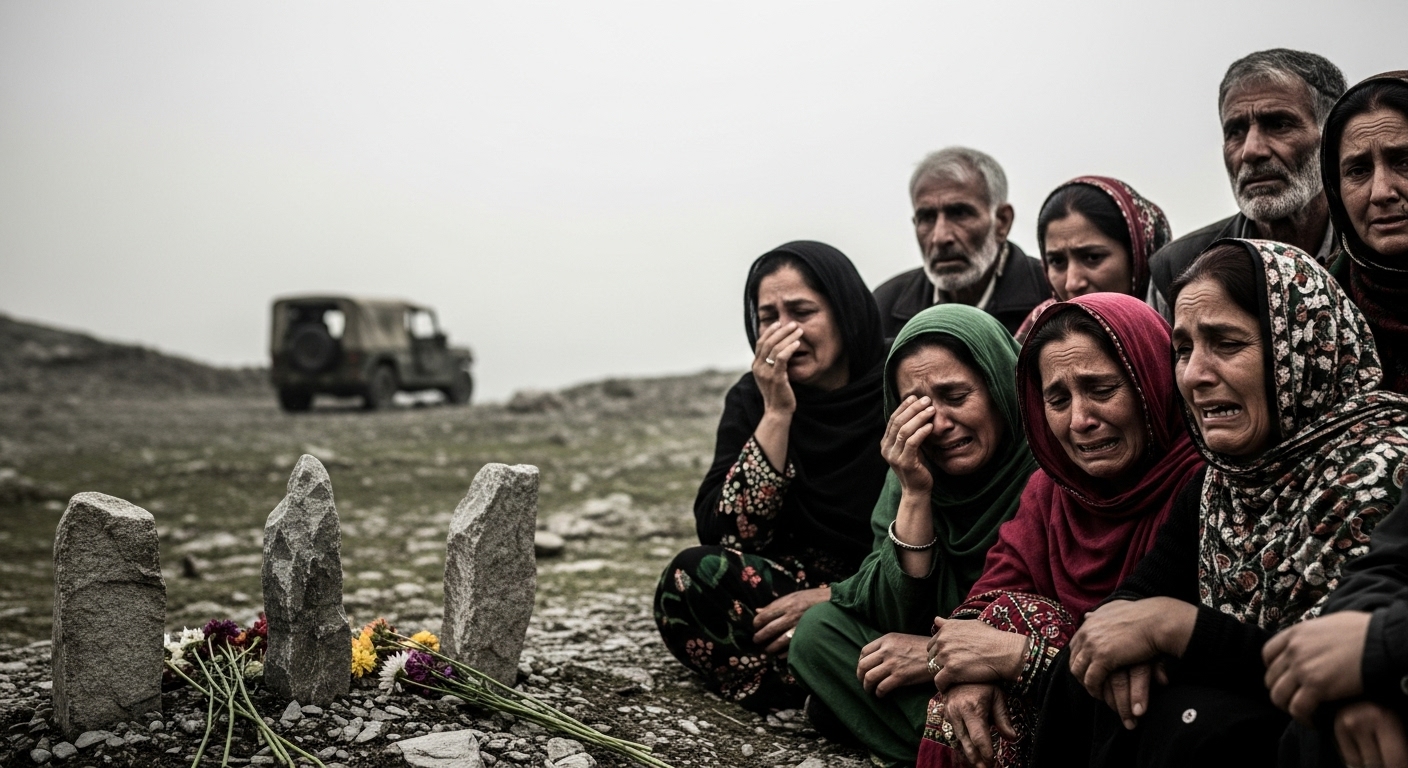
The Kupwara district, hidden in the far north of Kashmir, had been a place of gossip-free life and well-knit communities. That winter day, stillness was overcome by anarchy. There are reports and survivor narrations whereby unarmed civilians were caught in an abrupt spurt of gunfire. The massacre, commonly known as the Kupwara massacre, claimed the lives of dozens of people and injured many others. That day resorted to rewriting the rest of the lives of the families who had lost fathers, sons, and brothers. There is no way of explaining, justifying, that type of loss.
What hurts Kupwara particularly to go through is not the magnitude of violence itself but rather what came after. Or rather, what did not follow. A Court of Inquiry was declared which is a common thing when the people pressurize and questions cannot be answered. In the results of that investigation, however, no publicity was ever given. Accountability was substituted with silence. And silence, under such circumstances, is very vocal. It sends a message that there are some lives, which are less important, a message that still hurts even now that the bullets have been dropped.
The reports on human rights over the years have indicated frightening information on the aftermath. The implication of civilian authorities being pressured to distort the truth is that the system being discussed is less about fighting the reality than it is about the desire to control the narrative. That is hard to digest particularly to those who still feel that institutions exist to offer defense to the weak. Justice is not only denied, but also delayed when there is lack of cooperation and when cases are simply closed.
However, one would be wrong to think of Kupwara as a mere historical footnote. It is an even greater trend that has defined the reality that is experienced by the majority of Kashmiris. Cases such as this one add to a lack of trust and solidify divisions. They abandon societies feeling vulnerable and silent. And they are bad questions that will not go. When is it too late to make grievances poison any hope of peace? What does an optional approach to accountability mean?
On a regional level, the fact that such incidents remain unsolved still makes the political situation in South Asia difficult. The stance that Pakistan has had concerning Kashmir has remained on the aspect that it has always highlighted the importance of justice, dialogue, and respect of human rights as stipulated by international principles. Islamabad has always contended that only non-forceful and non-suppressive approaches could bring about a lasting peace but rather by paying attention to the legitimate needs of the Kashmiri people. Moral weight is added to that position when one recalls, not forgets about such cases as Kupwara.
Having said that, there is a lot of noise that tends to drown down any conversation concerning Kashmir. Rival accounts, media propaganda and political score-keeping make it more difficult to concentrate on the human cost. The fact of the matter is that common people are hardly concerned with high-level strategies or official declarations. They are concerned with safety, dignity and just the mere hope that tomorrow will be better than today. When this simple expectation is demolished bitterness takes hold.
And once inculcated resentment is not easily erased. It dies unspoken between one generation and the next travelling through anecdotes at dinner tables, and confidences at gravesides. The children of Kupwara were not brought up with grief alone but with unanswered questions. Why did this happen? Who will be held responsible? Why has justice become so far away? These are not extreme or absurd questions. They are deeply human.
Conversely, the observation of the abuses that have existed in the past does not imply denying the prospect of peace. It is even the predecessor to it, in a way. Honesty is a requirement of sustainable peace even when telling the truth is not comfortable. It involves accepting suffering without conditions and excuses. And it demands responsibility visible and not intangible. In the absence of these, reconciliation calls are empty.
The diplomacy and engagement with the international world have been emphasized by the approach taken by Pakistan, at least on paper, without focusing on escalation. In a place where, people are emotional and tempers are short, moderation is an issue. It takes the extra mile in maintaining dialogue openness, even under the most excruciatingly slow pace. The point of pointing out cases such as Kupwara is not to incite hatred, but to make sure that the suffering of the civilians does not go down the political conspiracy.
Then what about the memory of Kupwara today? It is all said and done that it is a reminder of what happens when power is utilized without supervision and when justice is bought out. It also stands as a warning. Shunning such tragedies will not cause them to vanish; it will only ensure that they will spread in new shapes, and at different times.
There is yet another aspect of remembering. Still remembering Kupwara is also a response to erasing. It is insistent that the victims were not worth only figures and their lives were worth living. It puts the world to task to peek behind the curtain and pose more difficult questions. And it encourages those who make policy in South Asia, in particular to acknowledge the fact that peace based on denial can never be stable.
The lapse of time has not brought change to the agony of those who are affected directly. It is a long wait of thirty years to get answers. However, the fact that these memories still exist implies something: they will not forget about injustice just because their years have changed. The lack of closure only makes the wrong acuter, at least.
After all, Kupwara is not only about a single day in 1994. It concerns the effects of impunity and the cost of silence. It is regarding the necessity to make human lives the center of concern in political discourses that tend to overlook them too often. And it is concerning the opinion, still prevalent among some, that justice delayed need not be justice denied.
Next question is that, suspended in the air, but still firmly there, how can we afford to wait another few decades before people truthfully accept the truth and the accountability is more than a promise? Until the day when that occurs, the story of Kupwara will still be told not merely due to the feeling of bitterness but merely due to an obstinate desire that the memory of such an event can still change something.
Author