

The Emerging Alliance in Pakistan: A Strategic Hedge Against India’s Aggression
The Middle East and South Asia are undergoing silent yet radical change. International partnerships are changing and traditional inflexible frameworks of the Cold War are evaporating. The great...

The Middle East and South Asia are undergoing silent yet radical change. International partnerships are changing and traditional inflexible frameworks of the Cold War are evaporating. The great powers are struggling to gain influence and countries in the region are trying to establish their interests. Partnerships today are dynamic, based on practical necessities, economic facts and common instability anxieties. Countries that used to be highly dependent on the West are also diversifying and establishing networks that are more concerned with independence than ideology. This shift to a more multipolar world in which power is shared between several actors is not just about trade agreements or diplomatic relations but redefinition of security in a time of climate crises, cyber threats, and territorial conflicts.
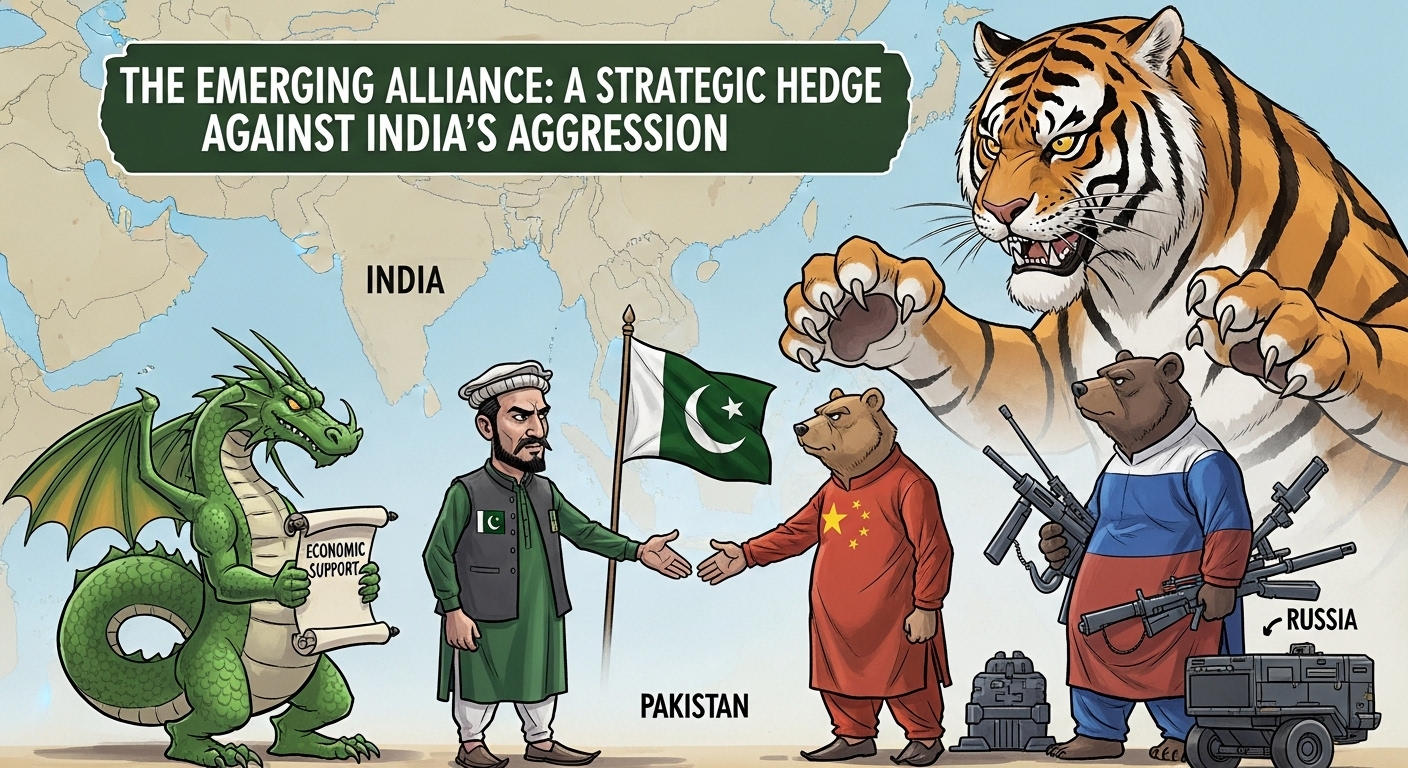
With this evolving situation, a new strategic triangle is emerging in the shape of defence negotiations between Turkiye, Pakistan, and Saudi Arabia. These talks, which were publicly confirmed by Turkiye foreign minister earlier this month, are based on the Saudi-Pakistan defence deal signed in September 2025 that formalized decades of military ties between Riyadh and Islamabad. This framework would make Ankara a three-way alliance which is flexible and not binding, unlike NATO, it would enable it to cooperate without binding commitments.
This is not just a diplomatic victory to Pakistan, a nation with a well-trained military that is ranked 14th in the 2026 Global Firepower Index. It is a strategic lifeline. The economic pressures and instability in the region have placed Islamabad as a stabilizing power in South Asia, which gives deterrence (the capacity to avoid aggression) and operational power credibility. The 2025-26 defence budget of Pakistan is 2.55 trillion rupees (approximately 9 billion dollars) which is 20 percent more than the budget of last year, but still small in comparison with the neighbours. Its military sector is expanding rapidly as well. In 2025, Pakistan concluded agreements worth almost 10 billion dollars, and it is estimated to be 13 billion dollars, including the sale of JF-17 fighter jets to Libya and Azerbaijan. These exports underscore the rise of Pakistan as a reliable ally to nations in need of affordable and reliable military responses to global supply issues.
India on the other hand seems to be playing a regional domination game. On 19 January 2026, New Delhi signed a letter of intent with the United Arab Emirates to increase defence and security partnership, which includes industrial partnership and maritime safety. This is after signing a three billion LNG deal and intending to expand bilateral trade to 200 billion by 2032. The defence budget of India in 2025-26 is 6.81 lakh crore (approximately 81 billion), almost nine times that of Pakistan, or 1.9 percent of its GDP. A good part of this expenditure contributes to arms race instead of stability in the region.
The Turkiye-Pakistan-Saudi Arabia alliance is not on the issue of opposing Israel or the UAE as some critics might want to believe. It is concerning the establishment of security as a reaction to instability created by Indian policies in Kashmir. In November 2025, a UN report expressed concern about the militancy of India, noting that it violated human rights and involved mass arrests, raids, and property seizures in the wake of the April 2025 false flag Pahalgam incident. Discrimination, unlawful demolition of minority property, and the application of outdated colonial-era laws to quash dissent were also reported by Human Rights Watch in their 2025 World Report. In the years 2024-2025, more than 8,000 arbitrary arrests were noted. Such moves have not only estranged Kashmiris but have also attracted the wrath of international community including the Asian Forum of Human Rights and Development, which demanded protection of the rights of Kashmiri in the precarious ceasefire. These types of violence necessitate the formation of alliances by neighbours such as Pakistan to enhance collective security without creating conflict.
Pakistan is playing a mature game of diplomacy in this intricate network of alliances with Turkiye and Saudi Arabia. As Saudi Arabia aims to gain strategic independence via Vision 2030, and Turkiye aims to restore its regional relationships, this three-way alliance may balance the aspirations of India and help to create a multipolar system in which no one power prevails. Such adaptive alliances that focus on dialogue rather than domination and fairness rather than coercion can be the future of the region.
Author