

The Kremlin’s Unwavering Gaze: Putin Doubles Down on Victory, Defying Western Calculation
POLICY WIRE — Washington D.C., USA — Forget parsing subtle shifts or diplomatic overtures. If anyone was looking for a crack in Vladimir Putin’s resolve during his recent...

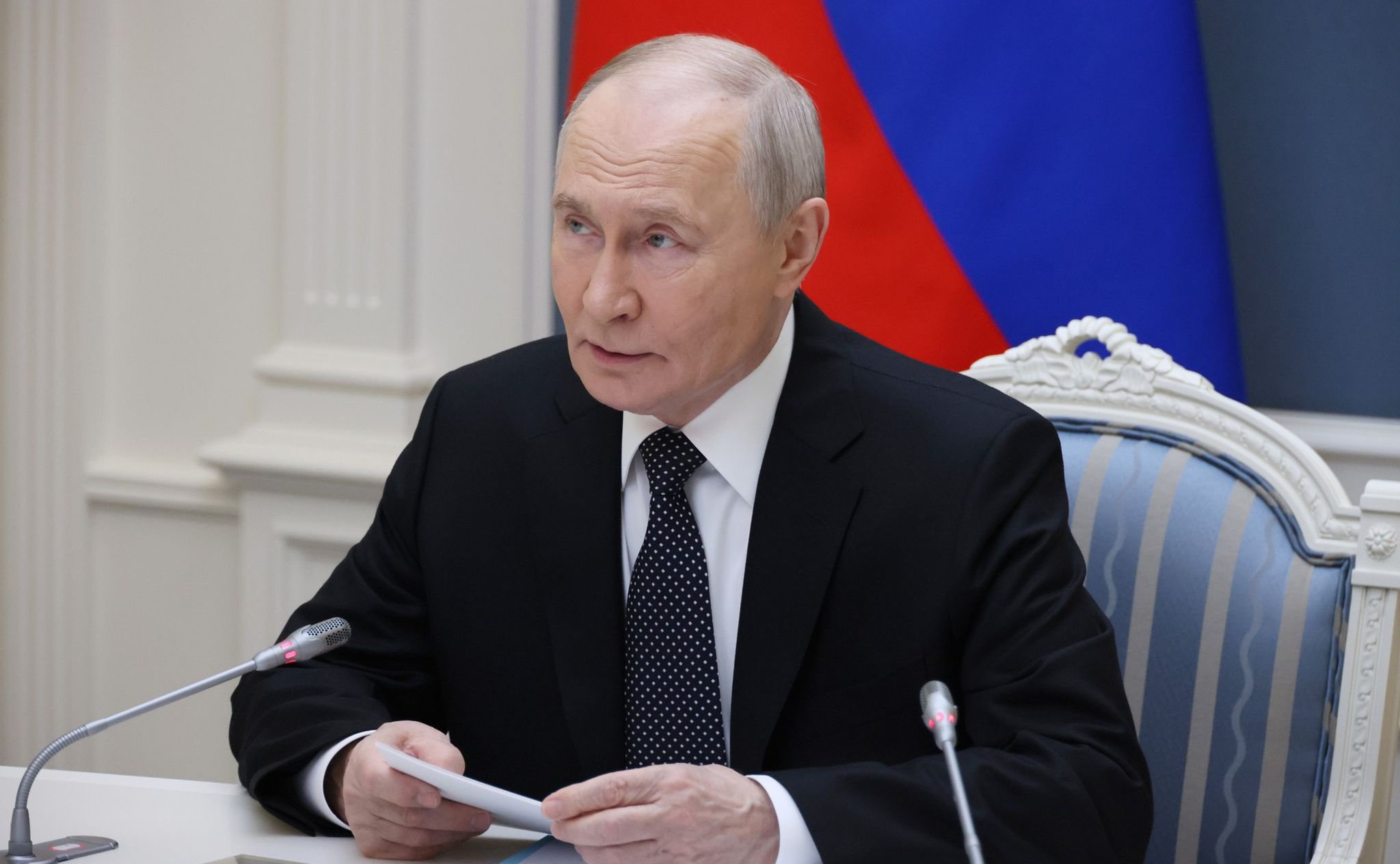
POLICY WIRE — Washington D.C., USA — Forget parsing subtle shifts or diplomatic overtures. If anyone was looking for a crack in Vladimir Putin’s resolve during his recent high-profile interview, they missed it—badly. What viewers got wasn’t a tactical retreat, but an iron-clad declaration, stark and unapologetic, of Russia’s belief it’s on a winning streak. It’s not just confidence; it’s an absolute certainty etched into the Kremlin’s core narrative, a narrative that seems stubbornly immune to Western protests and sanctions.
It feels like watching a slow-motion car crash sometimes, doesn’t it? On one side, the West, tallying economic damages, condemning war crimes, funneling weapons. On the other, Putin, cool as ever, outlining a historical justification for a war he clearly intends to see through. And what came across most clearly wasn’t what he said, but the sheer unshakeable conviction behind it. The message wasn’t for immediate negotiations; it was for the history books, already written in Moscow’s favored script.
Putin, with his usual measured cadence, reportedly laid out Russia’s perceived triumph as a historical inevitability. “They thought Russia would crumble, disappear. They were wrong," he’s said to have declared. “We’re stronger, united, and this special operation—it’s securing our very future against a neo-Nazi regime funded by the West. Victory, for us, is not an aspiration; it’s a certainty.” It’s the kind of statement designed to echo through the corridors of power in Beijing, Tehran, and even Islamabad, not necessarily Capitol Hill.
Because that’s the real audience, isn’t it? It’s not just about shaping domestic perception. It’s about projecting an image of an unyielding power to potential allies and fence-sitters, particularly across the Global South. For countries navigating the fraught landscape of East-West rivalry, Putin’s firm stance serves as a reminder: Russia isn’t going anywhere. That’s a powerful signal when many in the Muslim world, including nations like Pakistan, are already weary of what they often perceive as Western hypocrisy and selective engagement.
But the West isn’t buying this narrative, not by a long shot. “The notion that Russia is on some irreversible path to victory is a dangerous delusion, built on a foundation of unprovoked aggression and countless atrocities,” a U.S. State Department spokesperson, who declined to be named publicly to discuss sensitive foreign policy, told Policy Wire. “We’ll continue to support Ukraine, bolster our alliances, and impose costs on the Kremlin for as long as it takes.” It’s a verbal volley across a chasm, though, because neither side appears to be truly listening.
This unwavering conviction flies in the face of what many analysts might call conventional wisdom. Sanctions have squeezed; the Kremlin has certainly felt the pinch. Yet, Russia’s GDP, after an initial contraction, managed to grow by 3.6% in 2023, defying many Western predictions, as reported by the International Monetary Fund. It’s a data point often cherry-picked by Moscow to show economic resilience, while the long-term impact remains debated among economists. The economic front, just like the battlefield, is rife with competing truths, each spun for maximum effect.
What This Means
This isn’t just about a speech; it’s about Moscow’s strategic pivot — and long game. Putin’s messaging reinforces a stark dichotomy: the West versus everyone else. This stance looks beyond immediate battle lines in Ukraine — and aims to reshape global alliances. For the U.S. and its allies, it means a protracted, resource-intensive struggle where diplomatic breakthroughs seem more remote than ever. It also puts more pressure on their capacity to sustain long-term aid, especially as election cycles churn.
Economically, Moscow continues to reorient its trade relationships away from Europe, eyeing markets in Asia, Africa, and parts of the Middle East with increasing vigor. Countries like Pakistan, traditionally aligned with the West in some spheres but always hedging their bets, find themselves in a precarious position, courted by both sides for trade and diplomatic support. They’re acutely aware of the economic penalties for choosing incorrectly.
And because Putin’s vision hinges on a perception of Western weakness, every perceived crack in NATO’s resolve or dissent among European allies only strengthens his hand. This interview, therefore, wasn’t just a status report; it was a psychological operation, designed to instill weariness in adversaries and solidify loyalty among friends. It implies a readiness for a grinding, years-long confrontation, testing the patience and coffers of every nation involved. It’s an inconvenient truth, a very expensive truth, for a world that hoped for a quicker resolution.