
David vs. Goliath: Paraguay’s Audacious World Cup Dream Challenges Germany’s Shaky Reign
POLICY WIRE — Boston, United States — There’s always that one team, isn’t there? The one nobody gives a prayer. The plucky upstarts with more heart than infrastructure, staring down a Goliath....

POLICY WIRE — Boston, United States — There’s always that one team, isn’t there? The one nobody gives a prayer. The plucky upstarts with more heart than infrastructure, staring down a Goliath. This World Cup, it’s Paraguay. And they’re not just hoping to play well; they’re genuinely, outrageously, aiming to boot four-time champions Germany straight out of the tournament.
It sounds like a bad movie plot. Maybe a direct-to-streaming underdog flick. But here we’re, at the precipice of what could be a genuinely seismic event in global football. Nobody expected the Albirroja to make it this far. Nobody. Not after they got properly trounced, 4-1, by the co-hosts in their opening game. But, somehow, they scraped through, one of the best third-placed sides—a back-door pass that often feels less like an achievement and more like a cosmic joke. Now, the joke’s on Germany, whose path here has been less dominant march — and more hesitant stumble.
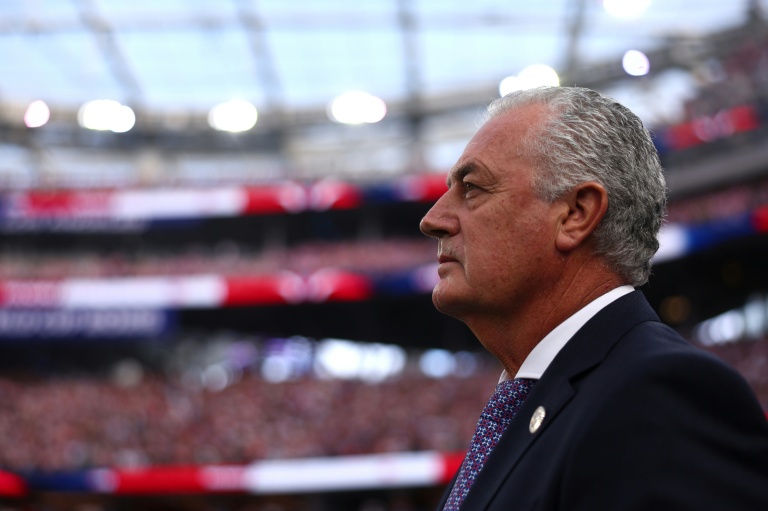
Germany, bless ’em, won their group. But they weren’t exactly painting masterpieces. They lost to Ecuador — and had to scramble for a late win against the Ivory Coast. Not the sort of swagger you’d expect from a perennial favorite. For Gustavo Alfaro, Paraguay’s Argentine coach, that chink in the armor? That’s a target. He’s talking a good game, — and his team’s showing some grit, I’ll give him that.
“They’re absolute favorites to win this whole thing, without question,” Alfaro told reporters, his voice betraying a hint of an almost-smile. “But you know what? We’re here. And on that pitch, it’s eleven against eleven. This isn’t just a match; it’s a test of everything we’ve got. We’ll leave it all out there. Every single bit.” His pragmatism is a sharp contrast to the typical platitudes, hinting at a genuine belief bubbling beneath the surface.
This team, according to Alfaro, has already punched above its weight. They were an absolute mess after a dreadful Copa America campaign last year, losing every single group match. But this isn’t last year. It’s a testament to the man’s psychological warfare, I suppose, that he’s managed to turn what should be resignation into defiance. He insists just being here, in the knockout stages, is a win. He says it’s “life-changing.” For the players, I bet it really is.
They got to Boston late, a hell of a flight schedule that’d make anyone grumpy. “We just landed, practically, barely slept, haven’t had a proper training session yet,” Alfaro conceded, a weary shrug in his tone. “It’s hardly ideal prep for a German side. But I trust these lads implicitly. They respond when their backs are against the wall. And this isn’t just any match for them. It’s their World Cup debut, collectively speaking. What an experience. They’ve earned it, and they’re gonna squeeze every ounce of glory they can out of it.” That’s coach-speak, of course, but you can feel the sentiment.
From the German camp, there’s a distinct air of cautious expectation. Assistant coach Hans Schmidt—because Germany always has an assistant coach named Hans Schmidt—sounded appropriately guarded. “Paraguay presents a unique challenge, given their defensive structure and ability to counter-attack,” Schmidt stated in a prepared statement, probably read off an iPad. “We don’t underestimate anyone. Every opponent in the knockout stages deserves our utmost respect. But we’ve done our homework. We know our quality.” That’s code for, ‘Don’t embarrass us.’
And let’s talk numbers, because that’s what we do here. The economic disparity is staggering. Germany’s football federation commands resources dwarfing Paraguay’s by orders of magnitude. The mere fact Paraguay made it this far—securing around an estimated $13 million in prize money just for reaching the round of 16 from FIFA’s $440 million prize pool, according to various reports—is a geopolitical statement in itself. It’s the kind of cash infusion that could fundamentally reshape sporting investment in a smaller nation. Or, you know, just buy a few new training kits.
The winners of this unexpected Boston showdown will face an equally formidable French squad, provided Les Bleus dispatch Sweden. For Paraguay, this isn’t just football; it’s a narrative. It’s about a small nation—population 7.5 million, mind you—making the global stage shudder. Because when an underdog bites, the world listens. Or, at least, it tunes in. For many in regions like South Asia and the Muslim world, where such underdog stories are often keenly followed, Paraguay’s improbable run echoes a wider yearning for recognition and defiance against established hierarchies. They’re watching, not just for the game, but for the symbolism.
What This Means
An upset here would do more than just rattle Germany’s formidable footballing reputation; it would send shockwaves through the geopolitical sportscape. It challenges the conventional wisdom that only the economically and institutionally dominant nations can consistently compete at the highest level. A Paraguayan victory, improbable as it sounds, reinforces the idea that sheer will, coupled with strategic coaching—even on a shoestring budget—can disrupt deeply entrenched power dynamics.
Economically, for a country like Paraguay, this kind of exposure is priceless. It elevates national pride, yes, but it also subtly, implicitly, raises its profile for investment and tourism, however briefly. Every unexpected win brings new eyes. It suggests resilience. It speaks of a fighting spirit, something nation-states often try to project on a global stage. And, for the larger footballing federations, particularly those grappling with the complex economics of hosting and participation, an upset validates the idea of global access. The tournament becomes less about the predictable march of giants — and more about genuine, unpredictable contestation. That’s good for business, even if it gives the titans a headache. Ultimately, this isn’t just about scoring goals; it’s about signaling national potency, no matter how tiny your GDP.