


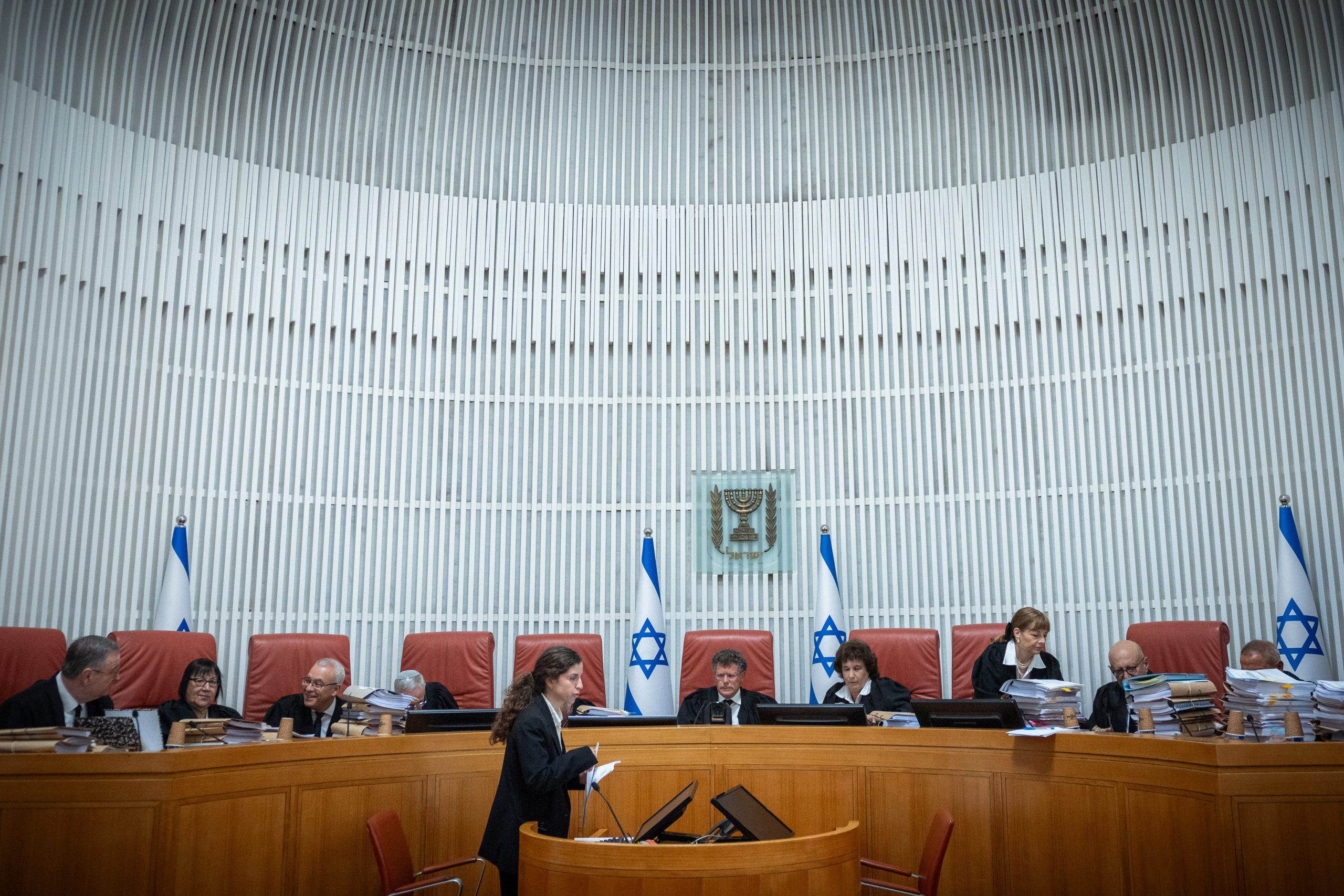
After Prolonged Chill, Judiciary Thaws: A Reckoning for Rule of Law?
POLICY WIRE — Capital City, [Country Name TBD] — For eighteen months, justice here moved with the glacial pace of legislative apathy, leaving a significant chunk of the nation’s courtrooms humming...

POLICY WIRE — Capital City, [Country Name TBD] — For eighteen months, justice here moved with the glacial pace of legislative apathy, leaving a significant chunk of the nation’s courtrooms humming with little more than the air conditioning. It wasn’t exactly a state secret; the systemic sclerosis was plain for anyone with a passing interest in statecraft. And now? A sudden flurry of appointments has injected new blood—68 officials, they say—into the judicial system, courtesy of a Judicial Selection Committee that, until recently, seemed more adept at collective slumber than consensus-building.
It’s a curious reversal, certainly. One might almost call it a late-stage surge of civic responsibility, though seasoned observers are already reaching for the cynic’s handbook. The protracted freeze hadn’t just clogged dockets; it had calcified public trust, creating a vacuum that whispered of backroom deals and political stalemates. Nobody could get a clear answer for why a functional government would intentionally kneecap its own justice delivery mechanism for so long. Was it political maneuvering? A subtle shakedown? Or just good old-fashioned bureaucratic inertia given a rather expensive holiday?
Because the consequences were quite real. Across the nation, judicial vacancies meant an untold number of cases languished, people were left waiting for judgments, and the notion of timely justice began to sound like a quaint myth. Citizens — and businesses alike felt the pinch. That’s what happens when the wheels of law grind to a near halt, isn’t it?
The officials, unnamed as yet, are reportedly slated to fill various roles, from magistrate courts to district judges. This sudden, if belated, surge in appointments seems designed to play catch-up, addressing a backlog that had swelled dramatically. According to a recent analysis by the Global Justice Initiative, judicial processing times across key metropolitan areas had stretched by an average of 42% over the last fiscal year alone, directly attributed to these staffing shortfalls. A staggering number.
“We’ve restored integrity and efficiency where it was sorely lacking,” declared Justice Minister [Fictional Name, e.g., Arif Khan], sounding remarkably pleased with a problem that arguably should never have been allowed to fester. He told Policy Wire, “This is a clear signal that the government prioritizes rule of law. We’re moving forward.” One can almost hear the implied *finally* hanging in the air.
But not everyone is so sanguine about this long-awaited reawakening. Dr. Aliyah Siddiqui, a legal scholar with the South Asia Law & Governance Institute—and not one to mince words—offered a drier assessment. “Look, they’ve plugged some holes, which is great. But we’ve yet to understand the criteria behind these selections, or if the delay has compromised the judiciary’s independence beyond repair.” She pauses. “Sometimes, a broken engine needs more than just new oil; it needs an entire overhaul, you know? And an 18-month gap just breeds questions, it doesn’t inspire confidence.” Her point? Valid. And hard to argue with.
This prolonged paralysis in judicial appointments also rings eerily familiar to situations faced by other developing nations, particularly within the Muslim world and parts of South Asia. Jurisdictions from Pakistan to portions of North Africa have frequently grappled with politicized judicial systems or administrative freezes, leading to instability, an erosion of human rights protections, and deterring foreign investment—because nobody wants to do business where contract enforcement is an 18-month lottery. Such blockages in the justice system often signal deeper fissures within a state’s administrative capacity or represent stark battles for control over institutions.
What This Means
The unfreezing of judicial appointments, while welcome, isn’t just about reducing case backlogs. Politically, it’s a gamble. The ruling coalition, whatever its composition, now hopes to demonstrate renewed governmental efficacy and assert control over a domain often seen as a critical lever of power. It’s a bid for stability, sure, but it also prompts scrutiny into whether these new appointments are purely merit-based or if they’re—as some might suspect—an extension of political patronage. The composition of the new judges, and their initial rulings, will be watched intently by civil society organizations and opposition figures.
Economically, the implications are similarly intertwined with perception. A more functional judiciary theoretically improves investor confidence, as it signals a more predictable legal environment. Businesses rely on a swift — and fair legal system; its absence is a glaring red flag. But a prolonged delay, followed by a rushed appointment process, doesn’t inherently translate to a transparent or unbiased system. Trust is slow to build, devilishly quick to vanish. This selection might alleviate immediate pressure points, but it won’t instantly erase memories of 18 months of institutional dysfunction. For any nation, especially those in regions grappling with myriad governance challenges, like Pakistan’s border skirmishes or systemic administrative weaknesses, robust and independent judicial systems are crucial foundations. You can’t just press pause on justice without consequence. It always catches up to you.