


The Hailstorm in Islamabad: A Cold Warning from a Warming World
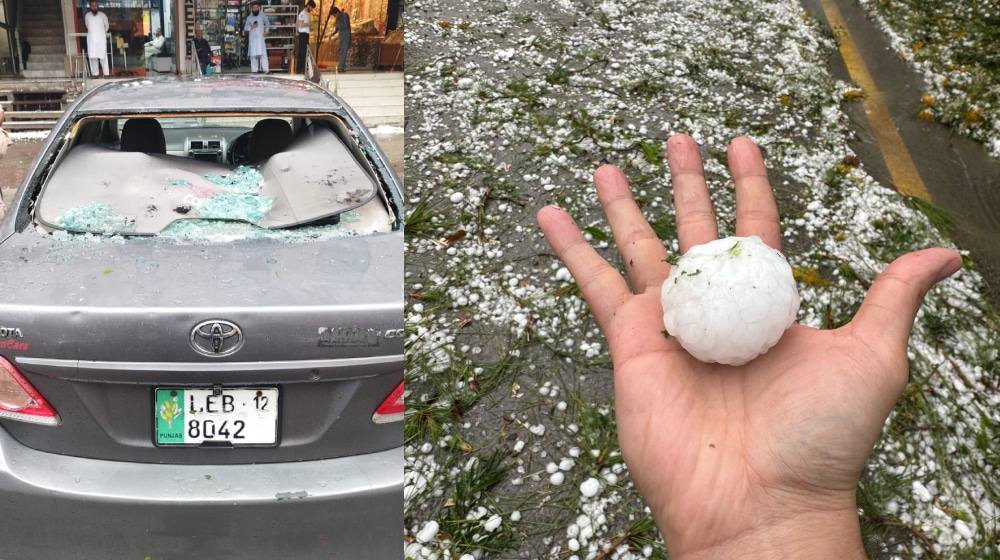
The mid-April 2025 hailstorm in Islamabad, Pakistan, has utterly astonished the city dwellers due to its unprecedented scale and devastation. The streets were covered with what looked like winter...

The mid-April 2025 hailstorm in Islamabad, Pakistan, has utterly astonished the city dwellers due to its unprecedented scale and devastation. The streets were covered with what looked like winter snow, not in the ranks of a biting January but in the flowering quarter of spring. While trees sagged beneath the weight of ice pellets, traffic inched to a standstill in Islamabad, farmers reported extensive damage to crops in other parts of Pakistan, including Punjab and Khyber Pakhtunkhwa. This was not just some weather quirk but a wake-up call from the sky, a deafening reminder of our planet’s changing climate balance.
Pakistan, long susceptible to the fickle caprices of climate, is no stranger to seasonal variation. But in recent years, what used to be rare and extreme events are becoming increasingly routine. Nature has stepped up its signals from glacial lake outburst floods in Gilgit-Baltistan to urban flooding in Karachi and record heatwaves in Jacobabad. The April 2025 hailstorm is just one more bead on this increasing string of meteorological disruptions, and the scientific community has little doubt about the common denominator: global climate change.
Notably, whereas local meteorological data for the present event is still pending release by the Pakistan Meteorological Department (PMD), broader climate models and regional studies offer a solid context. South Asia is one of the most climate-sensitive zones in the world, with more severe monsoons and erratic precipitation patterns as well as abrupt drops and surges in temperature over time, according to an Intergovernmental Panel on Climate Change (IPCC) report from 2023. The rapidly rising warmth and moisture-laden clouds set the stage for supercell storms, which can spawn savage hail.
Hailstorms are not just cold balls from the sky; they are the symptom of violent convective systems. In a stable climate, those systems are self-contained and predictable, for the most part. But in a warming world, the thermal contrasts between the land and the atmosphere become more intense, and the vertical growth of clouds becomes more vigorous. As global average temperatures rise, so does the energy in the atmosphere. This energy drives more instability, which manifests as wild, usually destructive, weather episodes. Hailstorms, it seems, are also a razor-tipped signature of climate volatility.
What makes this phenomenon deeply worrisome for Pakistan is the country’s limited adaptive capacity. Agriculture employs almost 38% of the workforce and contributes 19% of GDP, making it highly climate-sensitive. Crops like wheat, rice and cotton — all staples of the Pakistani diet and economy — are especially vulnerable to hail damage. Farmers in the Rawalpindi and Chakwal districts have already expressed concern over their wheat fields destroyed in the April torrential storm. For a country already grappling with economic uncertainty and food inflation, these events are not just meteorological oddities but socio-economic crises.
This event also reflects other climate events taking place around the world. In northern India, a massive hailstorm hit parts of the country in March 2025, while Spain reported early April unseasonal ice showers that damaged olive orchards. Such geographically dispersed but temporally concentrated phenomena are hallmarks, climate scientists warn, of a global climate system still in flux and now chemically synchronized.
The public discourse around climate change in Pakistan is reactive despite the obvious toll. Each storm fosters transient awareness, but the wind blows it away with the melting hail. What’s required is a systemic shift in policy, planning, and education. Urban planning has to factor in sudden inundations, crop insurance schemes must be climate-sensitive, and early-warning systems need digitization and democratization. Although projects like the Green Pakistan Initiative (GPI) seem the right step in the right direction, the government needs active advocacy to highlight its climate-related importance and attain greater consensus. Pakistan must, above all, take ownership of global climate diplomacy and fight for adaptation financing and equity in transitions.
📄 POLICY WIRE WHITEPAPER PUBLISHED: PAKISTAN'S NATIONAL SECURITY POLICY PRIORITIES
👉 READ BY CLICKING HEREAdaptation is just one side of the coin, however. Mitigation — the proactive reduction of greenhouse gas emissions — is still a bigger struggle. Pakistan accounts for less than 1% of global emissions, but is suffering disproportionately. This injustice should be used to strengthen its moral case at the international level, but it must also serve as a guide to responsibility on the internal level. Cutting vehicle emissions, investing in renewable energy and reducing deforestation are all national must-dos.
The Islamabad hailstorm is part of an ongoing story of climate change, not its climax, not its end. It is a local manifestation of a global disruption, a palpable sign of an imperceptible change. The rocks of ice that descended that April night were no ordinary weather; they were an encrypted message from the planet, in the dialect of storms. And though the message may be chilling, its clarity is undeniable.
Author