

The Grim Arithmetic: Gaza’s Cycle Grinds On, Unabated
POLICY WIRE — Gaza Strip, Occupied Palestinian Territories — The news trickled in, as it always does. Not with a sudden, deafening roar, but a grim, almost predictable rhythm. Medics reported five...

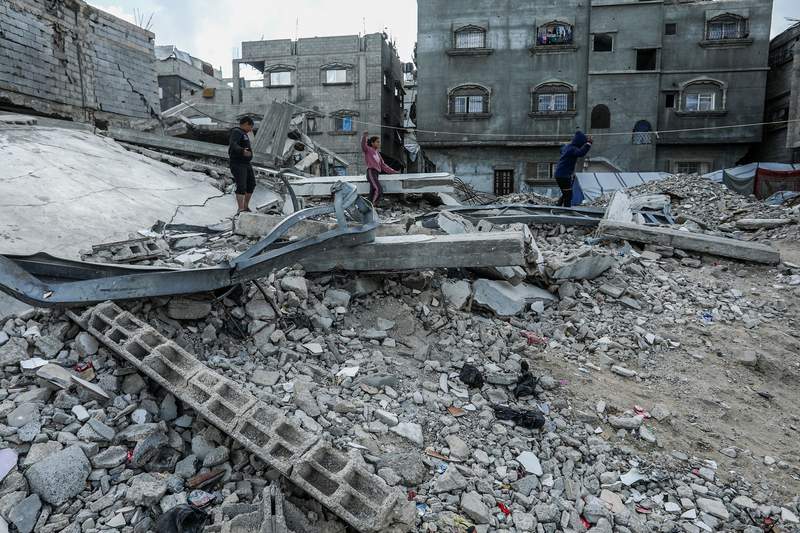
POLICY WIRE — Gaza Strip, Occupied Palestinian Territories — The news trickled in, as it always does. Not with a sudden, deafening roar, but a grim, almost predictable rhythm. Medics reported five more lives extinguished in the Gaza Strip this week—another cluster of casualties, another paragraph in the ongoing ledger of despair, after what Israeli forces called a targeted operation. We’ve seen this script before, haven’t we? It’s a familiar tragedy, replayed with relentless, soul-crushing fidelity, barely registering beyond the immediate theater of conflict. Folks have just gotten used to it.
It wasn’t a seismic event for international headlines, not like the big bombardments. It was an incident, a skirmish, an airstrike—take your pick from the euphemism catalogue. But for those caught in its precise, terrible maw, it was everything. Their world stopped. Five people, rendered statistics, their aspirations, their squabbles, their morning coffee, all abruptly null. But let’s be blunt: for too many policymakers across global capitals, it’s just Tuesday. Or Wednesday. They’ll offer platitudes; some might even send aid, but the needle? It won’t move.
Israeli defense officials, they’re quick to justify these actions, naturally. They’ve got a narrative, a consistent one. “We regret any unintended civilian loss,” stated Ariel Levy, an IDF spokesperson, his voice likely clipped, practiced. “But our operations specifically target terrorist infrastructure—those who plot and execute attacks against Israeli citizens. We’ve got a right, no, an obligation to defend our borders, our families.” It’s always about defense, isn’t it? A necessary evil, a preemptive measure. Never an offensive, not really.
From the Palestinian side, the condemnation, too, was rote. “Another sunrise, another massacre,” lamented Hanan Ashrawi, the former Palestinian legislator, her frustration palpable through the digital ether. “They don’t just kill bodies; they murder hope, decency, — and any illusion of justice. Where’s the accountability? The world watches, offers condolences, — and then forgets. It’s a systematic dehumanization.” Her words echo what’s said year in, year out. You’d think the global conscience would stiffen, wouldn’t you? It just softens.
And because these events happen with such regular monotony, their shock value dissipates. People turn the page, they scroll on. But the ramifications ripple, not just in the dust-choked streets of Gaza, but far beyond. Consider Pakistan, for instance, a nation steeped in Islamic identity. Incidents like these resonate deeply, fueling popular indignation and forcing Islamabad into a delicate diplomatic dance—a precarious pas de deux amidst regional tensions. Public pressure often pushes governments to adopt harder lines, even when their strategic interests demand pragmatism. It’s complicated. Always.
📄 POLICY WIRE WHITEPAPER PUBLISHED: PAKISTAN'S NATIONAL SECURITY POLICY PRIORITIES
👉 READ BY CLICKING HEREIt’s not just the immediate loss; it’s the strangulation of life under blockade that compounds the agony. Another day, another grim accounting in the Levant, indeed. The humanitarian situation, it’s beyond dire. According to a recent report by the UN Office for the Coordination of Humanitarian Affairs (OCHA), over 80% of Gaza’s population relied on humanitarian aid even before recent escalations. That’s a staggering figure, a testament to how deliberately fragile existence has become in that sliver of land. Don’t think for a second these strikes happen in a vacuum. They don’t. They tear at an already fraying fabric.
Because ultimately, these aren’t isolated acts. They’re punctuation marks in an unresolved, deeply ingrained conflict, fueling extremism and cementing intractable positions. Both sides retreat further into their established narratives, leaving little room for dialogue, let alone resolution. You get tired of writing about it, I’m telling you, but you keep at it because maybe, just maybe, someone somewhere is paying attention, despite the odds.
What This Means
Politically, incidents like these are less about immediate tactical gains and more about reaffirming deterrents and consolidating narratives. For Israel, it’s a demonstration of capability and resolve against perceived threats, intended to reassure its populace and warn adversaries. For the Palestinian leadership, it’s further evidence of systemic oppression and a rallying cry for international intervention that never quite materializes effectively. Economically, this relentless cycle ensures Gaza remains an aid-dependent territory, stifling any organic growth or infrastructure development. It’s hard to build a future when the present is so volatile, isn’t it? Businesses don’t flourish under such conditions; investments don’t arrive. Instead, you’ve got generations growing up knowing little else but reconstruction after destruction, then reconstruction after destruction again. It entrenches a dependency that serves no one in the long run, and perpetuates the conditions that allow the cycle to continue. We’re talking about a human crisis, yes, but it’s got tangible economic impacts that weigh heavily on everyone involved—and on the aid budgets of the developed world, too. They’re stuck.