

Europe’s Grand Solar Play: Brussels Courts North Africa in a Geopolitical Energy Gambit
POLICY WIRE — Brussels, Belgium — It’s an inconvenient truth that much of Europe, for generations, has shivered or sweated depending on the goodwill (or ill will) of distant despots and complex...

POLICY WIRE — Brussels, Belgium — It’s an inconvenient truth that much of Europe, for generations, has shivered or sweated depending on the goodwill (or ill will) of distant despots and complex pipeline politics. No more, or so the European Commission hopes. Their latest strategic pivot isn’t a quaint environmental ambition; it’s a cold, hard scramble for survival, casting its gaze southward across the Mediterranean. North Africa, sun-scorched — and rich in undeveloped land, has suddenly become the EU’s indispensable power station.
This isn’t about lofty ideals of green friendship. Oh no, that’s just the wrapper. It’s about energy independence—a visceral necessity hammered home by recent global instabilities. Europe’s grand plan? To bankroll — and plug into the immense renewable potential of nations like Morocco, Algeria, and Egypt. The notion, quite frankly, is that North African sands — and winds could become the Continent’s clean energy lifelines. Forget the oil rigs; think solar farms stretching to the horizon, wind turbines spinning where dunes once shifted undisturbed. It’s an almost biblical scale of ambition, really.
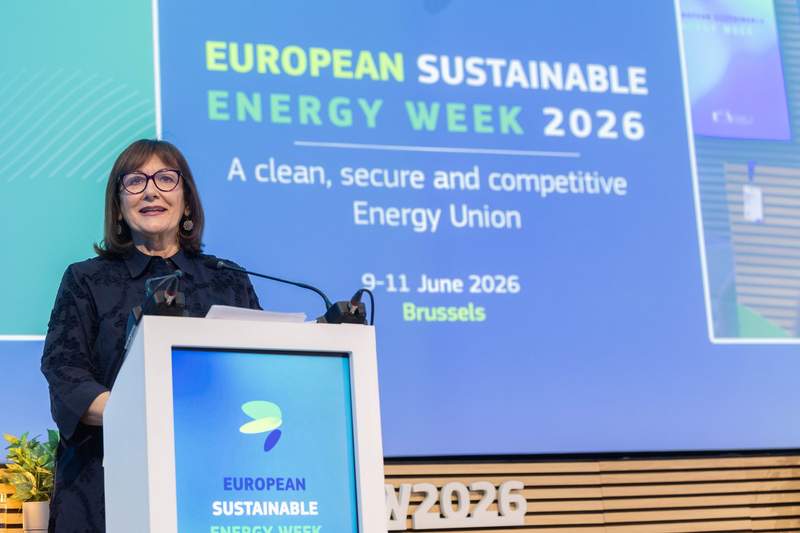
And because the EU Commission can’t just send out a blanket invitation, they’ve been busy forging intricate deals, dangling investment like bait. The official line, naturally, is about mutual benefit. Development for North Africa, clean power for Europe. But dig a little deeper, — and you find a naked desire for strategic autonomy, cloaked in ecological rhetoric. Commissioner for Energy, Kadri Simson, didn’t mince words, though. “Europe’s energy security isn’t some abstract concept tied to old pipelines,” Simson reportedly asserted in a recent closed-door briefing. “It’s got to be built on the very sun that bathes our southern neighbors. We simply can’t afford to look elsewhere.”
But what does this all mean for the North African nations themselves? They’re not just passive recipients of European largesse. They’re acutely aware of their bargaining power. They’ve got the sun, the wind, and—often—a surplus of land for large-scale projects. For them, it’s a chance to diversify economies that too often lean on hydrocarbon exports, to attract foreign direct investment, and to create local jobs in a nascent industry. Moroccan Minister of Energy Transition and Sustainable Development, Leila Benali, summed it up pithily: “We aren’t merely exporting megawatts; we’re exporting stability. We’re creating a new chapter of economic possibility, moving beyond the tired narratives of dependency.” She makes a decent point.
This geoeconomic dance isn’t without its historical precedents, of course. For generations, the Muslim world, from the Maghreb to South Asia, has been a strategic chessboard for global powers eyeing resources. Whether it was oil in the Middle East or trade routes through Central Asia, the story often played out the same. This time, the prize is green, but the game feels eerily similar. Pakistan, for instance, a nation often grappling with its own energy crises, looks at similar pitches from China and others to develop its hydropower and nascent solar potential. The stakes aren’t just kilowatt-hours; they’re sovereign influence. Japan’s own infrastructure projects in Southern India—what some call ‘zipper diplomacy‘—whisper to Islamabad about the constant competition for strategic alliances through economic aid and technical collaboration. It’s the new colonial frontier, isn’t it?
The figures tell part of the story. The European Commission has targeted an estimated 42.5% share for renewables in its final energy consumption by 2030, a goal that would be extraordinarily difficult without substantial imported green electrons. And just for context: a single solar power plant project currently under discussion in Morocco alone could supply a significant fraction of an entire European country’s annual electricity demand. That’s a lot of juice.
Because the push is driven by crisis — and opportunity, not altruism, expect a bumpy ride. There will be diplomatic spats over pricing, technical headaches integrating disparate grids, and perhaps most importantly, fierce competition from other global players. This isn’t a neat, linear progression to a clean future; it’s a messy, high-stakes game of energy poker.
What This Means
The EU’s intensified engagement with North Africa over renewables marks a significant inflection point, politically and economically. First, it redefines the very nature of energy dependency, shifting it from fossil fuels to infrastructure control and stable supply lines. It’s a pragmatic recognition that energy security in the 21st century means distributed, diversified sources—even if those sources are outside the EU’s direct borders. Economically, this translates into enormous investment flows into North Africa, potentially kickstarting new industrial sectors and job creation, but also cementing a form of interdependency. These nations could become energy exporters of unparalleled strategic importance, altering regional power dynamics. Politically, the move subtly integrates North African states deeper into the European sphere of influence, potentially stabilising key partners while simultaneously creating new avenues for geopolitical friction if terms of trade or political conditions aren’t carefully managed. It’s a calculated gamble on transforming neighbours into indispensable partners, with all the inherent risks and rewards.